The Time-based and Digital Special Interest Group* represents a diverse community of conservators, preservation specialists and cultural practice professionals dedicated to the care of cultural materials which are variable, intangible, performative and or technologically dependent.
Members of the SIG collaborate with allied experts in the audio-visual, information technology, digital preservation, media archive, cultural practice and research sectors. This multidisciplinary approach supports the development of diverse care practices that respond to the continually evolving nature of contemporary cultural materials. It also addresses the challenges of maintaining, conserving, and preserving related technologies, software, hardware, and intangible practices.
The Time-based & Digital SIG aims to:
- Foster and facilitate a forum for professional discourse and the sharing of skills and expertise as a leading collective voice in the conservation of time-based and digital heritage in Australia.
- Develop, encourage and share knowledge based on current and future good practice approaches through collaboration, community building and research initiatives.
- Encourage innovative activations to enliven and build a sustainable SIG community, open to anyone interested, in alignment with the strategic goals of the AICCM.
* Time-based and or Digital describes significant works, objects and practices that have a duration, a performative aspect and or digital components. They are often variable, dynamic and or interconnected, requiring collaborative frameworks for their care and access.
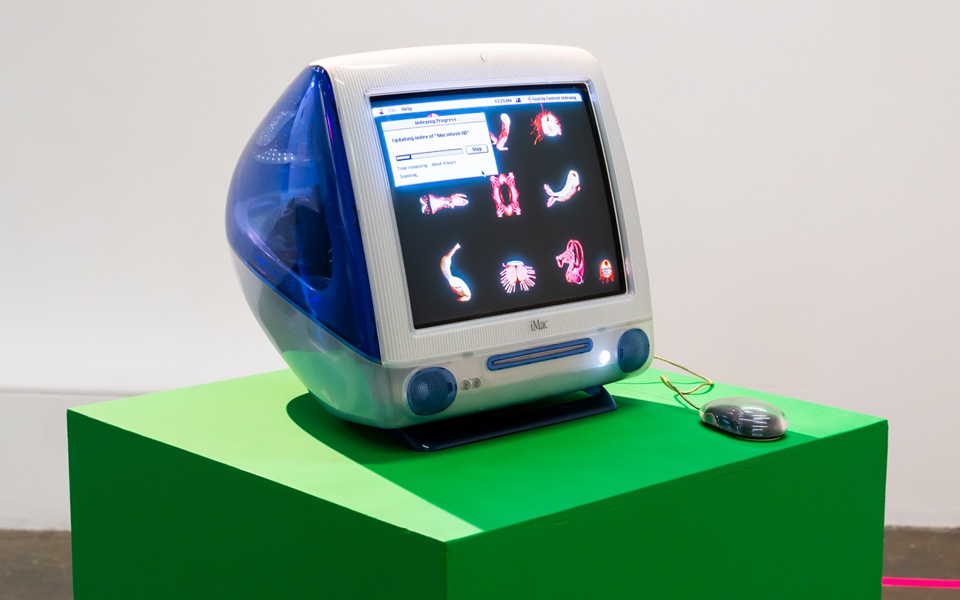
Installation view of 'Cyberflesh Girlmonster' (1995) CD-ROM by Linda Dement, exhibited in On-Site: Matrix Re-loaded, RMIT First Site Gallery, 2023. Curated by Xanthe Dobbie. Photo © Linda Dement / Sebastian Kainey.
Events
View upcoming events on the AICCM Events page.
Have a great idea for a future event? Please email the Time-based & Digital co-convenors : tbadigital@aiccm.org.au
Previous Time-based & Digital SIG Symposiums
‘2017: The Shock of the New: Modern Materials, Media and Methods’: Joint Objects and Electron Special Interest Groups Symposium, 8-10 February 2017 / Melbourne Museum, Australia
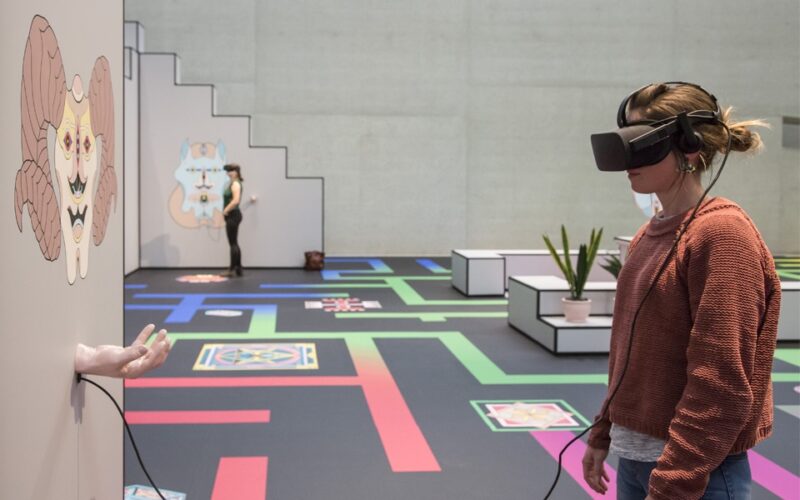
Installation view of virtual reality artwork 'Terminus' by Jess Johnson and Simon Ward, exhibited at National Gallery Australia, 2018. Photo © Jess Johnson and Simon Ward.
Resources
Here’s a selection of our favourite resources. Got a gem we’ve missed? Email us with your suggestions.
Research
- New Media Art Archiving Network: An international initiative for the preservation and networking of media art archives.
- Precarious Movements: Choreography and the Museum project connecting artists and institutions on good practice for dance in the art museum.
- Software-based Art: Research project into the care and preservation of software-based artworks in the Tate collection
- Our Digital Heritage: Australian research projects focussing on born-digital heritage including the ARC Linkage projects Aus EaaSI, and Play it Again.
- Rhizome: International hub for new media art. Specialists in emulation and web archiving.
- VOCA: Provide ‘Artist Interview workshops/training to support the care of contemporary art.
- Matters in Media Art : A collaborative project providing guidelines for the care, documentation, and preservation of media artworks across their lifecycle.
- Variable Media Network: A preservation initiative that explored ways for artworks to outlast their original medium, supported by collaborative contributions from individuals and institutions.
Conferences & Workshops
- ASRA: Australasian Sound Recording Association. 2025 dates: 30-31 October, Sydney / Gadigal Country and online.
- IPRES: international digital preservation conference. 2025 dates: 3-7 November, Wellington, New Zealand / Te Whanganui-a-Tara, Aotearoa.
- ISEA International: Symposium on Electronic Art, includes the New Media Art Archiving Summit.
- New Media Art Archive Workshop / ZKM, Germany. Read the 2025 Report (held separately to the Summit).
- Transformation Digital Art / LI-MA, Amsterdam. 2026 dates: 24-25 March
Recordings
- Just in time: On the Status Quo and Future of Electronic Art Preservation / ZKM, 2022.
- Lives of Net Art: Curator Christiane Paul / Tate, 2020.
- TBM Symposium / New York University, 2018.
- Tech Focus III: Caring for software-based art / Guggenheim Museum NY, 2015.
- Australia Society of Archivists: online talks and YouTube
- Digital Preservation Coalition: online talks
- NYU Institute of Fine Arts: TBM events and lecture series.
Media Preservation
- AIC Electronic media group: American Institute of Conservation SIG.
- AMIA: Association of Moving Image Archivists
- Australasia Preserves: digital preservation community of practice for the Australasian region.
- BAVC Media, previously Bay Area Video Coalition, is a nonprofit connecting independent producers and underrepresented communities to emerging media technologies.
- Digital Curation Centre: centre of digital information curation.
- Digital Preservation Coalition multiple resources.
- Digital Preservation Listserv.
- IASA audio and video preservation resources.
- New Media Curating Listserv.
- NFSA: Preservation Glossary.
Tools
- Bagger: Tool for packaging and preserving digital files using the BagIt format, ensuring data integrity and easy transfer.
- BitCurator: Digital forensics toolset designed to help archivists preserve and analyze born-digital materials.
- DROID: File format identification tool to automatically identify file types using PRONOM. signatures.
- FFmpeg: Command-line tool for processing audio and video files, including conversion, compression, and streaming.
- MediaInfo: Displays technical and metadata details about audio and video files, such as codec, duration, bitrate, and subtitles.
- VLC MediaPlayer: a free and open-source cross-platform multimedia player.
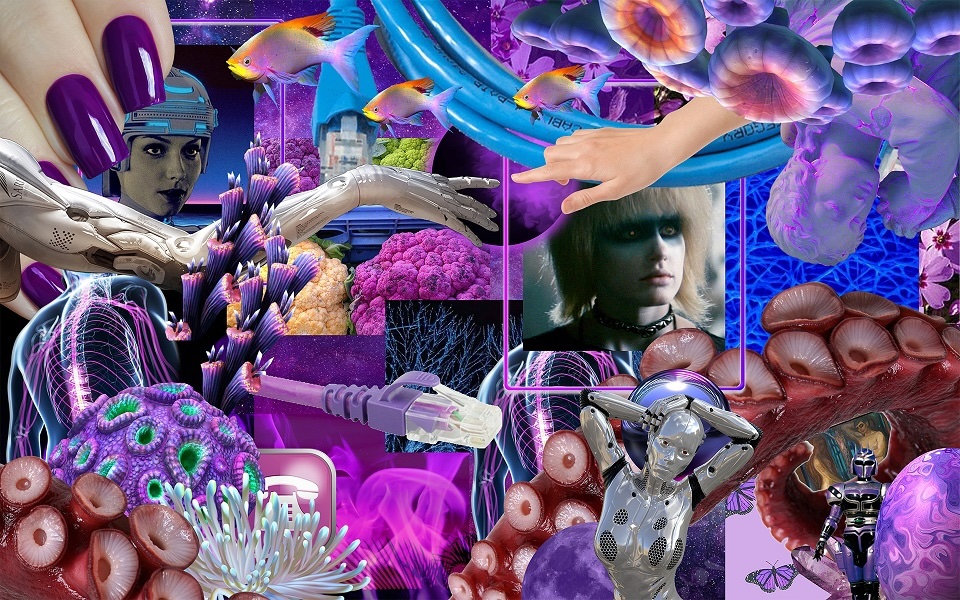
Cyborg from 'Real_Things' by Xanthe Dobbie. Presented as an online quiz in 2021, Real_Things determined if you’re a glitch, a goddess or other iconic online phenomena. Data was then used for targeted advertising. Photo © Xanthe Dobbie
Convenors
Candice Cranmer is interested in innovative conservation techniques, practices and research. She has over 10 years’ experience in time-based media conservation, digital preservation, collection access and care practices.
Lisa Mansfield is the senior time-based art conservator at AGNSW. She/they co-create interactive electronic artworks presenting environmental narratives and data.
We work, learn and live on unceded First Nations sovereign land and waters with respect.
Contact
Email the Time-based & Digital SIG co-convenors here.
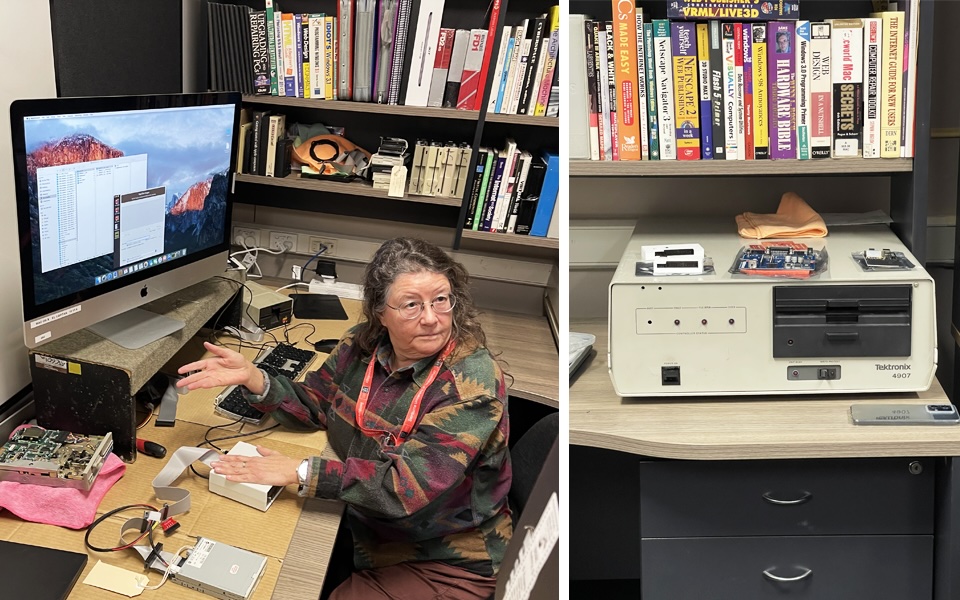
Flash and web restoration training with Dr Cynde Moya at the Digital Heritage Lab, Centre for Transformative Media Technologies, Swinburne University of Technology. Photo © Felipe Olivares.