Treatment Strategies for Painted Outdoor Sculpture was a five-day, in-person workshop jointly organised by the Getty Conservation Institute (GCI) and the National Gallery of Victoria (NGV). Held in late April, the program took place across the NGV, the Robert Cripps Institute for Cultural Conservation and the streets of Melbourne, utilising the City of Melbourne’s public art collection, an incredible (and free) teaching resource for conservators.
This was the third iteration of the GCI workshop and the first to be held in the Asia-Pacific region. Attendees travelled from South Korea, Japan, Malaysia, India, Hong Kong, Portugal, the United States, Canada, New Zealand and, of course, all over Australia. Despite the cultural and language differences in the room, there was unanimous agreement on one point: painted outdoor sculptures are among the most ubiquitous, yet headache-inducing, artwork types encountered by objects conservators worldwide. We were all grateful for the opportunity to be there and eager to learn from one another.
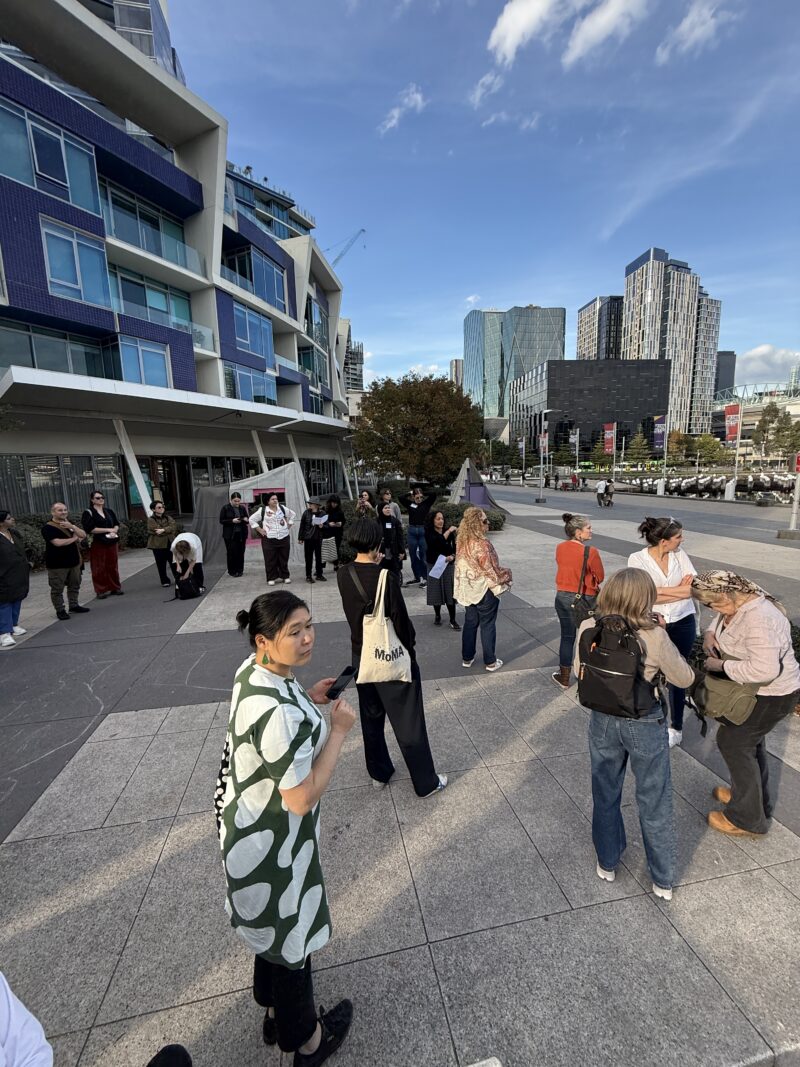
Workshop participants inspecting ‘Monument Park’ by Callum Morton, Docklands
The workshop facilitators and presenters represented a thoughtful mix of institutional and private-sector conservators, educators, artists and industry technicians, ensuring that the contextual, technical and pedagogical challenges associated with painted outdoor sculpture were examined from every angle. Rosa Lowinger and Abigail Mack generously shared their wealth of experience, both positive and challenging, as private sculpture conservators working in complex environments: think Miami heat and humidity. Alan Feder, the ‘paint whisperer’, brought decades of expertise as a trade painter and patiently answered every question thrown his way on paint technology and deterioration. Anne Cummins and Caroline Kyi expertly translated international discussions into an Australian context (for example, we call it a paint system, not a paint stack), while Anne also entertained us with stories of Sydney’s most persistent artwork vandals: cockatoos.
Topics ranged from the microscopic to the strategic, encompassing paint technology and manufacturing processes, interpretation of technical data sheets and Australian Standards, common substrates and surface preparation, deterioration mechanisms, project management and stakeholder engagement. A personal highlight was the graffiti-removal workshop at the Robert Cripps Institute, where participants were introduced to emerging green-solvent and aqua gel technologies (if you’re still reading this, google ‘ethyl lactate’ and try it out next time you have graffiti to remove). It served as a timely reminder that materials science and industry are continually evolving, and that we as conservators need to commit to lifelong learning to keep our skills and knowledge relevant.
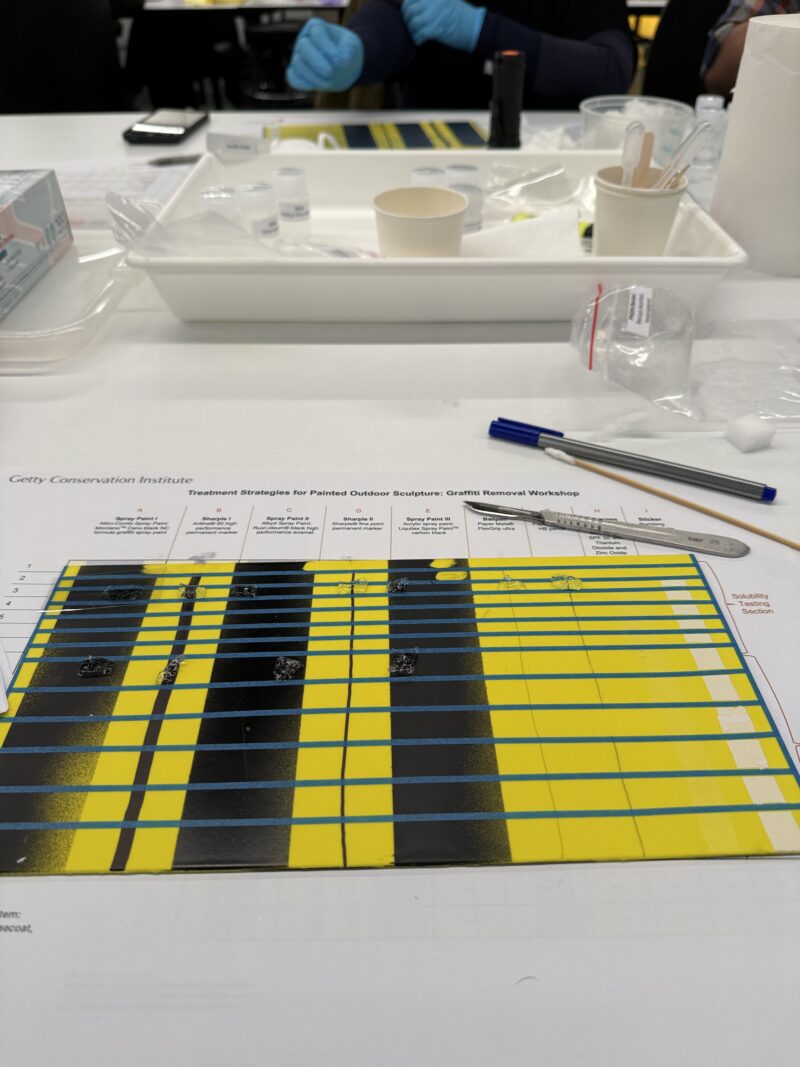
Graffiti removal workshop at the Robert Cripps Institute
MaryJo Lelyveld, Kasi Albert and Di Whittle from the NGV, along with Stavroula Golfomitsou and Ellen Moody from the GCI, ensured that participants remained organised, informed and surprisingly punctual throughout an ambitious schedule of presentations, site visits and workshops. The program also included a memorable after-hours dinner at the NGV, providing valuable opportunities for networking and discussion.
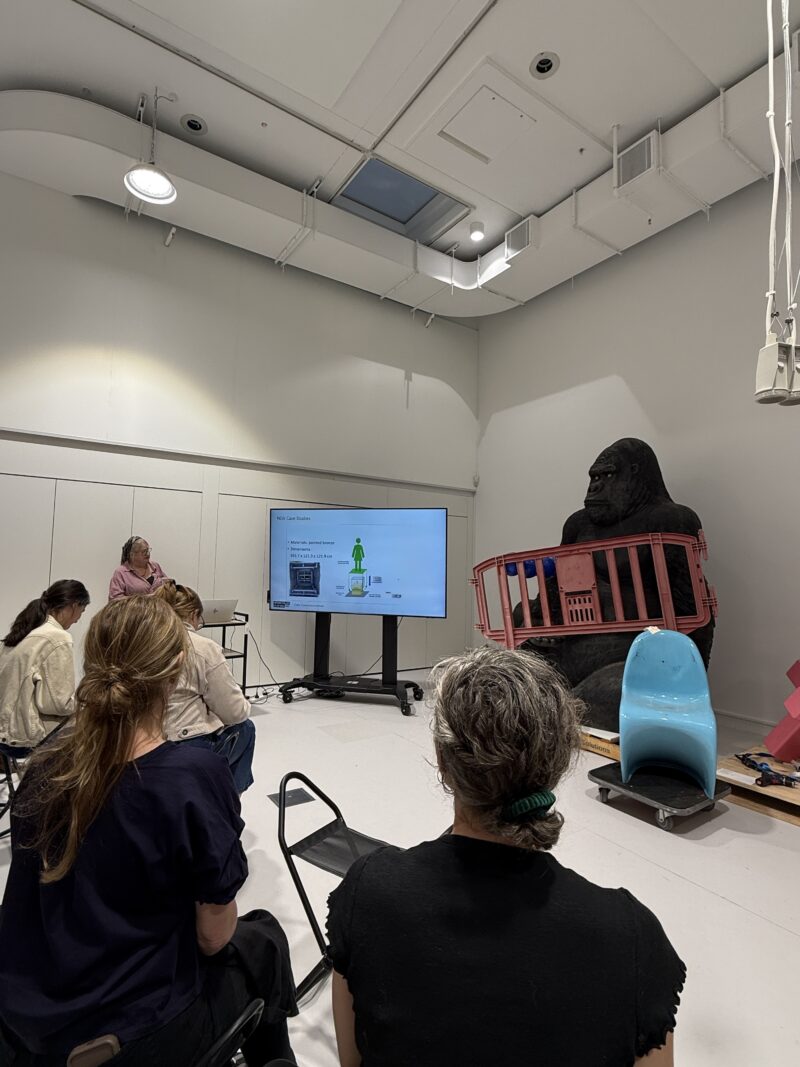
Di Whittle presenting case studies at the NGV
As conservators, we are trained to look for flaws and defects. However, the only disappointing aspect of the entire program was that it was simply too good. There were no sessions that you could justify skipping in favour of shopping or chugging espresso on Degraves Street. Every part of the program felt worthwhile.
The workshop concluded with a clear and passionate call to action from Stavroula Golfomitsou, Head of Collections at the Getty Conservation Institute: please, publish. There remains a significant gap in the literature on painted outdoor sculpture conservation, and practitioners need to share more case studies, technical papers and practical experiences. Whether the outcomes are successes or cautionary tales, documenting and disseminating this knowledge is essential to advancing the preservation of painted outdoor sculpture and supporting the conservators who care for it.
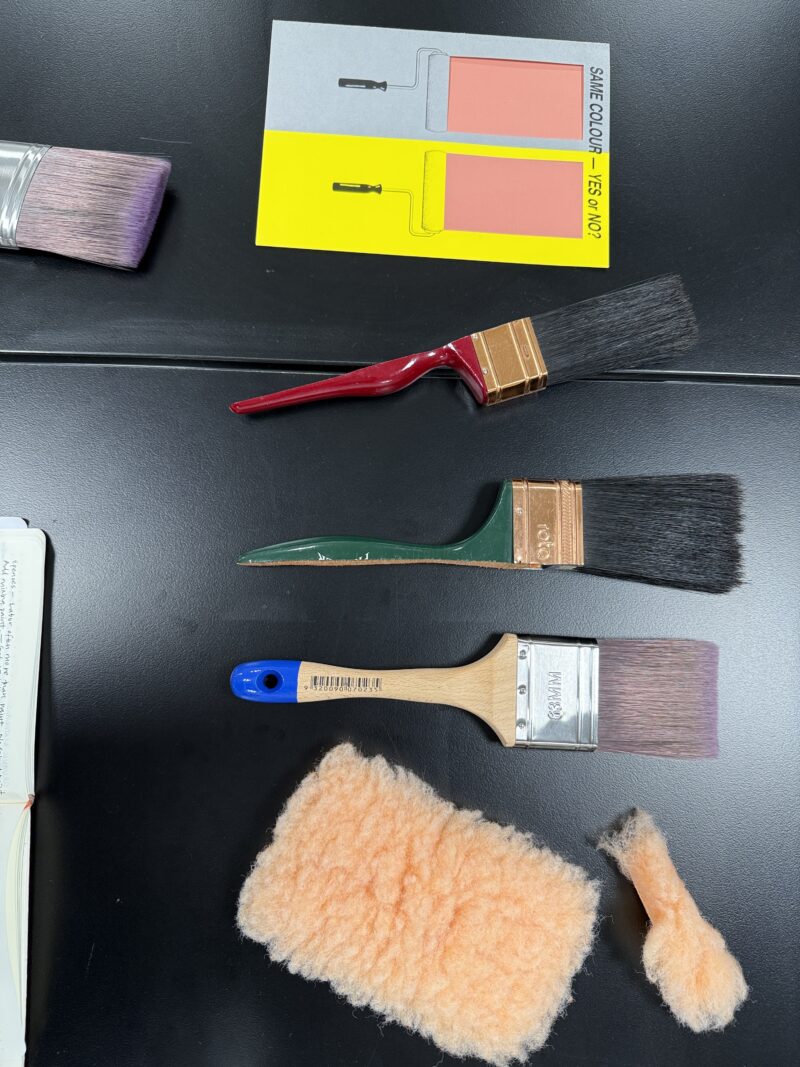
Paint brush and roller technology