Paintings
The Artlab paintings conservation team has had the pleasure of inward condition checking the Art Gallery of South Australia’s Winter Art Series 2026 exhibition ‘Monet to Matisse: Defying Tradition’, on loan from the Toledo Museum of Art. The exhibition runs from 11 July to 8 November 2026.
‘Portrait of a Lady’ 1848
Senior Paintings Conservator Marek Pacyna recently completed the treatment of ‘Portrait of a Lady’ for a local private client. The sitter is an ancestor of the owners who were thrilled with the results.
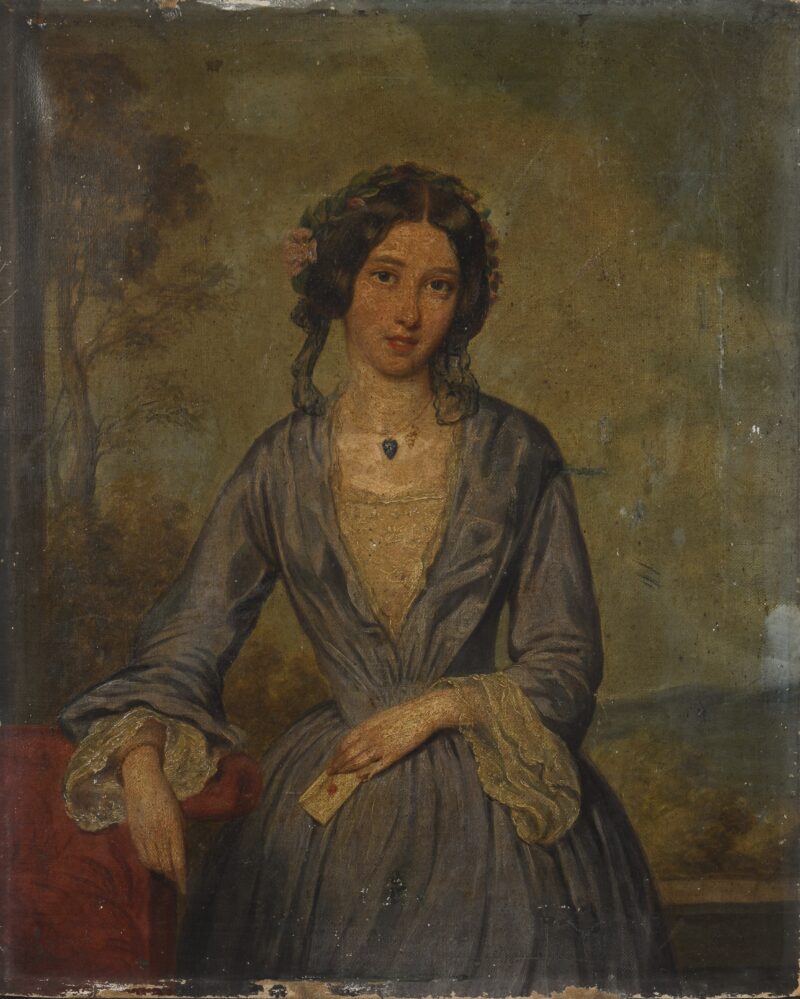
Painting before treatment.
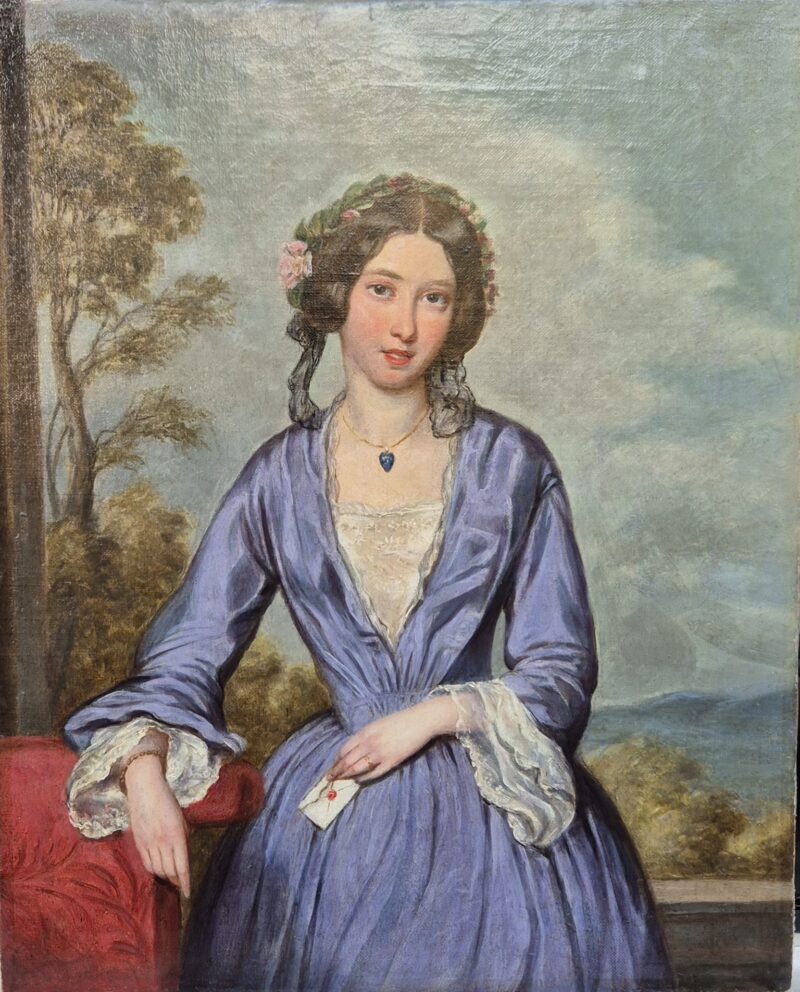
Painting after treatment.
The canvas was cut down and marouflaged to cardboard. The work underwent a backing removal and lining on linen in preparation for stretching. Several layers of varnish and surface grime revealed areas of overpaint and a number of old small puncture damages. Infrared imaging revealed delicate underdrawing.
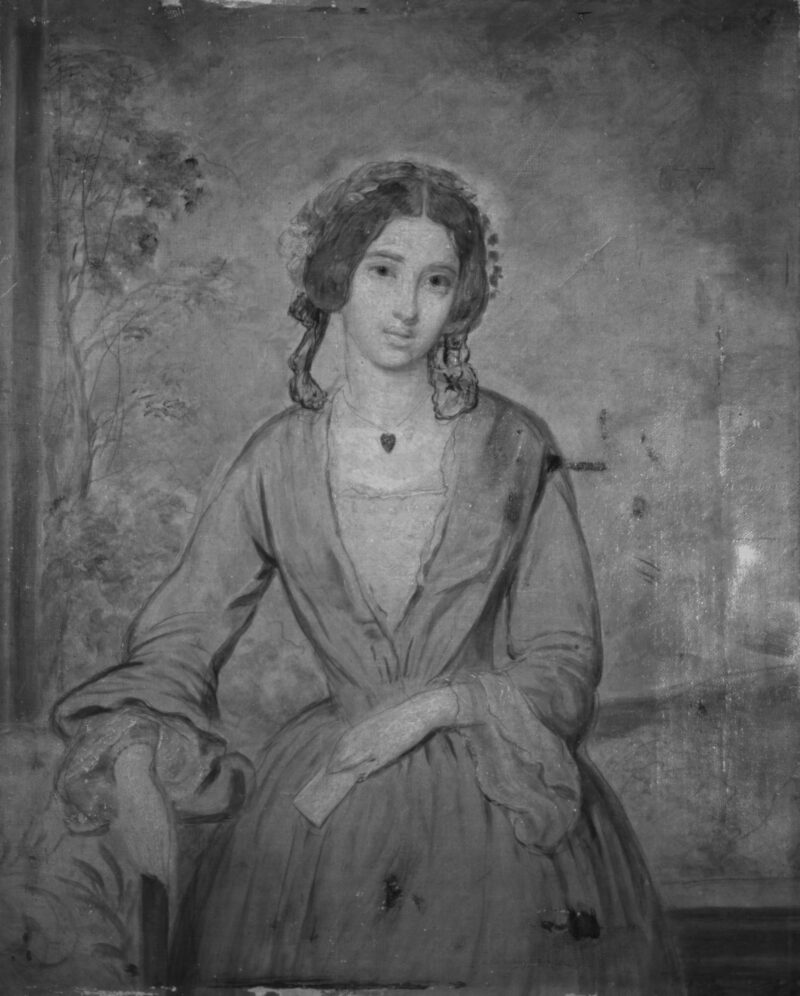
Infrared photograph
Paper & Objects: The McKinlay Monument time capsule
Artlab was proud to be a part of the Town of Gawler reclamation of a time capsule, placed in the McKinlay Monument 151 years ago. Gawler, an early South Australian European settler colony north of Adelaide, erected the monument in celebration of explorer John McKinlay on 14 November 1874. Historic records recount that there was a time capsule containing historical documents placed within the monument, and it was uncovered in December 2025 as stonemasons were undertaking remediation treatment to salt damp contained within the base of the monument. The lead time capsule was salvaged and brought to Artlab in early 2026 for assistance with opening and safe removal of and prevention of damage to the historical contents.
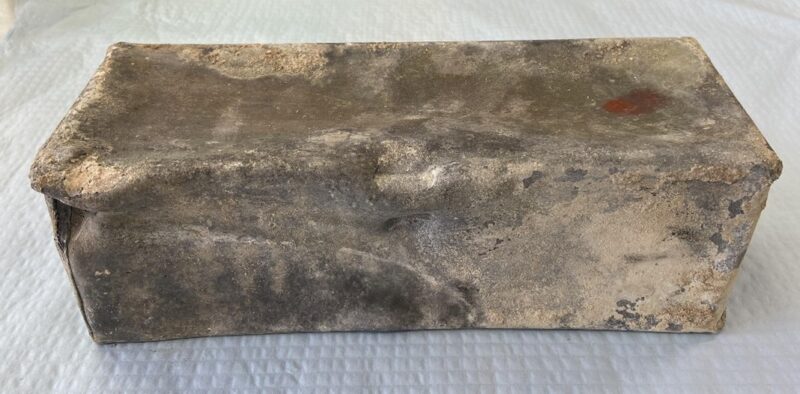
The time capsule looked like a block loaf of lead bread.
Principal Objects Conservator Jo Dawe thoroughly examined and documented the lead time capsule, formulating a strategy to safely remove the contents and minimise physical damage to them. During the recent excavation process a hole had pierced through the surface of the lead (see image below), fortuitously allowing a view to within the interior, revealing some paper materials. The Gawler Cultural Heritage Centre confirmed that they were keen to safely access the contents and gave permission for the lead container to be gently cut back with snips, which, after testing, seemed the most controlled method for access.
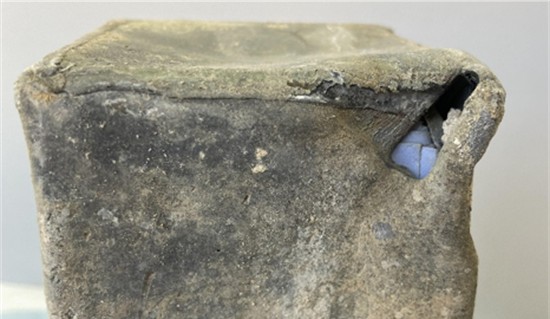
A hole from excavation of the time capsule allowed a partial view into
the interior and contents.
After slowly snipping along the edges – constantly checking the location of paper documents – and with gentle persuasion the lead sides were folded back to reveal the contents, a process not dissimilar to peeling a banana. This method was continued until the contents were able to be safely removed with minimal force exerted on them.
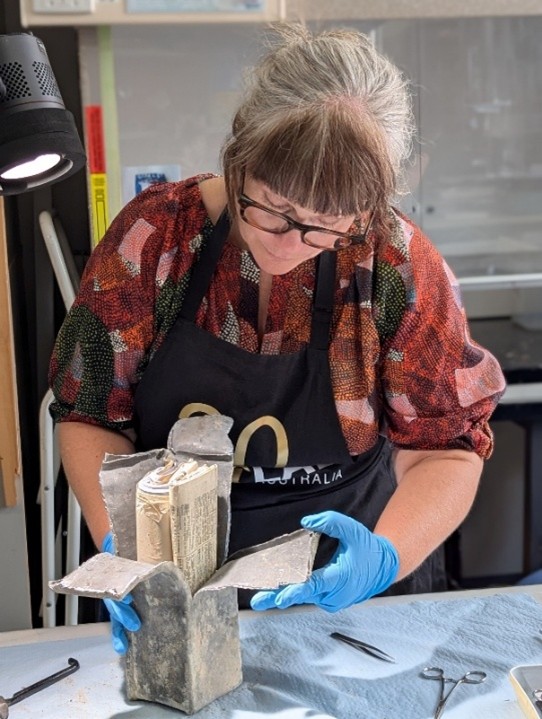
Retrieving contents from the lead capsule.
Senior Book & Paper Conservator Robin Tait lifted and gently removed the bound package from within the time capsule. There was applause (and birthing analogies bandied about) as it was a relatively stressful undertaking, which was also being filmed!
After documentation of each stage, and of the removed contents, Robin unbound and carefully removed items, showing representatives of the Town of Gawler – who were documenting and filming the unveiling – what was inside.
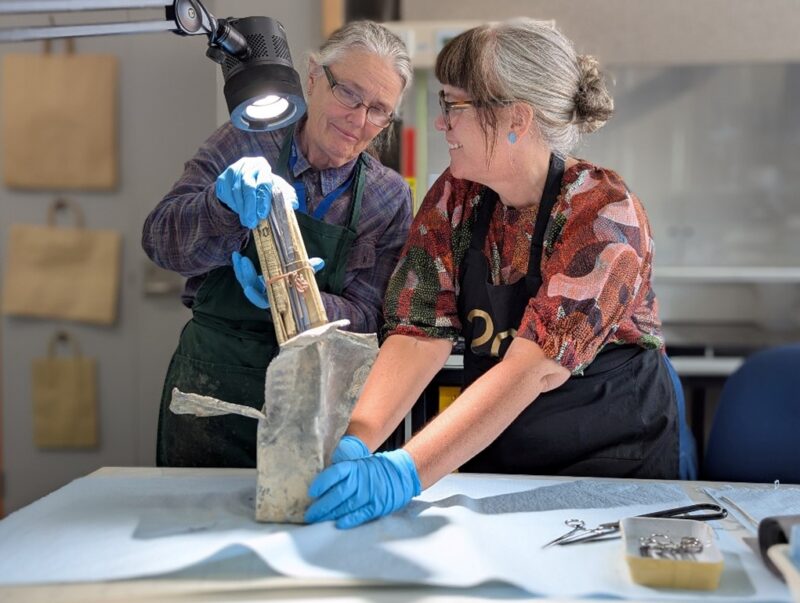
Retrieving contents from the lead capsule.
Contained within the time capsule were paper documents pertaining to John McKinlay’s official diaries of his explorations, maps and charts and a handwritten parchment commemorating the laying of the McKinlay Monument. Also included were two state broadsheet newspapers and one local broadsheet. Unexpectedly there was also an albumen carte de visite portrait of John McKinlay, and a card of memoriam. All items were in remarkable condition.
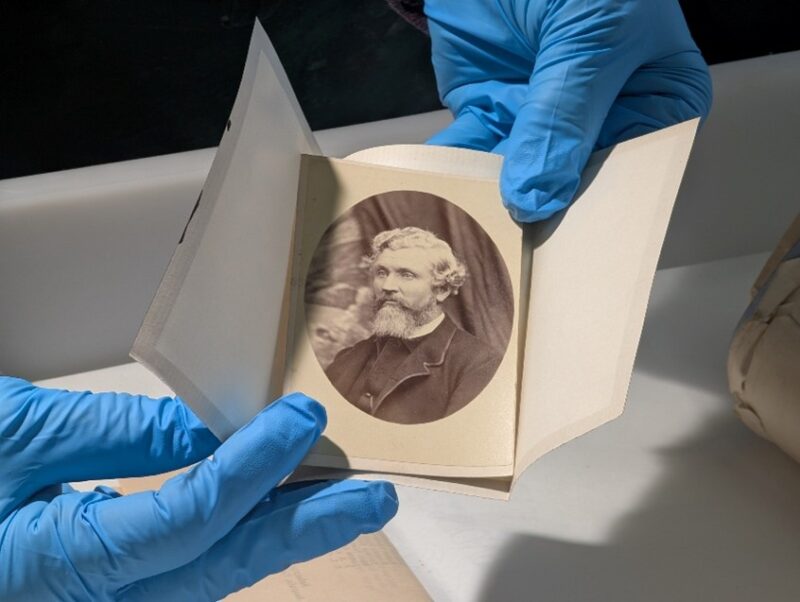
Carte de visite portrait of John McKinlay in excellent condition.
Following pretreatment photography, the collection was brought to Artlab’s Jodie Scott and Laura Drew, Senior Paper Conservators, for assessment. Due to an incredible amount of community and historical interest from around Australia, the custodians were keen to have the collection back in Gawler for short display and digitisation. This helped inform our proposal for treatment, which was principally focused on accessing the information safely and providing a long-term preservation storage solution.
Having been folded and creased in the same position for so many years, the paper and parchment had incredible memory to remain in the same contour. These materials resisted handling and opening the documents increased stress and risk of damage.
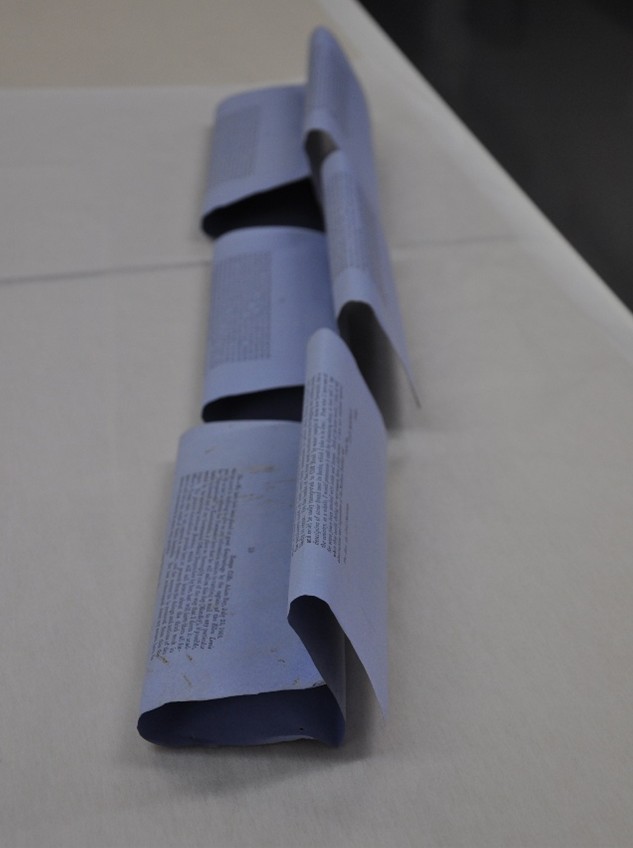
Example of McKinlay’s diary, holding folded memory.
After gentle surface cleaning to accessible surfaces, the individual paper sheets were humidified using Gore-Tex, followed by light pressing between Bondina, blotters and felts. In some instances, this treatment was repeated to encourage gradual flattening. We were conscientious to not flatten the works completely with this treatment, with the intention of retaining the history and unique value significance of these individual items. Although the creases, folds and some undulations are still visible in the items, the primary supports are easy to handle. The very few items that required tear repair were treated with wheat starch paste and thin Japanese paper.
The paper items were kept in their original batches as found and placed in a Mylar sleeve before a bespoke four-flap folder was made for storage. The parchment was hinged and mounted before being placed in a four-flap folder. The photograph was placed in an archival sleeve with the card of memoriam. The broadsheets and charts were placed in a Mylar sleeve and supported with a mountboard folder. All items were contained in a four-shelved blue-board box with drop-down side. This was intended to keep the collection together in one storage location and facilitate easy handling for custodians and researchers.
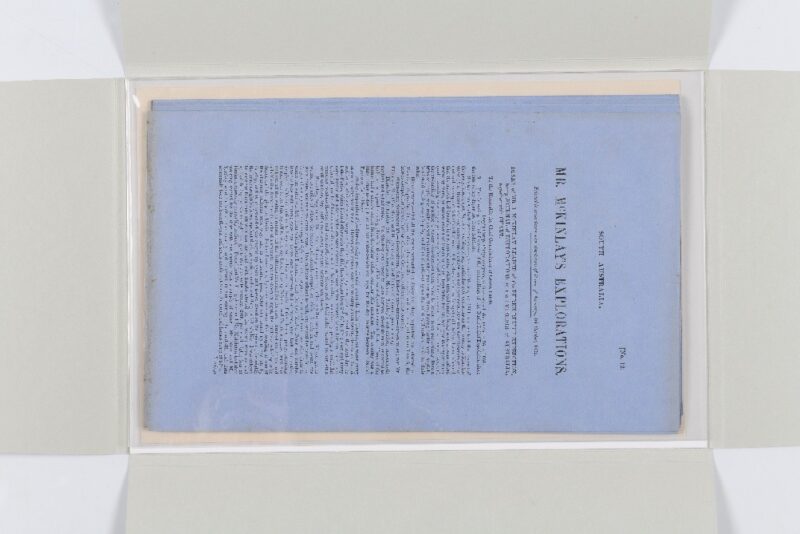
Example of McKinlay’s diary, flat in folio’s, Mylar sleeve and four-flap folder.
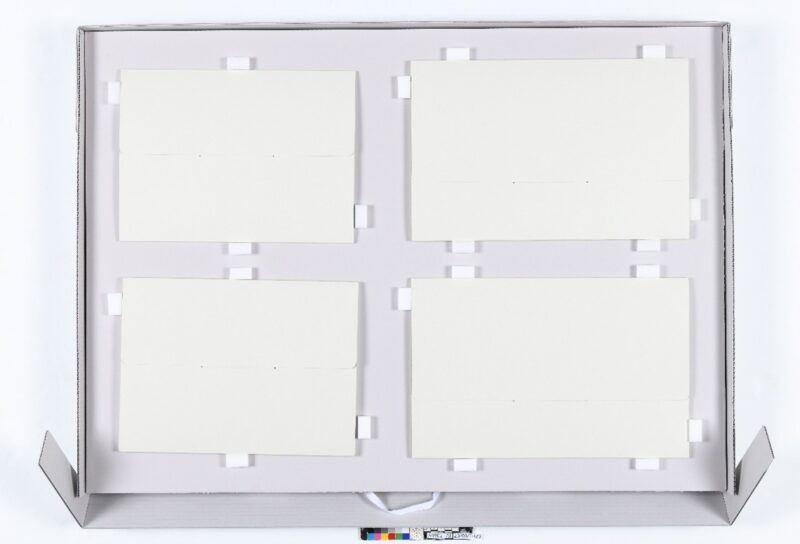
Example of one shelf in time capsule storage box with four four-flap folders.
To watch a video of the time capsule decanting, please use this YouTube link.