
People news
Deeksha Bhardwaj joined the team in February to provide Collection Care support while Melissa Juillard works on the refresh of the Birds of Australia gallery. Previously, Deeksha was working at the Museum of Transport and Technology (MOTAT) in Auckland. We are very happy to have Deeksha on board.
Sheldon Teare has returned to the team after temporarily taking on the role of Head of the Life and Geosciences Collections at the Australian Museum Research Institute (AMRI). Sheldon was in this role for four months and learnt a lot about our colleagues in Collections during this time. We know he is very pleased to be back with the Conservation team.
Brooke Randall stepped in as acting Senior Conservator while Sheldon was away and provided the team with extra capacity until the end of the financial year. It’s great to have Brooke providing us with her Collection Care knowledge.
Projects
Bird of Australia gallery redevelopment
Melissa Juillard has temporarily stepped away from the Collection Care programs and is the coordinating conservator for the gallery redevelopment. Australia is home to over 800 bird species, many of them endemic. The Museum’s Birds of Australia gallery, installed in the early 1980s, is getting a major refresh, ensuring the science (taxonomic ordering) is correct and reflects modern updates.
This will be a year-long project to revitalise a long-loved gallery of the Museum. Approximately 700 taxidermy mounts and associated materials will be processed during this project. Many of the mounts need minor repairs and recolouring. Sheldon and Maria Genetzakis are lending a hand. We have reached the halfway mark of the project and are on track for the opening of the gallery at the end of the year.
Weaving Memory exhibition
Deeksha Bhardwaj condition reported and installed textiles for the exhibition ‘Weaving Memory: Mexican Textile Art’, a special collaboration between the Australian Museum and the Embassy of Mexico in Australia, celebrating 60 years of diplomatic relations between our two countries.
The exhibition features work from the Tilmahtli project by Mexican anthropologist Miguel Angel Sosme Campos, including 24 photographs and 13 original woven works. These textiles are crafted by Indigenous women and embody generations of skill, cultural knowledge and lived experience.
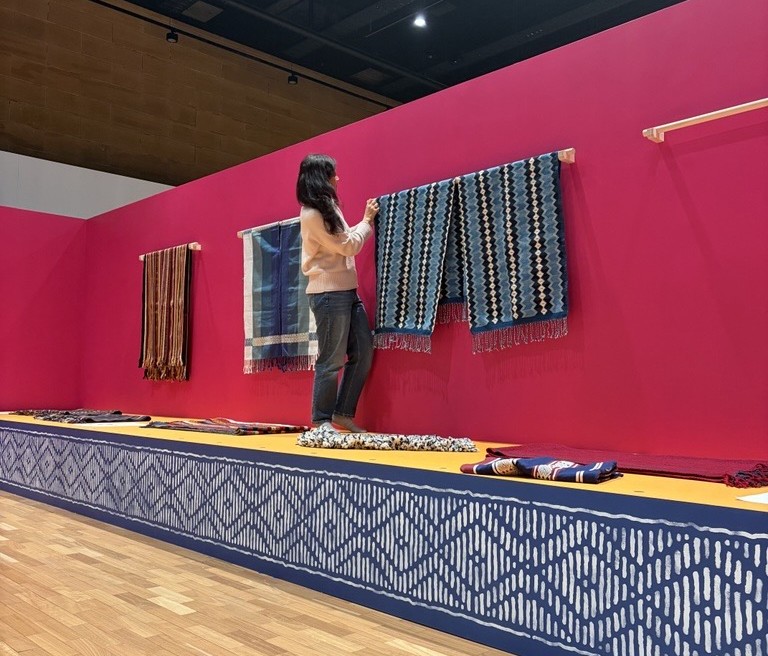
Deeksha Bhardwaj installing one of the wearable textiles in Hintze Hall for the ‘Weaving Memory’ exhibition at the Australian Museum. Image: Jaclyn Fenech, Exhibitions Producer, Exhibitions, Australian Museum.
Marine Icons
Project Manta
Over the past 11 months, Kerry Etherington has been undertaking Project Manta, a major conservation treatment of the 157-year-old holotype specimen of Krefft’s devil ray (Mobula alfredi). With a 4.1-metre wingspan, the taxidermy specimen has presented considerable logistical challenges, yet the treatment is progressing well. Over 53 kilograms of degraded fillings from the specimens’ interior have been removed, together with some unexpected surprises found within. Major skin repairs, fills and inpainting of the upper surfaces have been completed, and repairs to the plaster mouth have been attended to. Having overcome the logistics of obtaining access to the underside, much of Kerry’s time is currently spent underneath the manta ray where major damage repairs are underway.
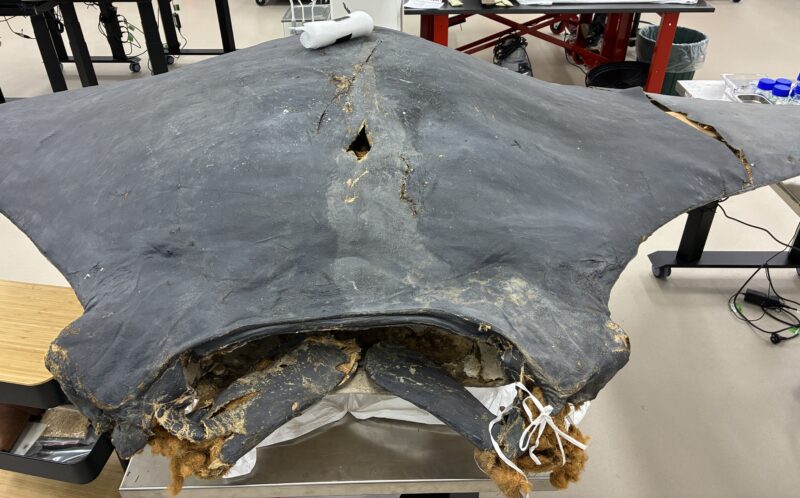
Manta ray (Mobula alfredi). During treatment wet clean using 1% w/v TAC in DI water. First pass following brush vacuum. Image: Kerry Etherington.
Project Sunfish
For eight weeks, Project Manta was put temporarily on hold while Kerry undertook Project Sunfish – continuing the major conservation treatment of the AM’s historic Marine Icons. Due to its size, this specimen was treated in the Museum’s main public space, Hintze Hall, and this display of conservation-on-show proved to be a big hit with the public. You can watch the Instagram video here.
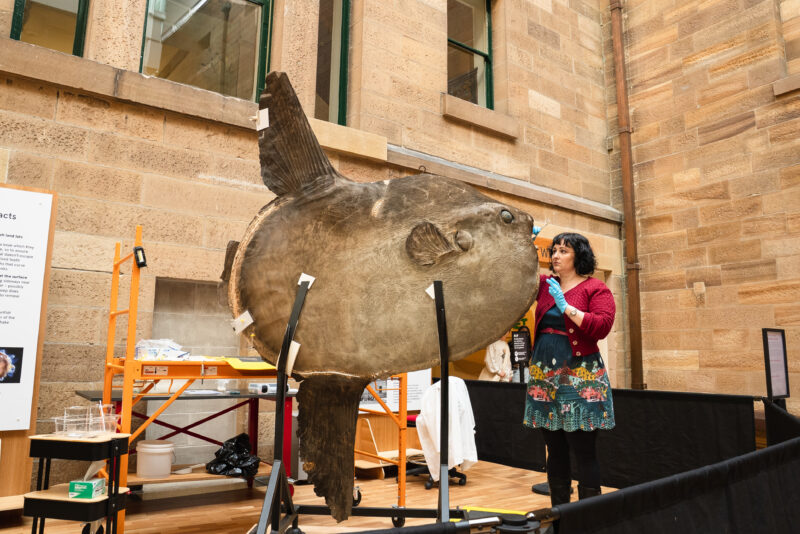
Sunfish (Mola alexandrini). During treatment of mouth repairs. Image: Louise Reily.
Conference presentation at the National Museum of Korea Museum Network Fellowship 2026
Kyra Kim has been undertaking a condition assessment and treatment of the Blaschka glass models of marine invertebrates from the Archives collection. These models are highly significant as they are some of the earliest examples of scientific models made by 19th century father and son glass artists Leopold and Rudolf Blaschka. Kyra has been exploring alternative pathways for treatment to address some of the more badly damaged models. A broken barrel jellyfish model has been an interesting case study to showcase the possibility of using CT scanning and 3D imaging for digital restoration.
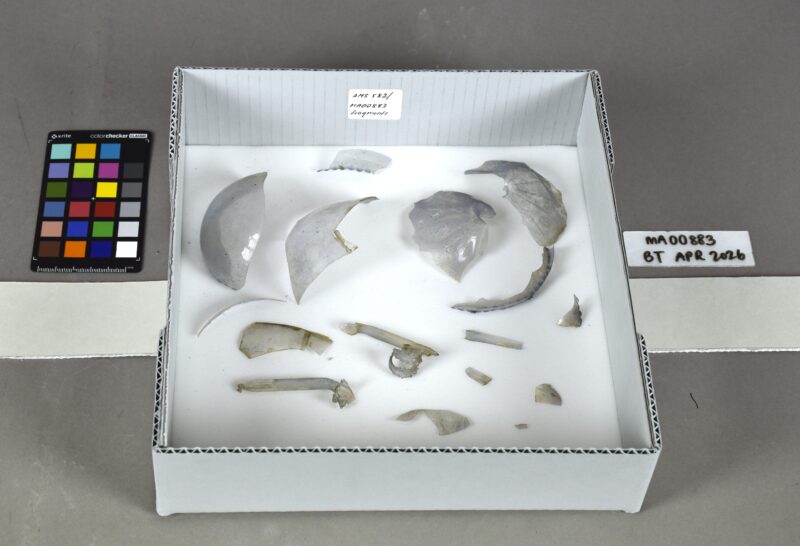
Broken pieces of glass Barrel jellyfish model. Image: Kyra Kim
Kyra presented this research at the National Museum of Korea Museum Network Fellowship in June. This is the first time this fellowship has had a focus on conservation science to celebrate the opening of the new Conservation Science Centre at the National Museum of Korea. Kyra participated in this fellowship with conservation colleagues from the Museo delle Civiltà, Rome, and the Grand Egyptian Museum, Giza. The week-long fellowship comprised an academic conference, panel discussions with Korean conservators and tours of the conservation labs and collection stores of the National Museum of Korea and affiliated regional museums.
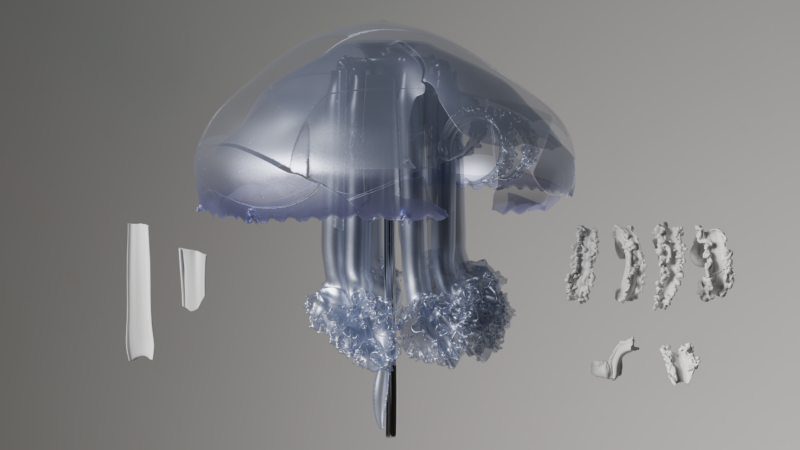
Digital reconstruction of barrel jellyfish model. Image: Tom Peachey.
Scientist for a Day
Maria Genetzakis and Elizabeth Reed participated in the AM’s school holiday Scientist for a Day program. The kids, aged 9–12, enjoyed a presentation on the 10 agents of deterioration, creating their own water-cut strips of Japanese tissue for repairs, and a behind-the-scenes tour of the lab.
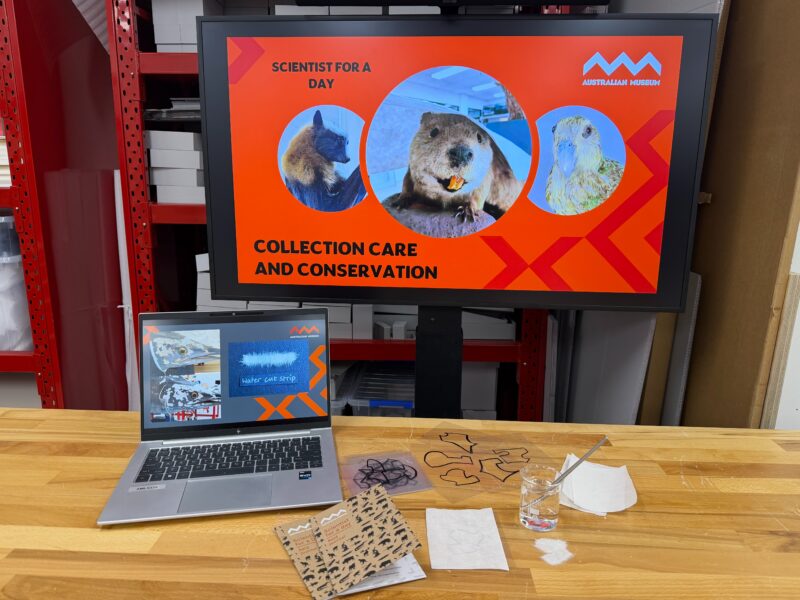
Scientist for a Day activity.
Au Waka Nua student placement
Deeksha and Kyra hosted four students for work experience through the Pasifika Au Waka Nua student placement program. The students got a crash course in conservation over two days, spending time in the conservation lab and Pasifika collection store. The program was a mix of conservation theory, IPM protocols and practical activities, including condition reporting a canoe model and rehousing Pasifika barkcloths into new plan file cabinets.
Collection Enhancement Project
As part of the Collection Enhancement Project (CEP), Brooke Randall completed the Australian Museum Research Institute’s (AMRI) first comprehensive collection risk portfolio, assessing preservation risks across nine natural science collections housed at the William Street site. Using the internationally recognised ABC Risk Assessment Methodology, the program evaluated 16 risk factors across 38 storage locations, drawing on multiple data sources including physical inspections, environmental monitoring, condition surveys and EMu collection records.
The assessment was delivered through a six-stage collaborative process to ensure institutional alignment and stakeholder consensus. The resulting portfolio establishes a quantitative framework for evidence-based resource allocation, coordinated infrastructure investment and long-term strategic planning while identifying cross-collection risk patterns and shared institutional priorities.
Marine Invertebrates Dry Types rehousing
Deeksha is currently rehousing the Marine Invertebrates Dry Type specimens. There are 1335 Dry Types that cover Crustacea, Annelida, Cnidaria, Echinodermata, Porifera and Bryozoa. The project focuses on rehousing specimens into archival trays while also rehousing associated registration numbers, labels and tags into Mylar sleeves, ensuring they remain securely stored alongside each specimen.
Each phylum has its own challenges and requirements for rehousing. From pinning a sea star using entomological pins, to securing legs of a crab using polyethylene foam and Softlon supports, the focus is to stabilise each specimen and minimise movement during storage and handling. The project will significantly improve the long-term preservation, accessibility and safe handling of these scientifically significant type specimens for future research and collection care.
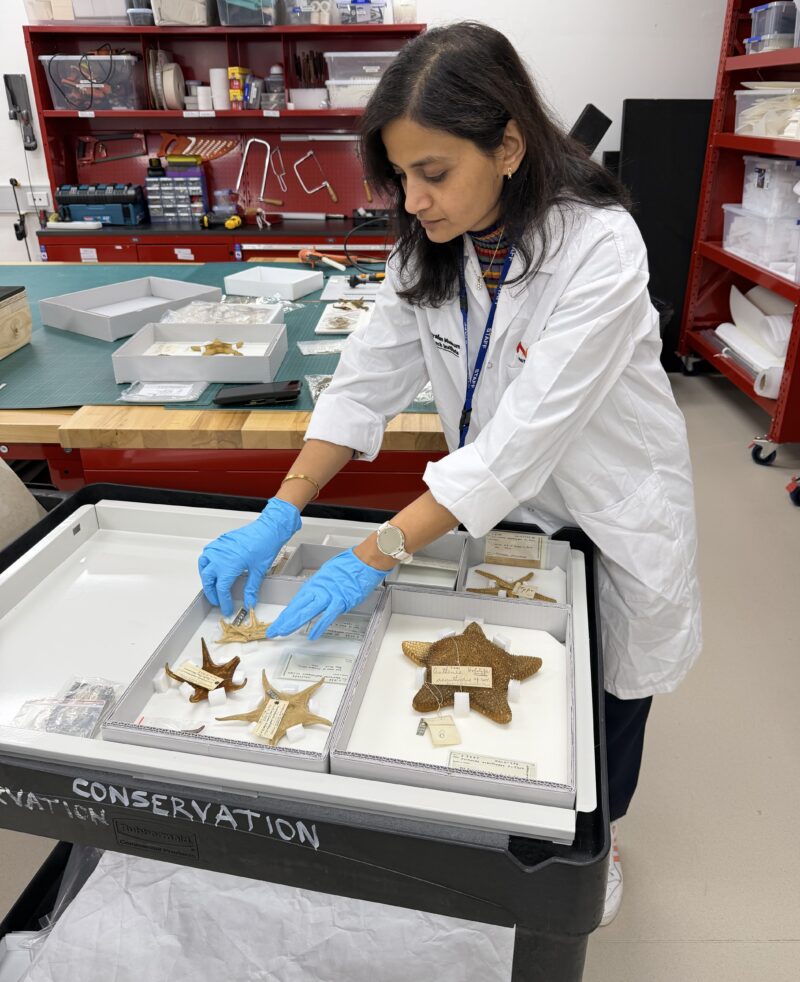
Deeksha Bhardwaj, checking the rehoused dry type specimens – Asteroidea (sea stars). Image: Elizabeth Reed.
First Nations Collection rehousing
Elizabeth has been working with the First Nations Collections team to rehouse a large quantity of material that was bagged with oxygen scavengers as part of a historic pest infestation in the store. This project aims to not only improve the storage of the collection but also training for collection staff in rehousing techniques.
IPM review
Our Collection Care team has been undertaking a review of our IPM processes and procedures this year. Deeksha reviewed the AM’s passive Pest Monitoring Program to assess the effectiveness of trap placement and monitoring practices. As a result, the total number of traps has been reduced across the three AM sites. Trap locations were rationalised to improve monitoring efficiency and focus resources on areas most likely to provide early warning signs of pest activity. The reduction in trap numbers is intended to support more effective monitoring and data collection, reduce the potential accumulation of insects on poorly performing traps, and allow greater emphasis on complementary preventive measures such as collection inspections, pest exclusion, housekeeping and targeted treatments where required.
Exhibitions
Sophie Phillips has assisted with the installation of our current international touring exhibition, ‘Bloodsuckers: Nature’s Vampires’. Created by the Royal Ontario Museum, the exhibition focuses on the biodiversity of ‘blood feeders’ in the natural world, and how these animals have been used in, and have influenced, medicine, folklore and popular culture. Sophie has undertaken some ‘wet box’ repairs that had failing seals.
Loans
Maria travelled to Orange Regional Museum to install artwork for the exhibition ‘Transformations: Art of the Scott Sisters’. A bound volume and a series of original artworks from the AM’s collection were loaned for the exhibition, which focuses on the incredible work of prominent 19th century Australian natural history illustrators Harriet and Helena Scott.
Sophie has been working with the Powerhouse Museum to facilitate an outward loan of mineral specimens. Sophie has assessed these specimens and is carefully packing them for transport.
Brooke has prepared two tunga for loan to the National Gallery of Victoria as part of the upcoming Margaret Preston exhibition.
Collection Care/Projects
Cold Store project (CAN) – with the assistance and expertise of Dr Elizabeth Carter from Sydney Analytical, the whole team recently had the opportunity to analyse part of our collection of unidentified cellulose acetate and cellulose nitrate negatives in a trial method focusing on the Near Infrared (NIR) wavelength using an FT-IR NIR spectrometer (MPA III, Bruker Optiks GmbH). This method proved successful, with the team being able to process 800+ negatives on average per day, whilst highlighting distinct shapes to the spectra in this range for the three types of film base expected, which allowed for confident visual interpretation. The identified cellulose nitrate and cellulose acetate negatives are now in the process of being rehoused, with assistance from volunteers and various members of the conservation team. Other tasks associated with the Cold Store project will involve the documentation of 3-dimensional malignant plastic objects, such as swimming and diving garments, footwear and swim caps, which will require condition checks and rehousing for future cold storage.
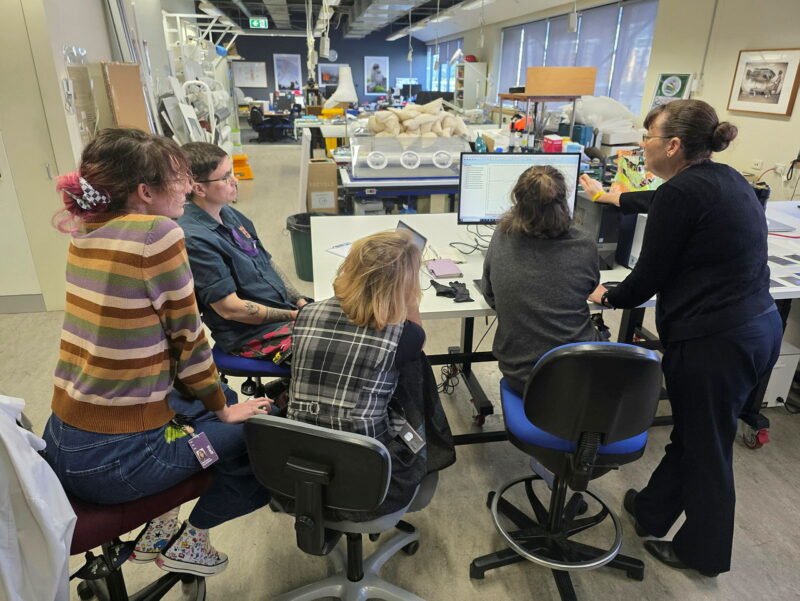
Dr. Elizabeth Carter showing ANMM conservators the set up and analysis of materials using an FT-IR NIR spectrometer. Image courtesy of ANMM Conservation team.
Tasman light lens and pedestal – It was annual maintenance day for our 1905 Tasman light lens and pedestal. Involving most of the conservation team, the job required scissor-lift access, toolbox talks, hazardous materials management and good old elbow grease. Two teams were established to condition check and clean the interior and the exterior. The result is another sparkling year ahead for our beloved lighthouse lens.
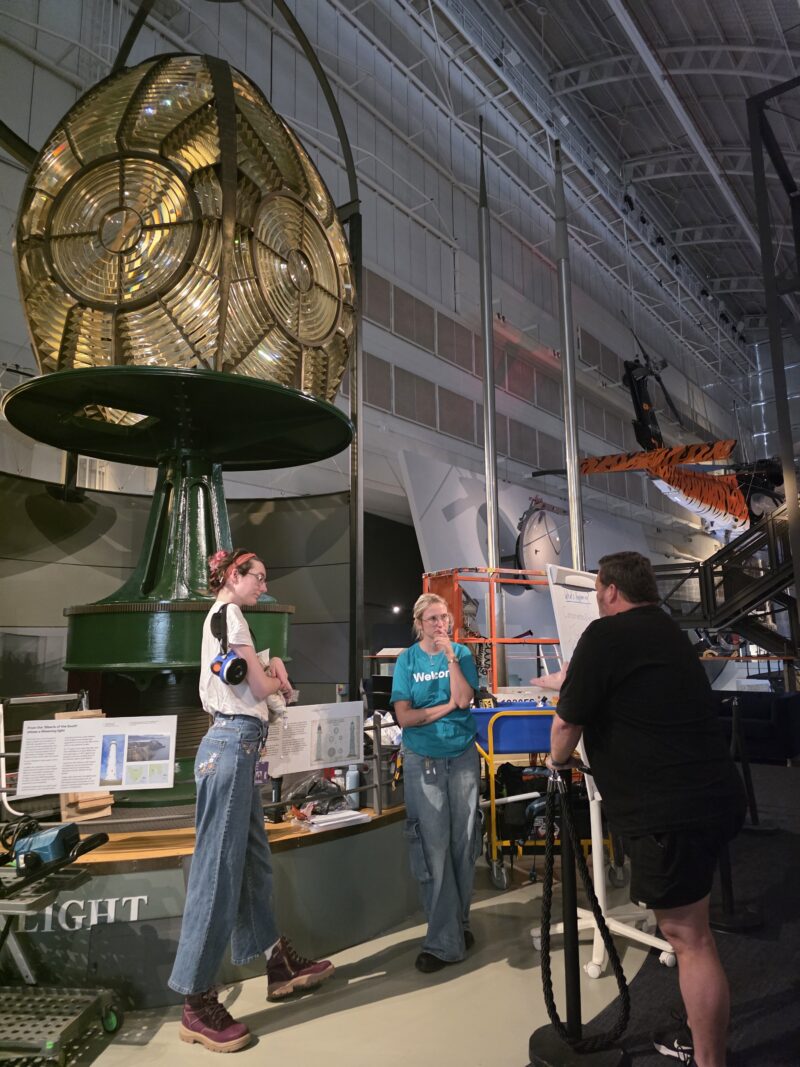
Senior Conservator Collections Jeff Fox giving a toolbox talk to assistant conservators Klem Kuligowski and Andi Macdonald.
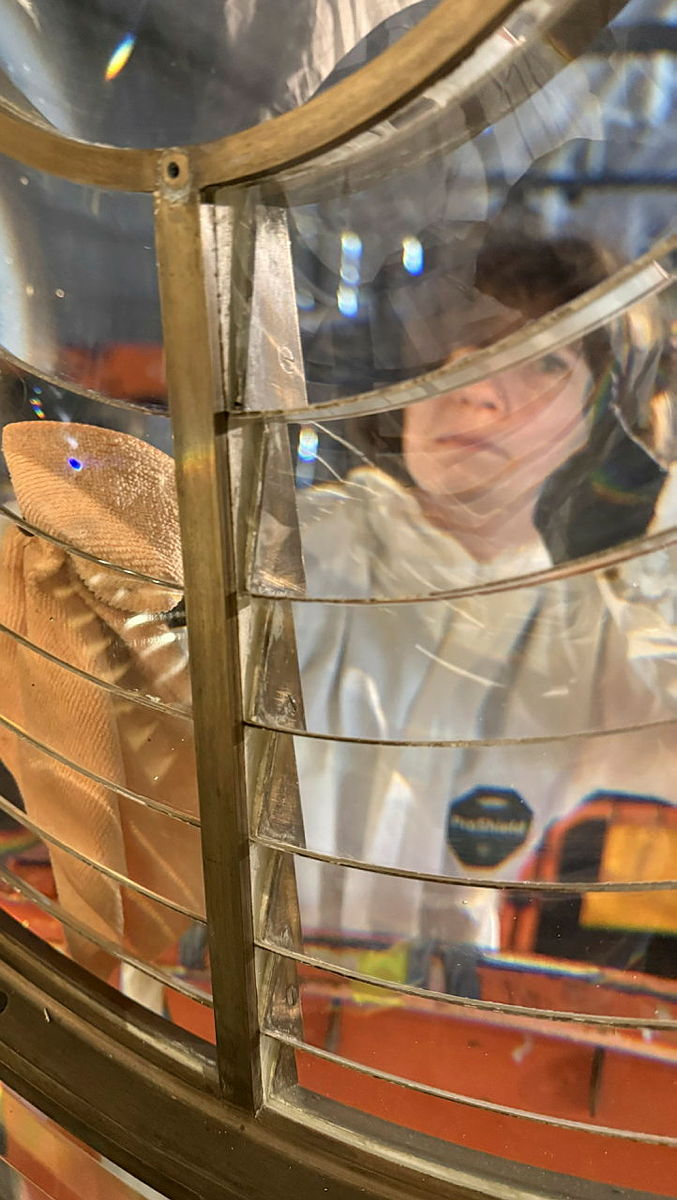
Interior ‘lens eye’ view of objects conservator Karen Wilcox cleaning the exterior glass of the Tasman light from the scissor lift. Images courtesy of ANMM Conservation team.
Exhibitions
Shaped by the Sea – As part of our regular object change-over program in the Shaped by the Sea Gallery, objects conservator Neeha Velagapudi and assistant conservator Andi Macdonald had the opportunity to display a new possum-skin cloak from the Members of the La Perouse Aboriginal Community. This required some thought around the engineering and design of the support to securely and safely hold the cloak whilst not putting pressure/tension on the pelt pieces or the stitching – at the same time revealing the traditional techniques combined with modern technology, local stories and designs that have been transferred onto the cloak, representing the Bidjigal, Dharawal and Yuin people and collected histories of La Perouse. We were thrilled with the result.
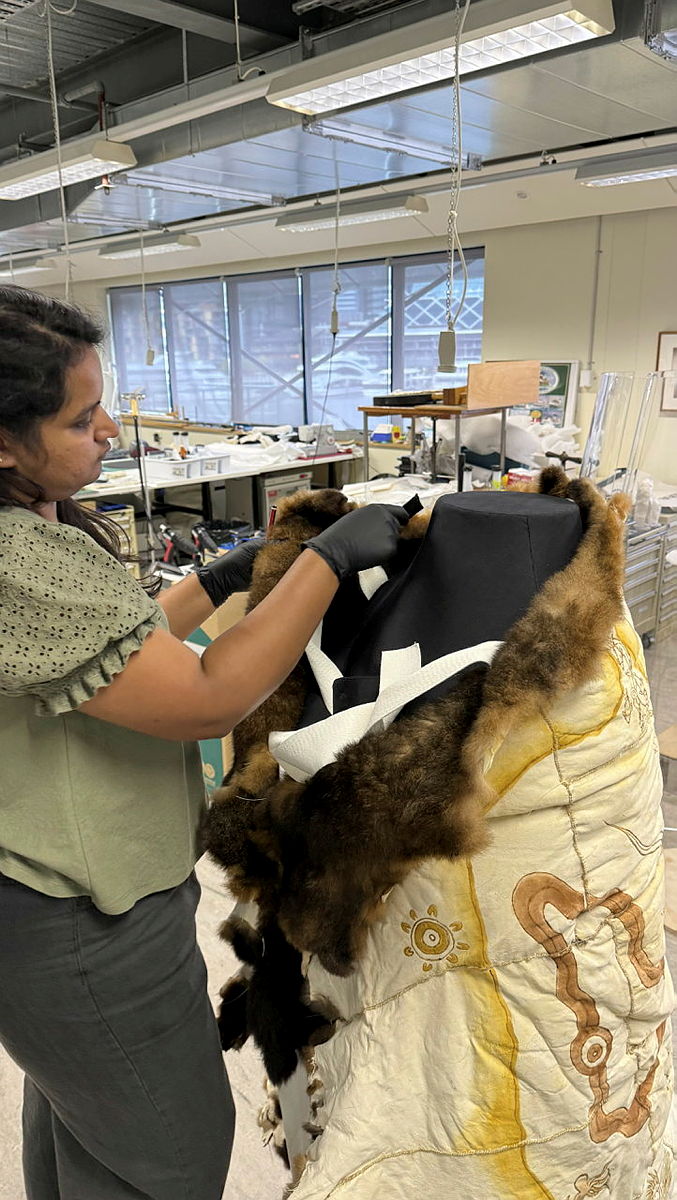
Neeha Velagapudi preparing the possum-skin cloak for display. Image courtesy of ANMM Conservation team.
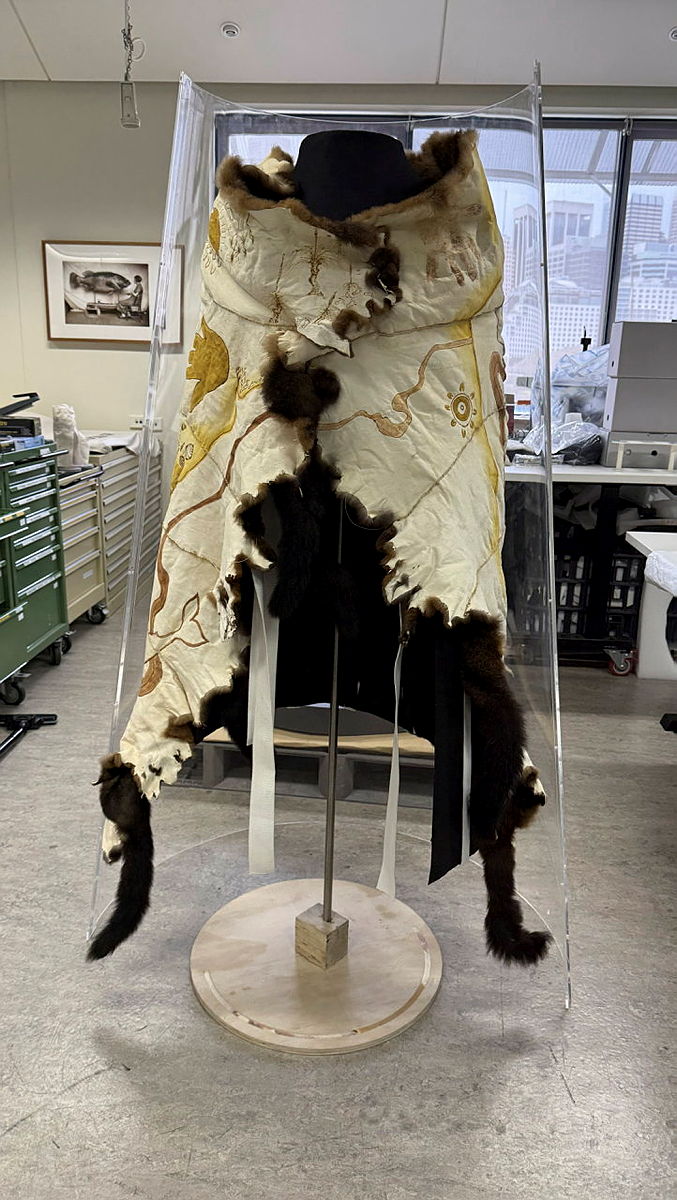
Neeha Velagapudi preparing the possum-skin cloak for display. Image courtesy of ANMM Conservation team.
New exhibitions in our galleries include the travelling show ‘Treasures of the Viking Age – The Galloway Hoard’ from National Museums Scotland; a display of artefacts and oral histories related to the Vietnamese refugee vessel TỰ DO, titled Voyage to Freedom; and rare manuscript material and artefacts from early European voyages recently donated by John and Jacqui Mullen.
To comply with the strict loan requirements for National Museums Scotland, Amy Heffernan (Acting Senior Conservator Exhibitions) successfully adapted a method from CCI to test the air exchange rates of our existing showcases.
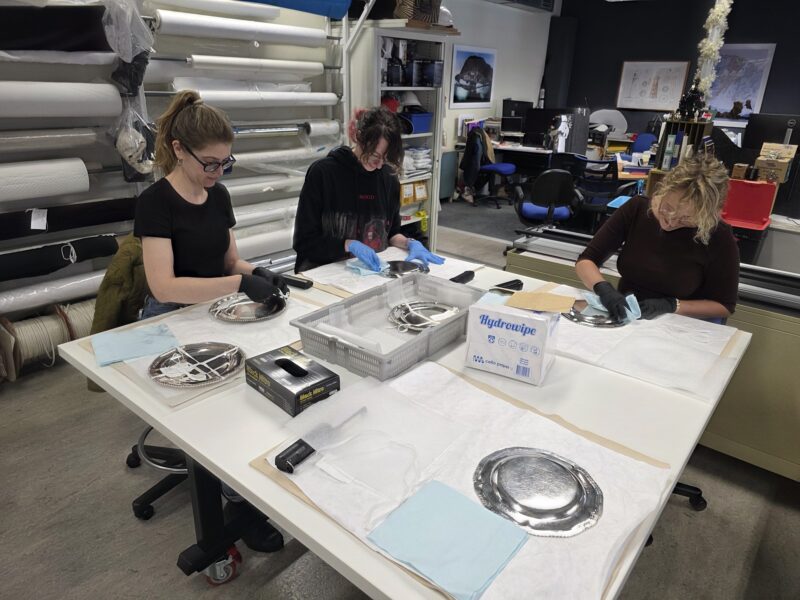
The team preparing collection items for display in the exhibition: John and Jacqui Mullen Collection.
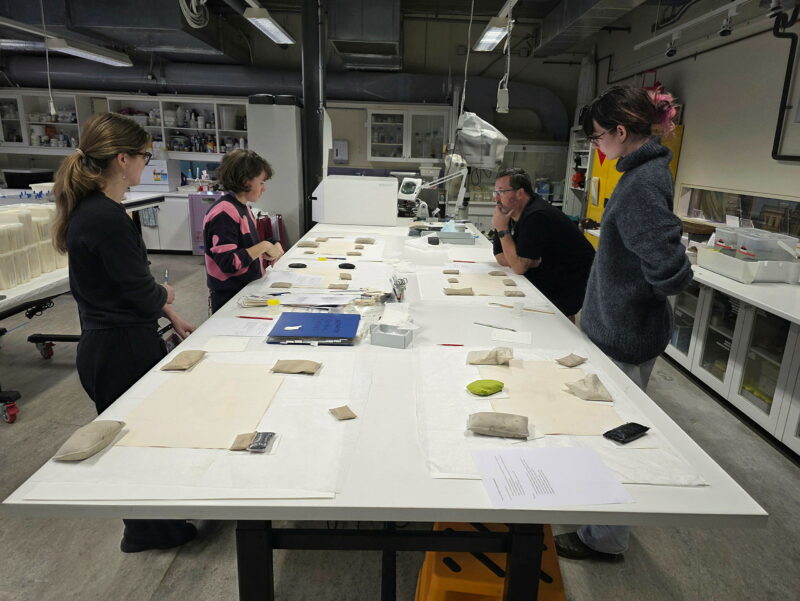
The team preparing collection items for display in the exhibition: John and Jacqui Mullen Collection.
Conference/Workshops
To complement the trial CAN analysis, Karen and Neeha presented their findings at the 2026 Sydney Analytical Vibrational Spectroscopy Symposium held at the University of Sydney. Their presentation titled ‘NIR spectroscopy for rapid, non-invasive analysis of cellolose nitrate and cellulose acetate negatives’ was well received by spectroscopy and analytical professionals and it is hoped this collaboration can assist to pave the way for further research and application for a standardised and mobile approach.
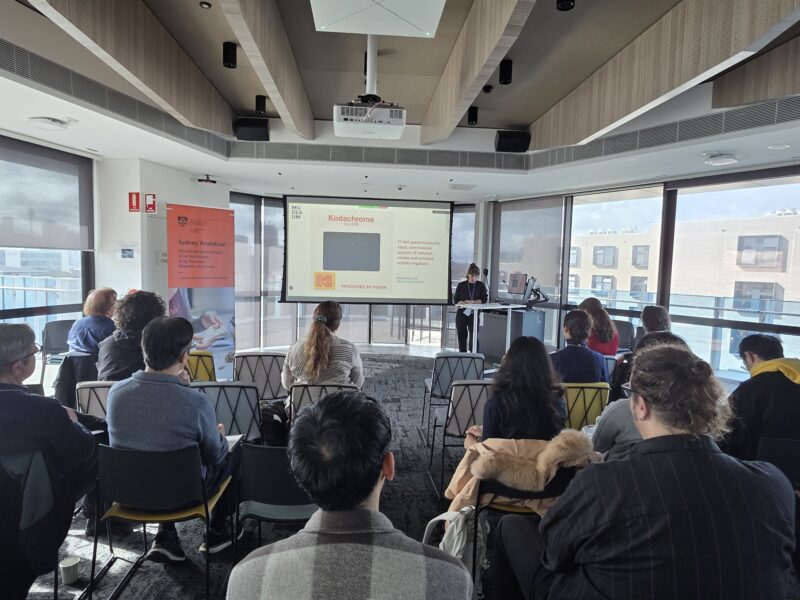
Karen Wilcox presenting at the Sydney Analytical Vibrational Spectroscopy Symposium 2026. Image courtesy of ANMM Conservation team.
Assistant conservator Andi Macdonald attended a 6-day intensive course at the A3TEX Research Centre at Sapienza University in Rome. The course focused on archaeometry, conservation and digitisation practices for archaeological textiles, covering techniques from first excavation to analysis, treatment, documentation and display, and including hands-on training in weaving techniques from traditional artisans.
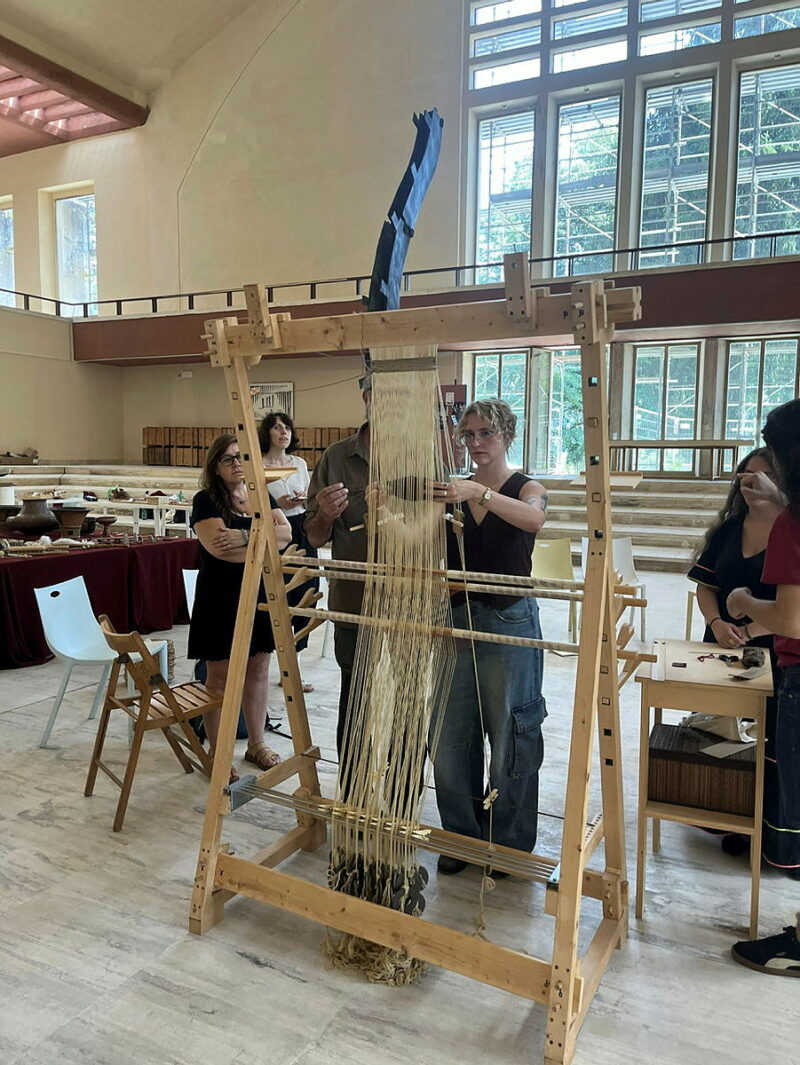
Assistant conservator Andi Macdonald getting a hands-on experience in weaving.
Awards
National Trust NSW Heritage Awards – May 2026
Julian Bickersteth AO and the conservation team behind our nominated projects attended the National Trust NSW Heritage Awards ceremony in Pyrmont in May.
ICS is pleased to share that three submissions made it to the podium:
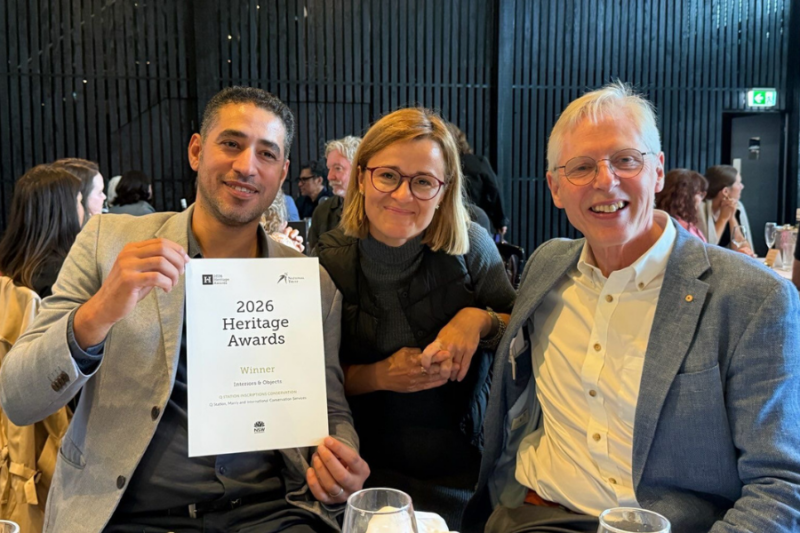
L–R, Dr Shrief Eissa, Alis Jitarescu, Julian Bickersteth AO.
1. Winner of the Objects and Interiors category
Q Station Inscriptions Conservation, Manly – entered by Q Station and International Conservation Services: https://lnkd.in/eVkqa2VC
Dr Shrief Eissa, Senior Objects Conservator, led a team undertaking long-term conservation treatment of sandstone inscriptions at the Q Station site within Sydney Harbour National Park.
These inscriptions are significant cultural records commemorating individuals who experienced quarantine at the site. Multilingual in nature – encompassing English, Chinese, Greek and Arabic – they provide a rare insight into early settler experiences and the social and public health impacts of disease.
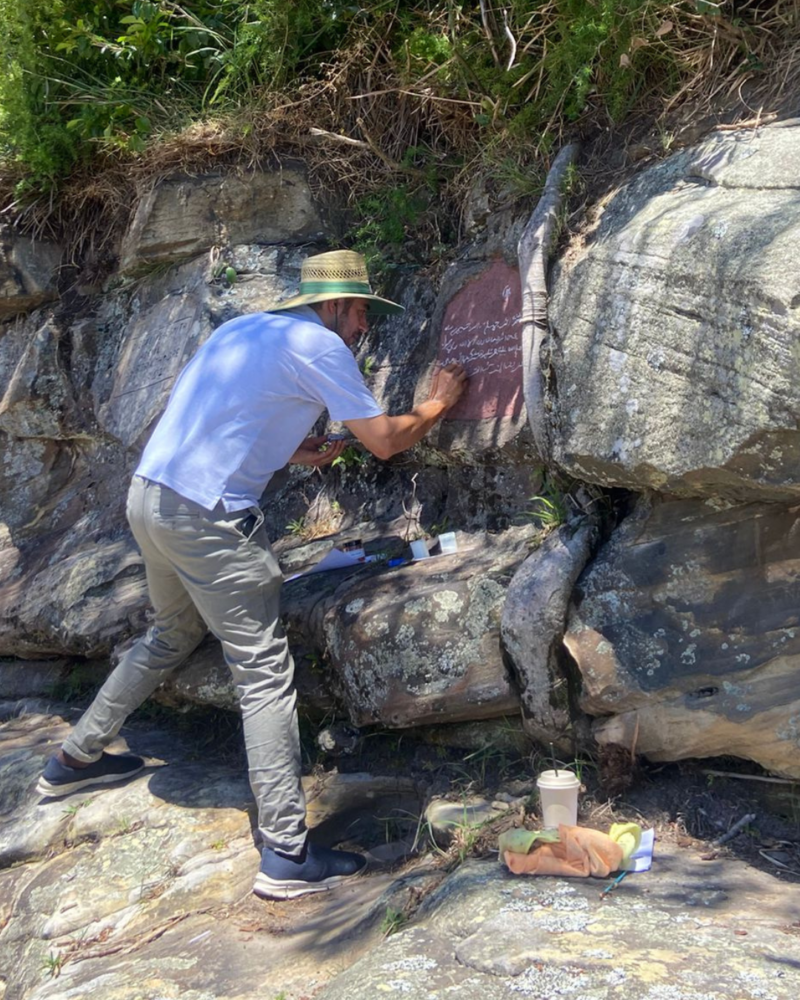
Dr Shrief Eissa at Q Station.
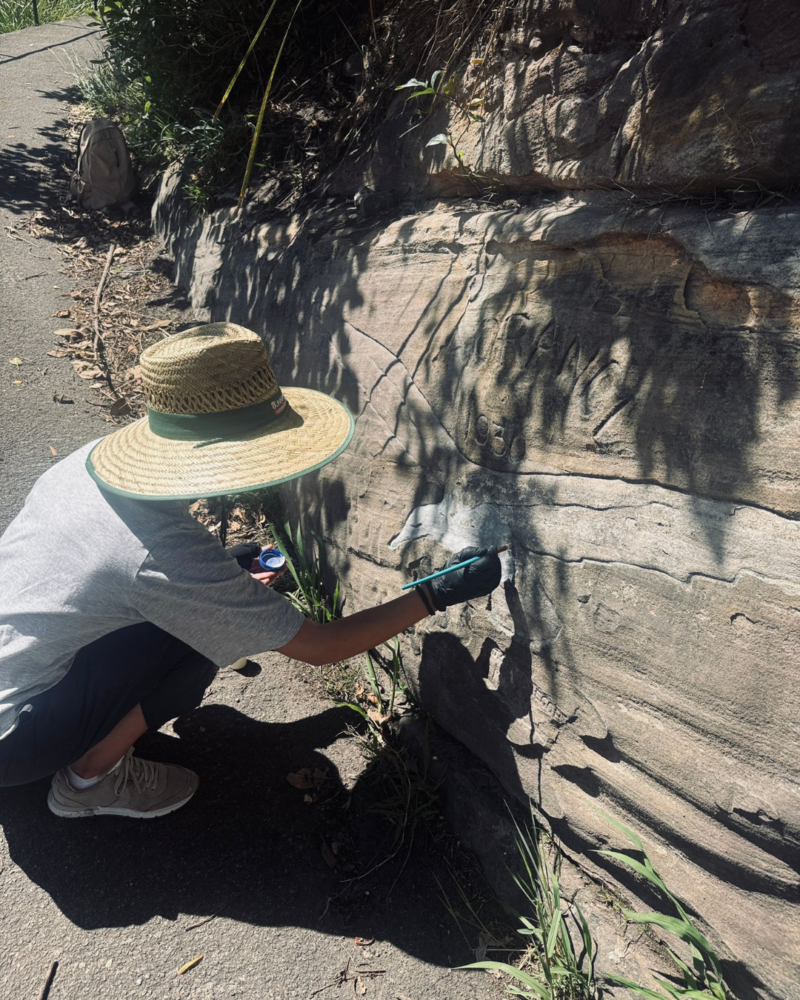
Inpainting the AORANGI bird.
2. Highly commended in the Objects and Interiors category
The Chinatown Ceremonial Gates, Haymarket – entered by City of Sydney: https://lnkd.in/e_vbx2vm
The ICS Objects, Outdoor & Built Heritage team collaborated with the City of Sydney on the revitalisation of Haymarket and Chinatown. Working alongside GML Heritage and Henry Tsang OAM of Tsang & Lee Architects, the team played a key role in the conservation and renewal of the Chinatown Gates.
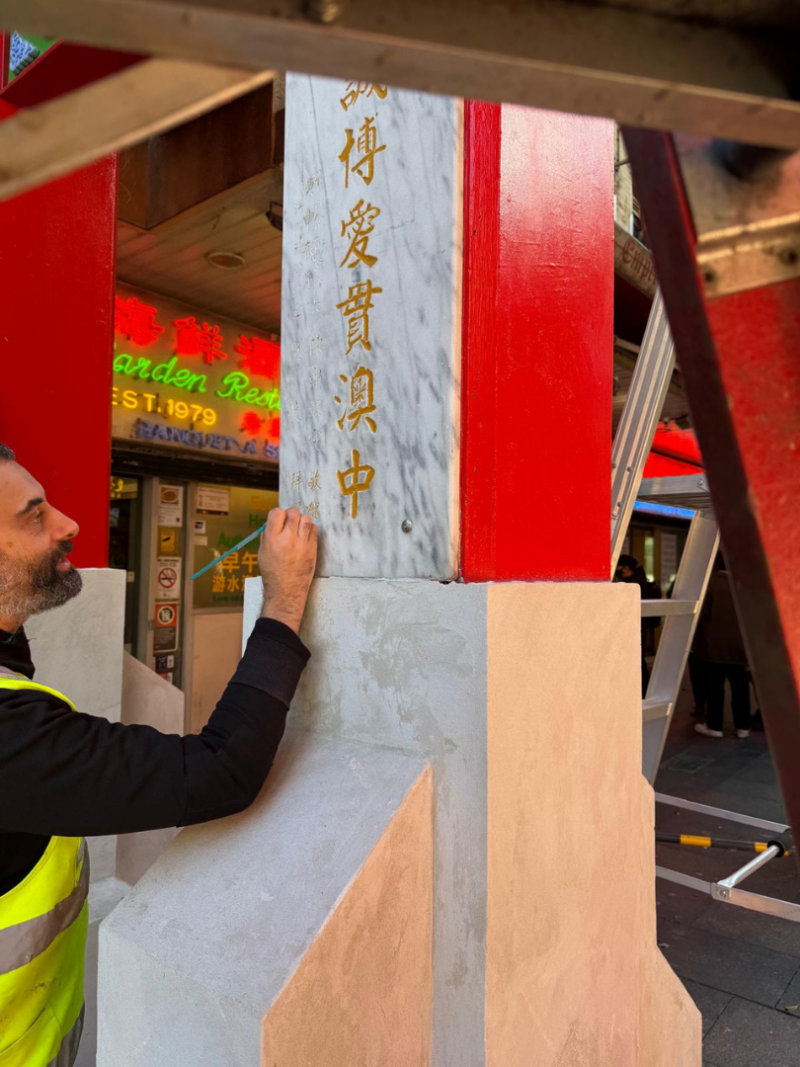
Inpainting the ceremonial gate inscriptions.
3. Architecture Award Winner
The Lands by Capella – entered by Hassell in collaboration with Purcell Architecture. This adaptive reuse project in the heart of Sydney’s CBD was the result of many minds and many hands coming together. ICS contributed through paint analysis to determine historic paint schemes, along with assessments of internal finishes, helping inform and support the broader conservation and restoration process.
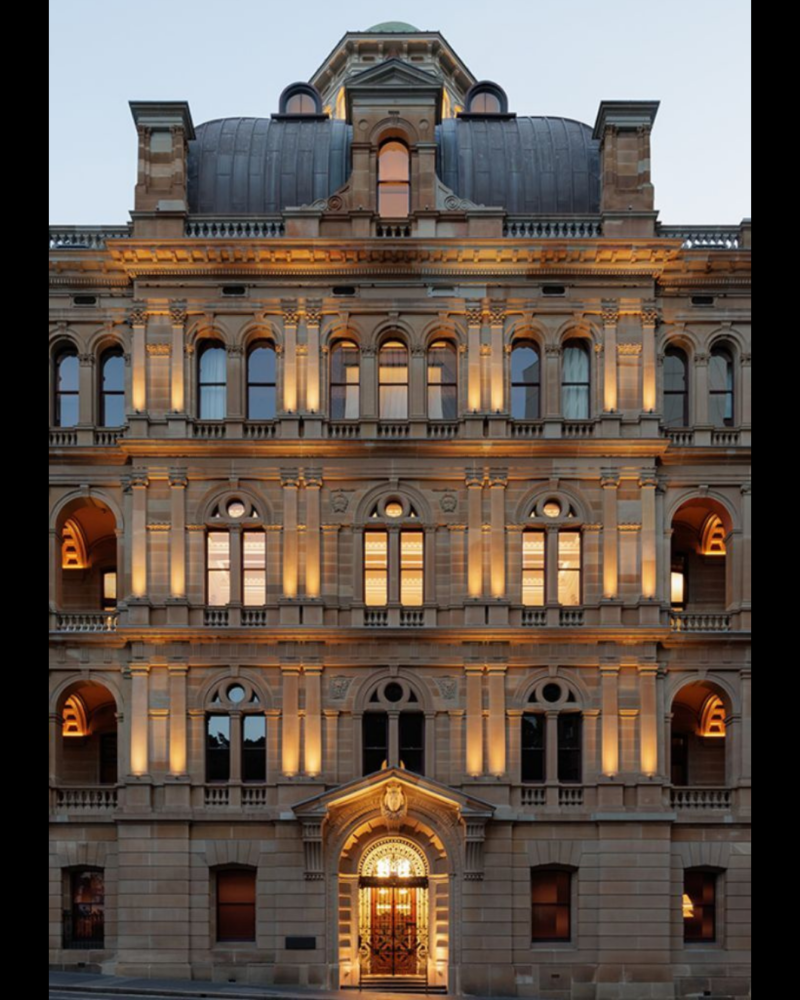
The Lands by Capella.
Paintings
The Legation, Sanqua painting
As part of the National Trust NSW Appeal, the Paintings Conservation team, led by Matteo Volonté, Head of Paintings Conservation, conserved five paintings by Sanqua of Canton (Guangzhou) from the collection of Bedervale Historic Homestead, Braidwood, NSW.
One of these works, ‘The Legation’, depicts the Hongs of Canton and was most likely commissioned by Captain John Coghill. The painting portrays scenes from the mid-1830s, capturing familiar views of the foreign trading warehouses in Canton before the First Opium War (1839–1842).
Paintings Conservator Francesca Elia undertook the conservation treatment of ‘The Legation’, achieving outstanding results that have restored the painting’s visual impact.
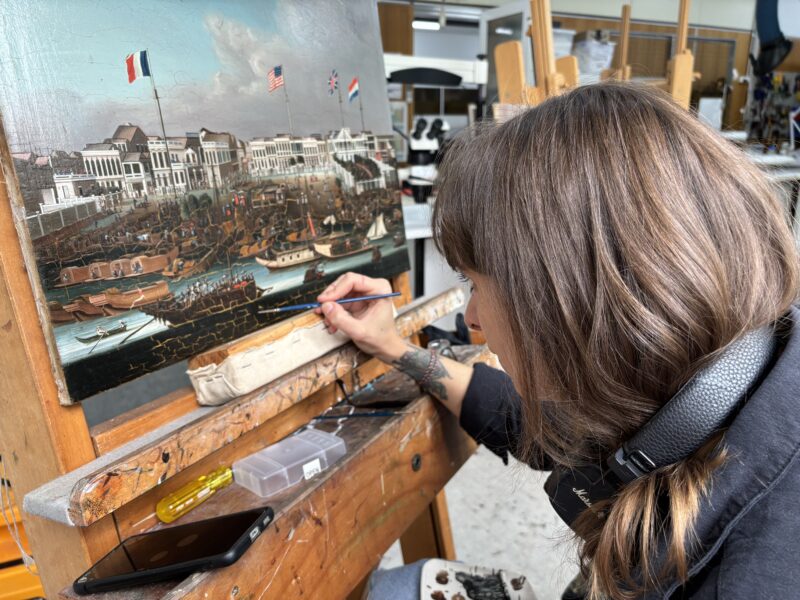
Francesca Elia with the painting during conservation.
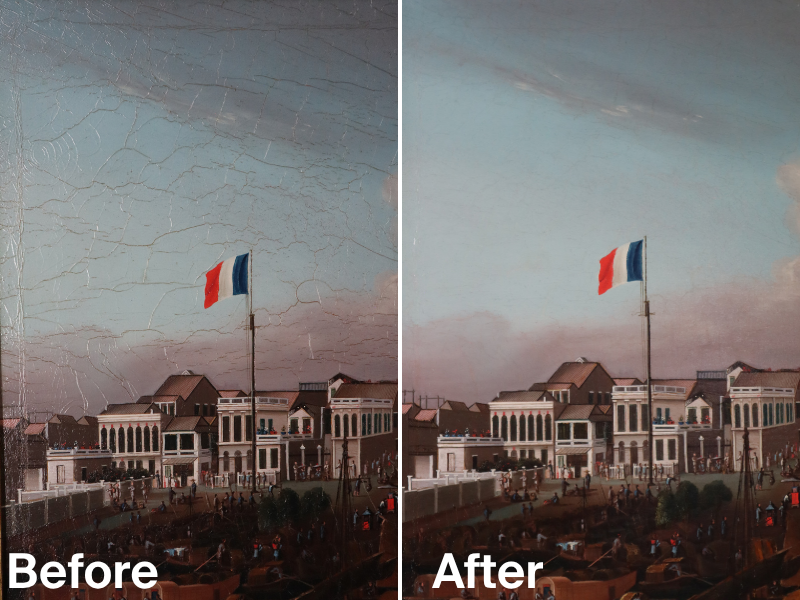
Painting before and after treatment.
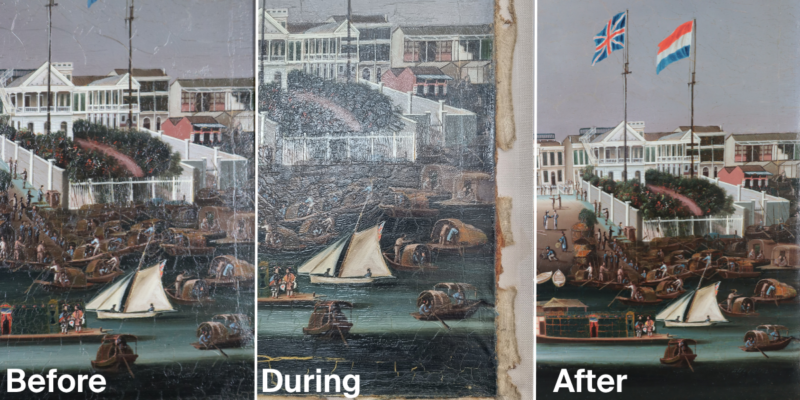
Painting before, during and after treatment.
Paper
Fans, Wind and Waves
Jennifer Walker, Senior Paper Conservator and specialist in East Asian scrolls and screens, conserved the two-fold screen ‘Fans, Wind and Waves’. The paper hinges had cracked, torn and become extremely brittle with previous adhesive and thick paper repairs. In this case, local repairs couldn’t strengthen compromised hinges, and no image remained on any of the hinge papers. The old hinges were removed and new strong paper hinges were entirely rebuilt. Once the treatment was successfully completed, the screen was able to stand on its own accordion fold once more.
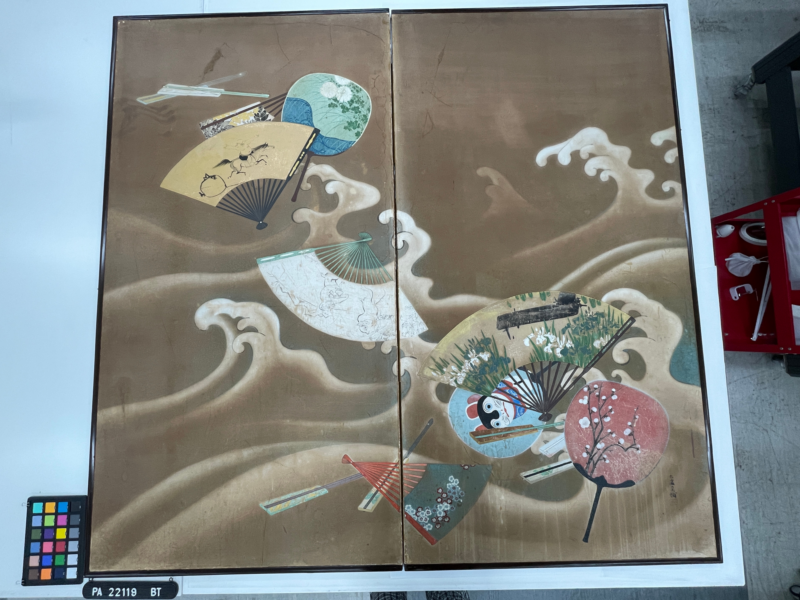
Screen before treatment.
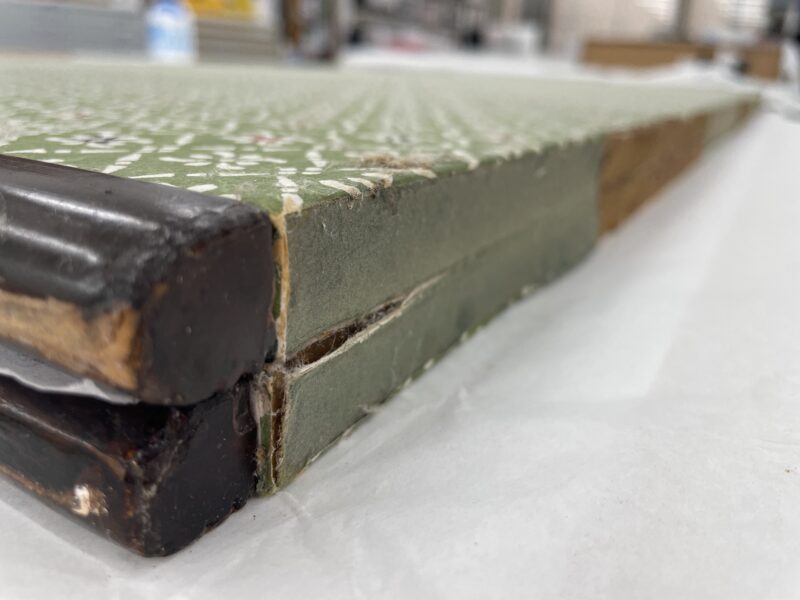
Screen before treatment.
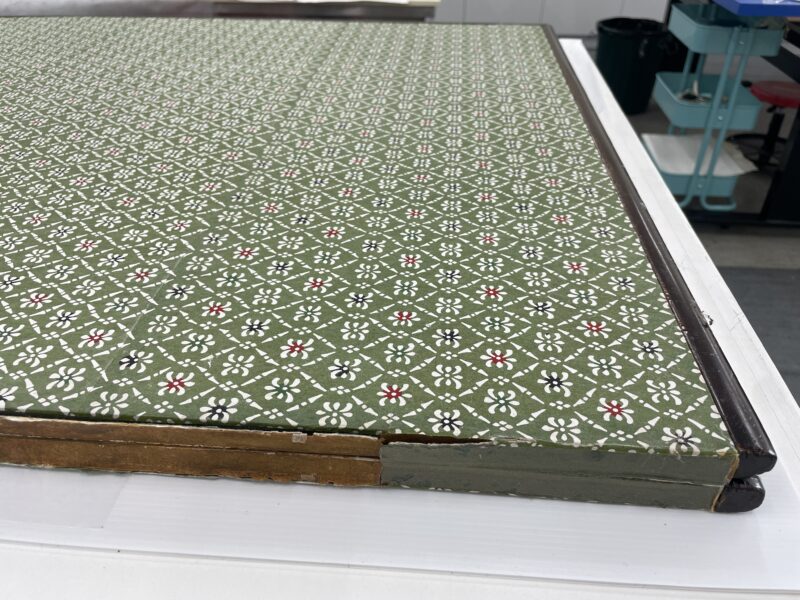
Screen before treatment.
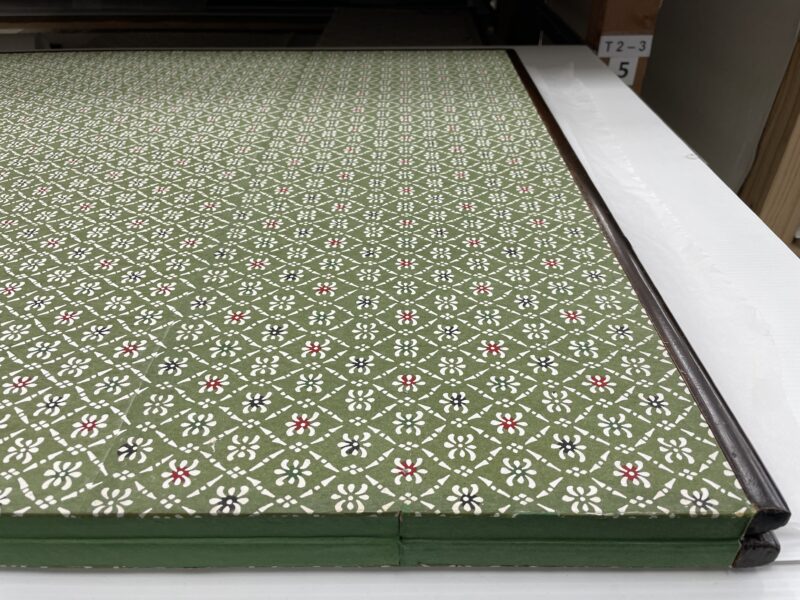
After hinge renewal treatment.
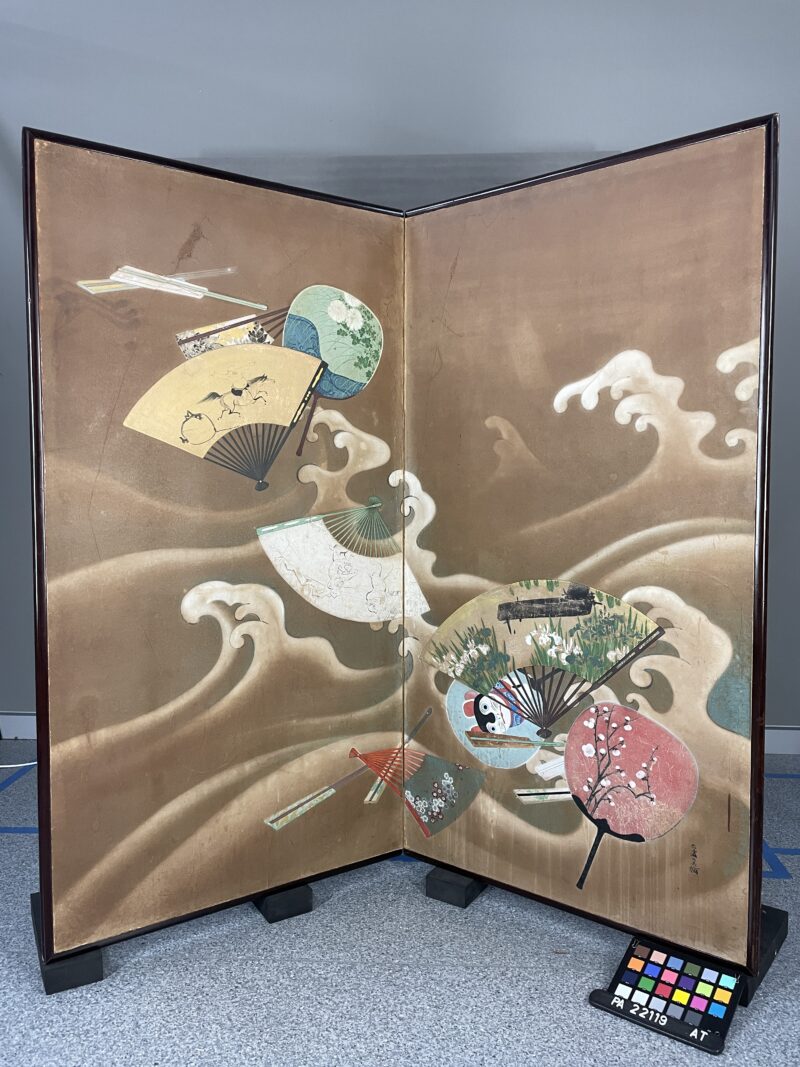
Standing on its own after treatment.
Objects, Outdoor& Built Heritage
The ARC Thomas Clock, Parramatta
Keir Bayley, Principal Conservator of Metals, restored the iconic ARC Thomas Clock for Parramatta Square.
The clock was purchased in April 1985 by local businessman ARC Thomas as a gift to the people of Parramatta. Following the extensive redevelopment of Parramatta Square between 2016 and 2022, the clock was carefully removed and placed into storage for safekeeping.
Working closely with City of Parramatta Council, Keir led the conservation and reinstatement of this much-loved landmark.
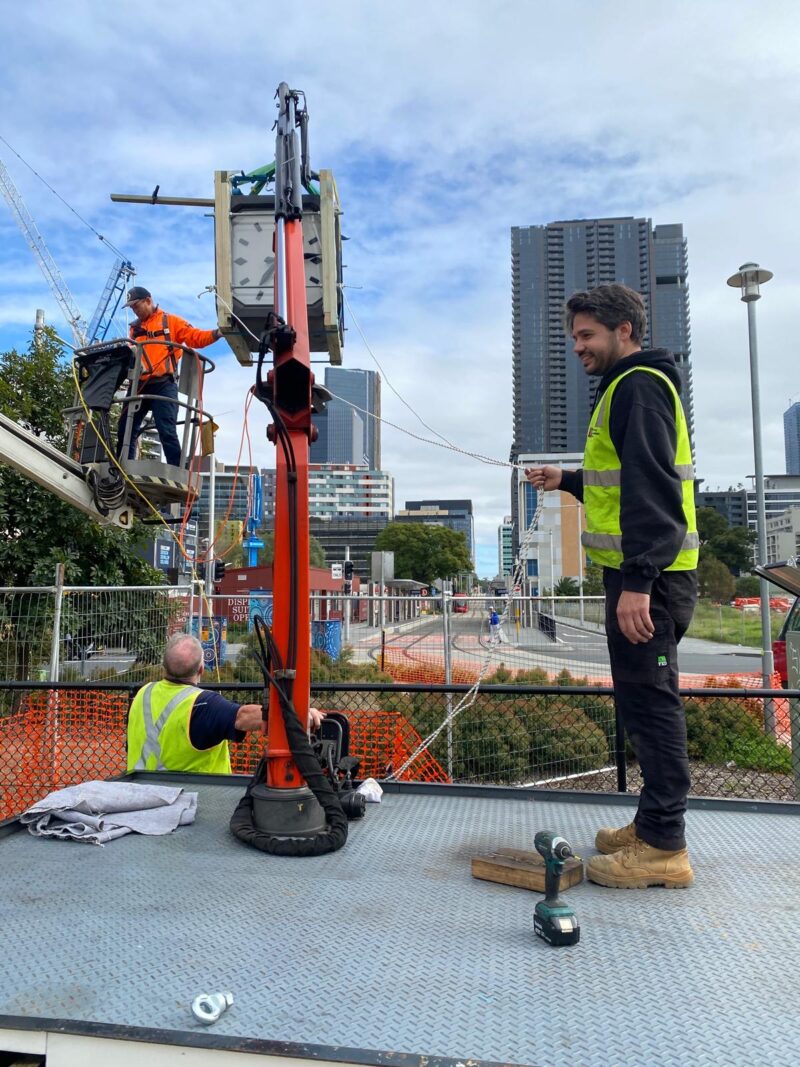
Keir Bayley looking on at reinstallation of clock.
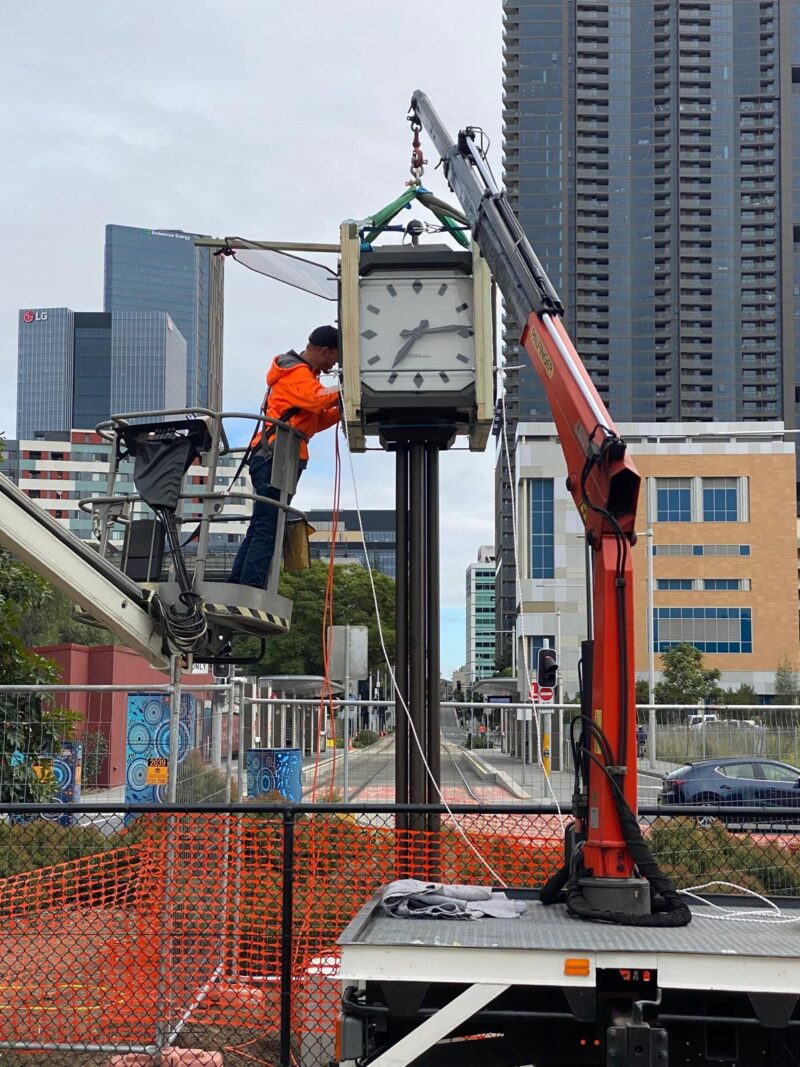
Nearing completion.
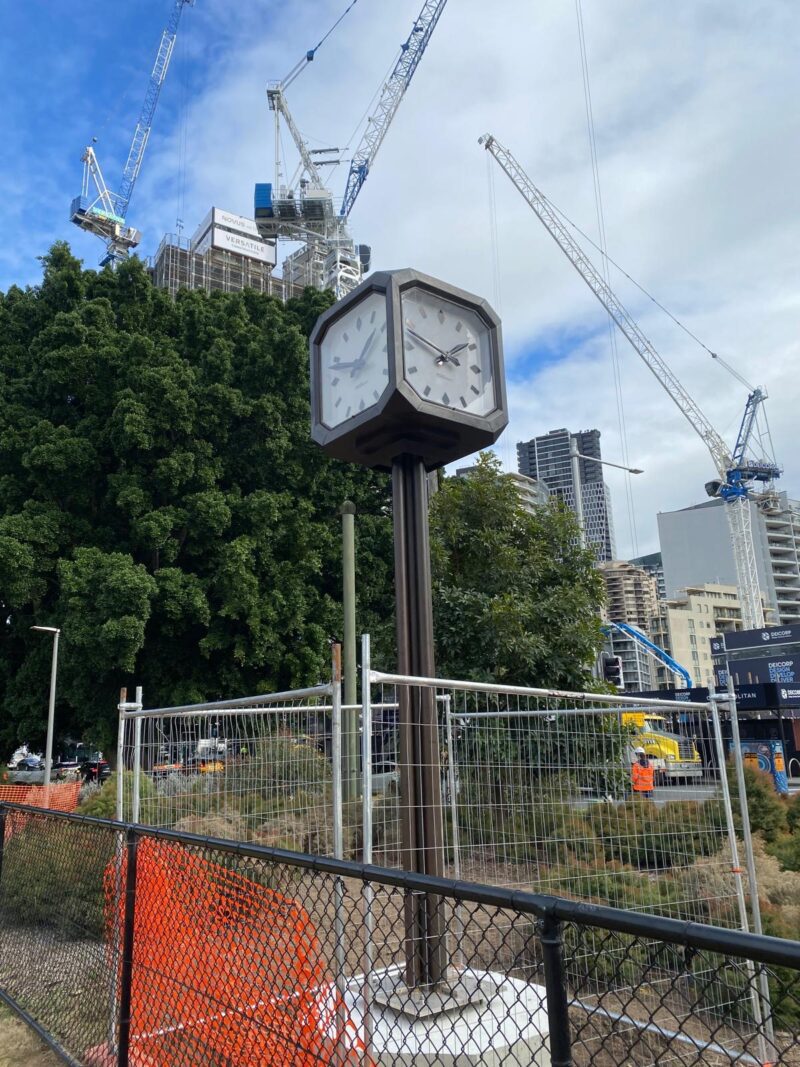
The iconic clock reinstalled.
We are pleased to announce the expansion of the O’Sullivan Conservation team with the appointment of two new Assistant Conservators, Jessica Chandy and Simone Brown. Both Jessica and Simone are recent graduates from the University of Melbourne’s Master of Cultural Materials Conservation. They bring enthusiasm, fresh perspectives, and a strong foundation in conservation practice to the organisation. As our organisation continues to grow, these appointments will further enhance our capacity to deliver high-quality conservation services.
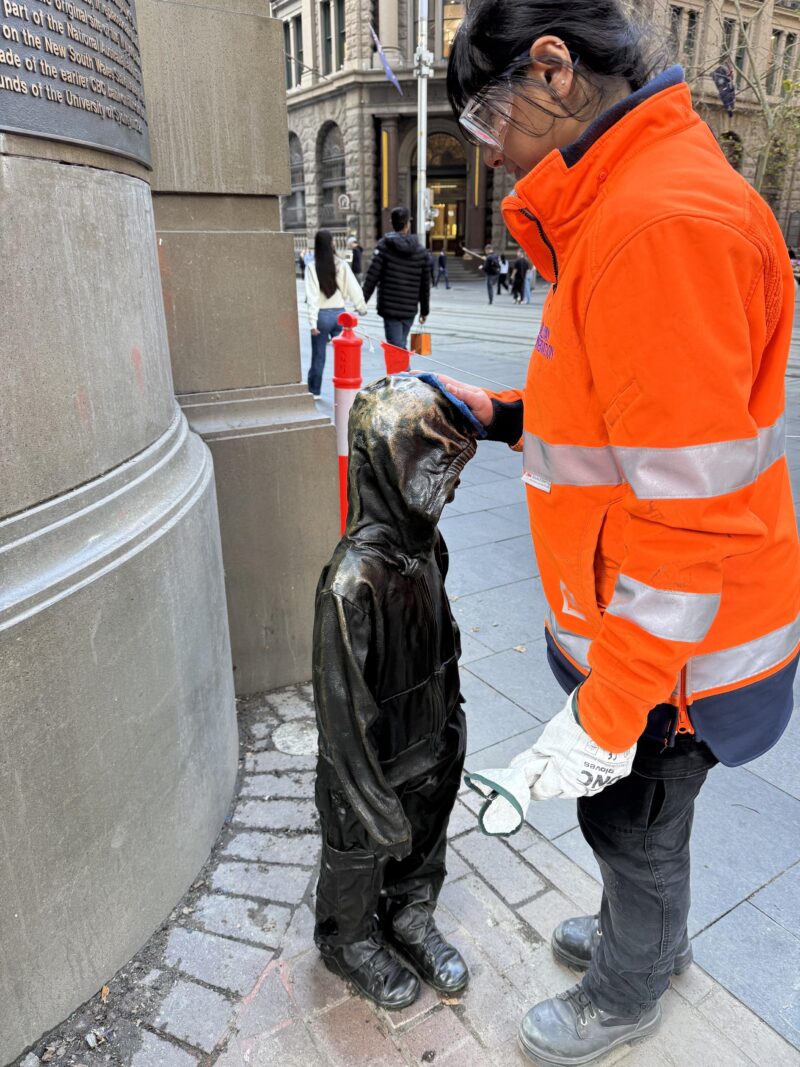
Jess on site, ‘Youngsters’, Caroline Rothwell, 2012.
In March, our contract manager, Hannah, travelled to the UNESCO World Heritage city of George Town, Penang. There she met with Chris Ong of George Town Heritage Hotels and representatives from the Department of Built Environment and Management (BEAM), George Town World Heritage Incorporated, to learn about heritage and public art conservation techniques in a tropical, high-humidity environment, with increasingly frequent flooding.
The visit provided valuable insights into collections care, public art management and heritage planning, including strategies for addressing the impacts of climate change and rising sea levels. It was an excellent opportunity to exchange ideas and gain a broader perspective on the challenges and opportunities facing conservation internationally.
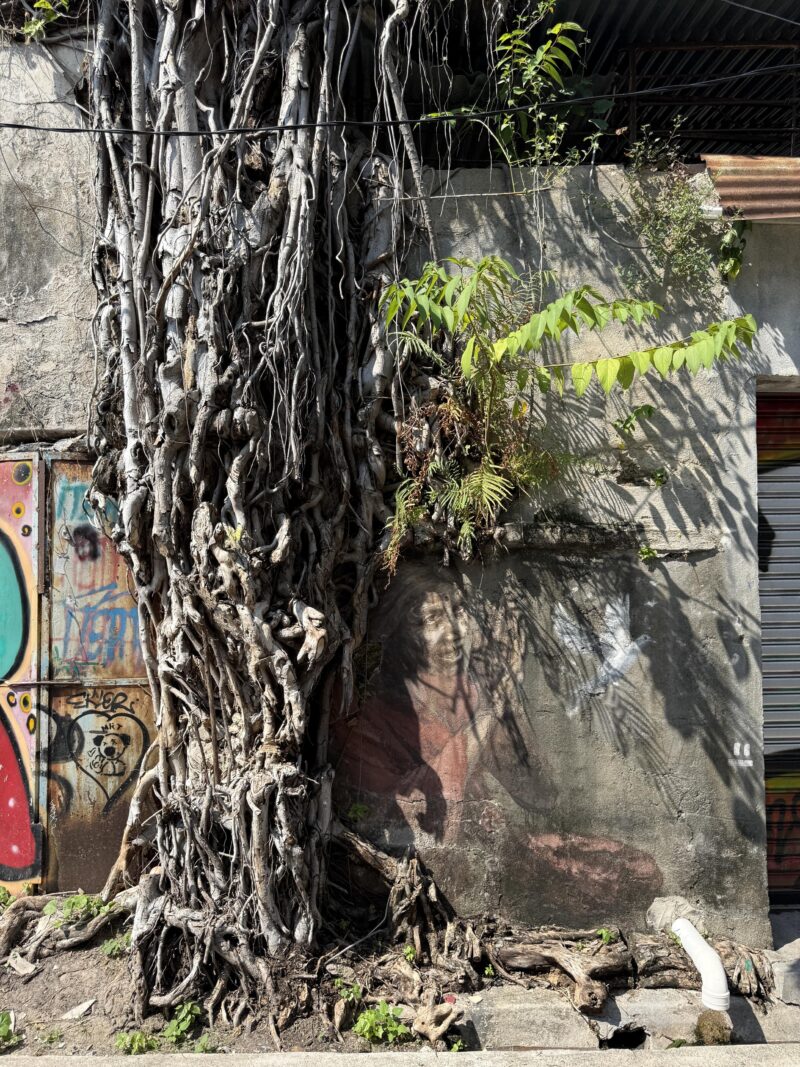
‘Old Indian Woman’, Julia Volchkova, 2015, Lumut Lane, George Town.
In April, Director Eoin O Súilleabháin attended the Getty Conservation Institute workshop Treatment strategies for painted outdoor sculpture in Melbourne, delivered in partnership with the National Gallery of Victoria. The practical and informative course provided valuable opportunities to engage with both local and international conservation professionals. It reinforced and expanded Eoin’s understanding of conservation approaches for painted outdoor sculpture, while also offering insights from conservators working across private practice and institutional settings worldwide.
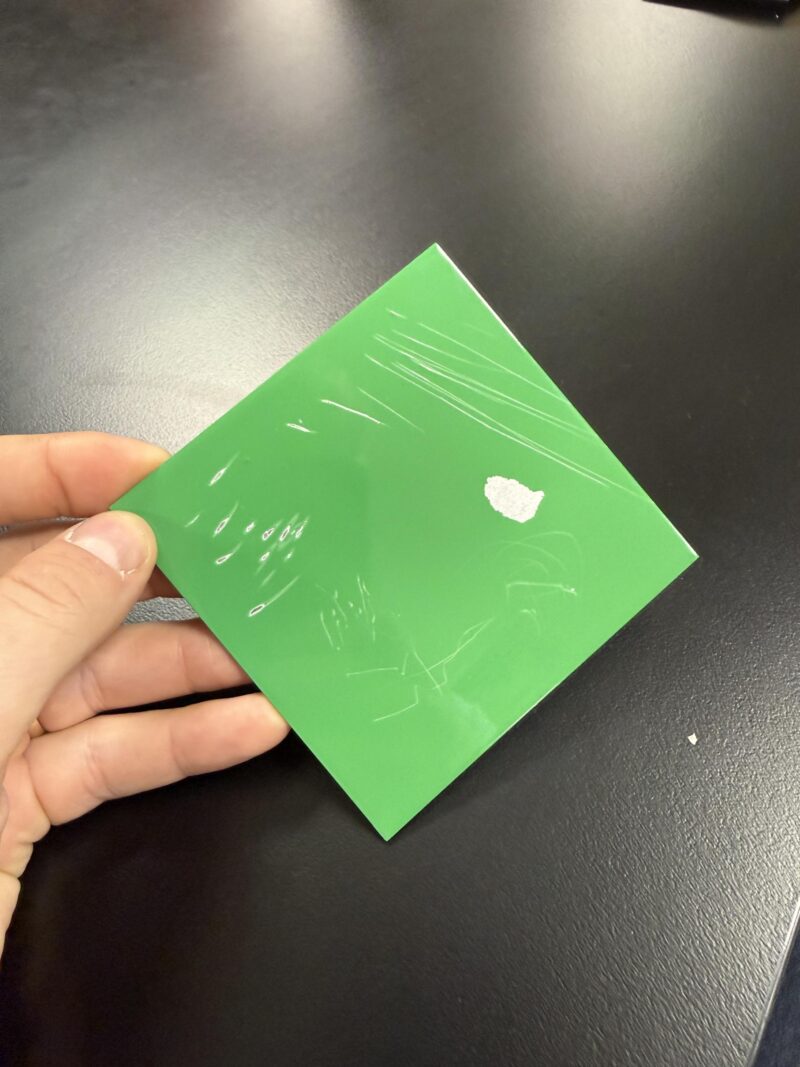
Different types of damage to a protective coating, used as part of a hands-on inpainting exercise.
Treatment projects
Seafarers’ Memorial Anchors, ANMM
In April, we undertook an outdoor conservation maintenance project at the Australian National Maritime Museum. The project involved a conservation treatment of the museum’s two memorial anchors, including removal of flaking paint, treatment of corrosion, and localised application of a new protective coating system to help safeguard the metalwork from ongoing deterioration.
Conservation work was also undertaken on the timber stocks, which were carefully cleaned before receiving an oil-based wood stabiliser to improve their condition and long-term durability. Additional treatment was carried out on the memorial base, commemorative plaques, and the custom compass feature, which form an important part of the memorial.
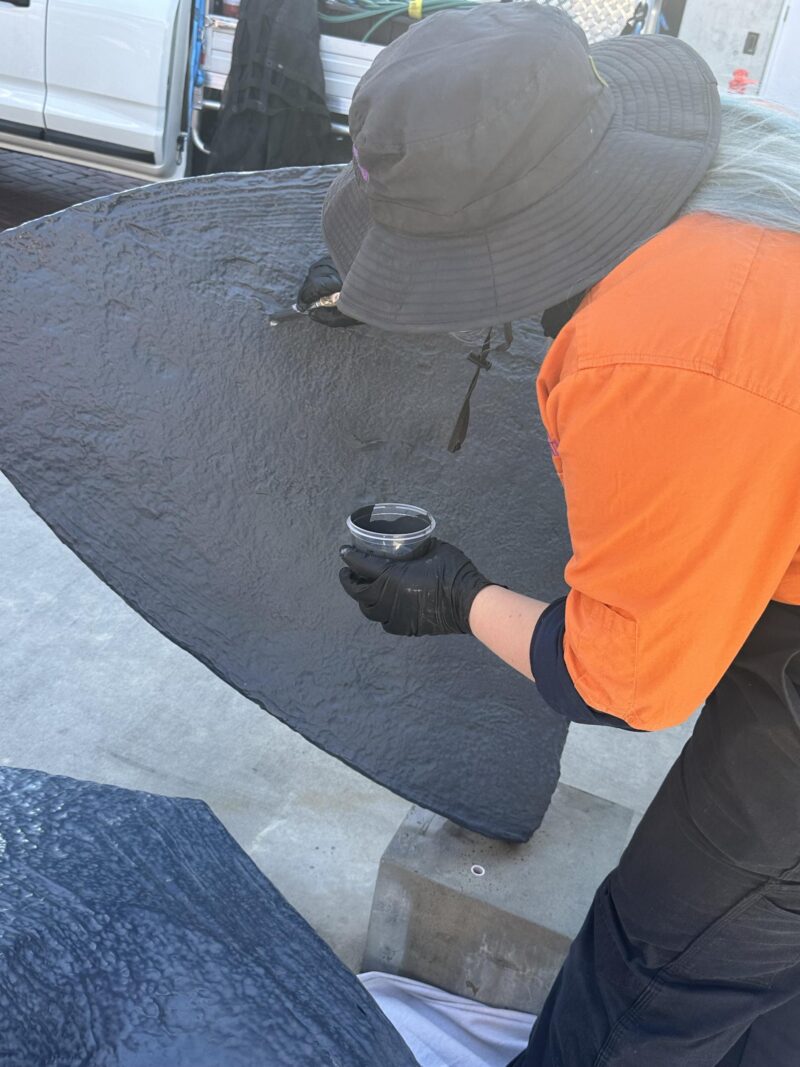
Simone undertaking treatment of the anchors.
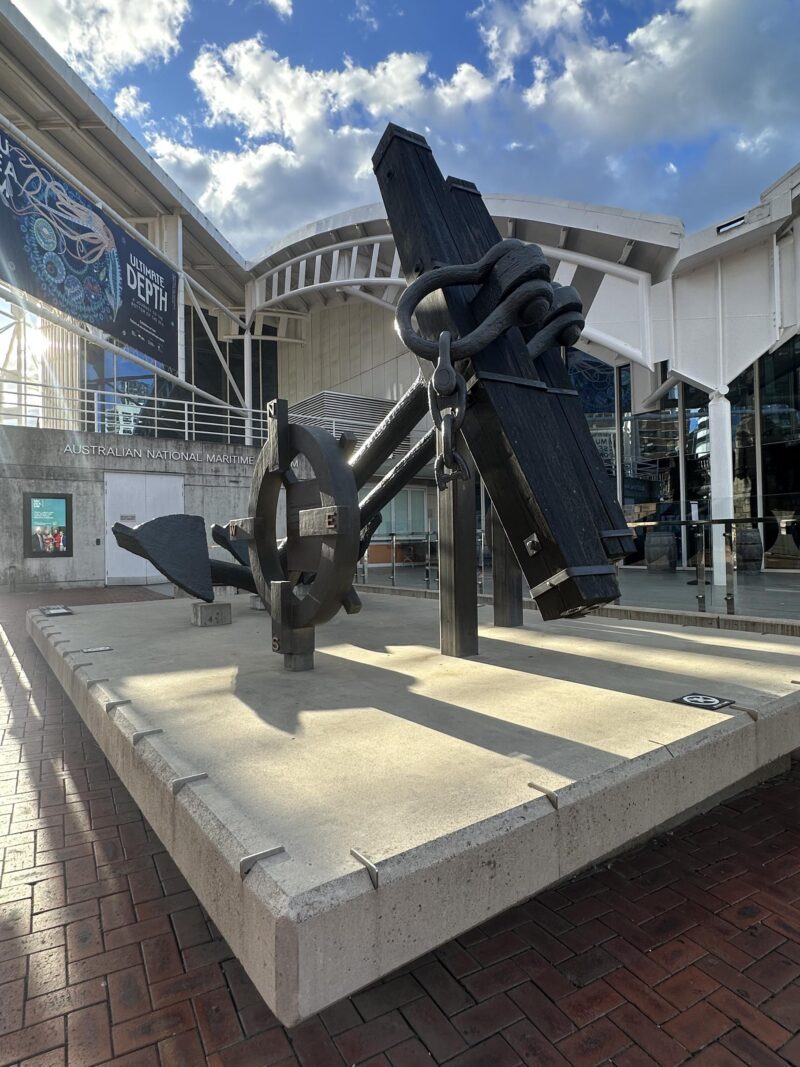
The Seafarers’ Memorial Anchors following conservation treatment.
Dubbo War Memorial
During autumn, O’Sullivan Conservation travelled extensively throughout New South Wales, particularly in the Central West. In March we undertook a condition assessment of the Dubbo War Memorial. The assessment was carried out in conjunction with a structural engineering investigation, with the combined findings providing a comprehensive understanding of the memorial’s current condition and the scope of works required to ensure its long-term preservation and structural stability.
These projects provide opportunities to visit and work within some of the state’s most significant historic centres.
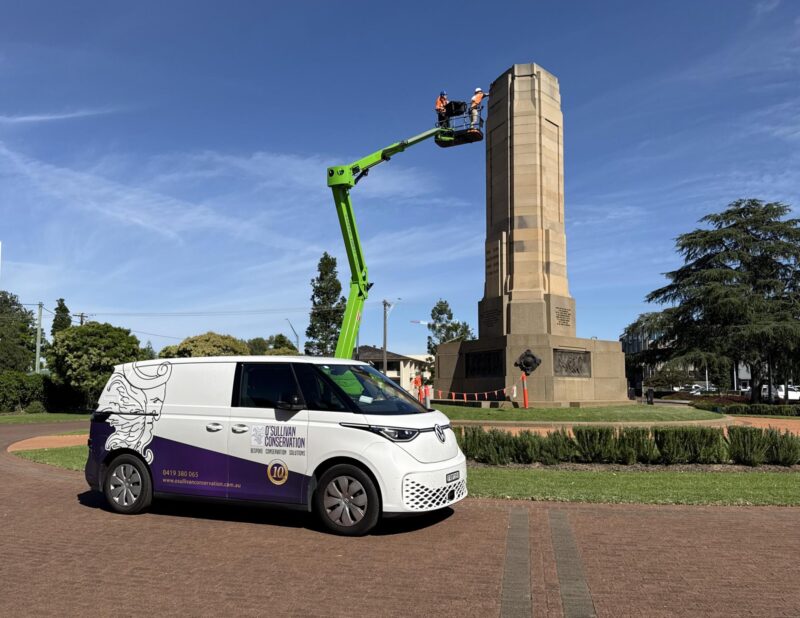
Eoin O Súilleabháin undertaking the at-height condition assessment.
Woodstock Roll of Honour (The Great War 1914–1919)
Two and a half hours away from Dubbo is the historic town of Woodstock where we were engaged to undertake a conservation treatment to their WWI honour roll. As a valued piece of local commemorative heritage, the honour roll required careful removal and transport back to our studio where it could be given a thorough treatment ready for the ANZAC Day memorial service.
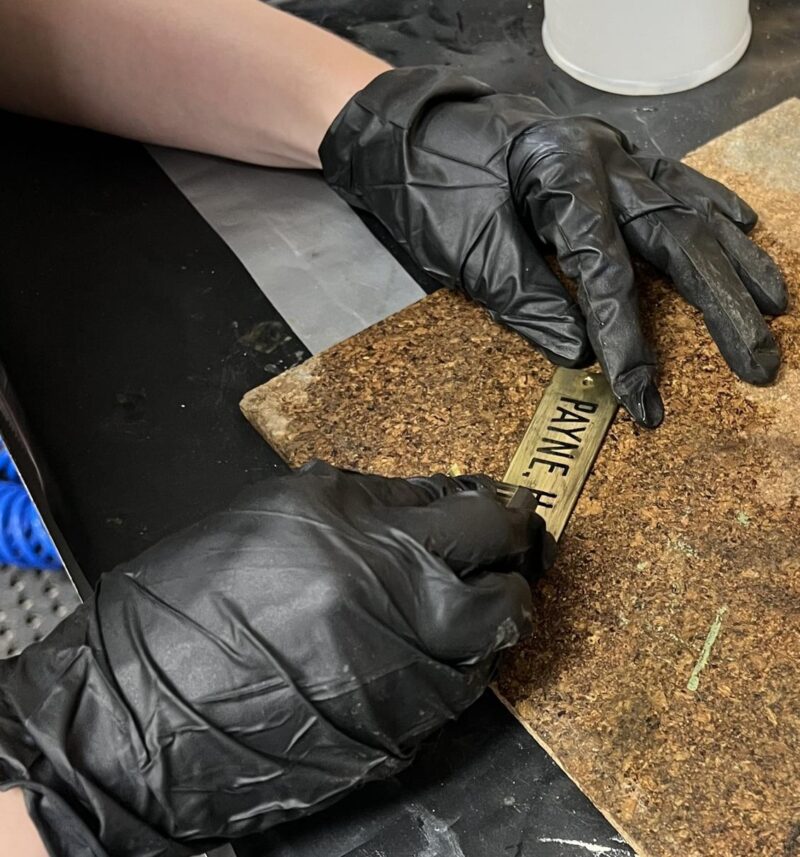
Team members undertake conservation treatments to the individual plaques.
George Street – built heritage
Back in Sydney, works continued on a built heritage project at 343 George Street, with the team completing conservation works on the copper alloy windows and doors and timber components of the windows, as well as structural repairs to the windows. Works also included regilding of the incised lettering on the George Street façade.
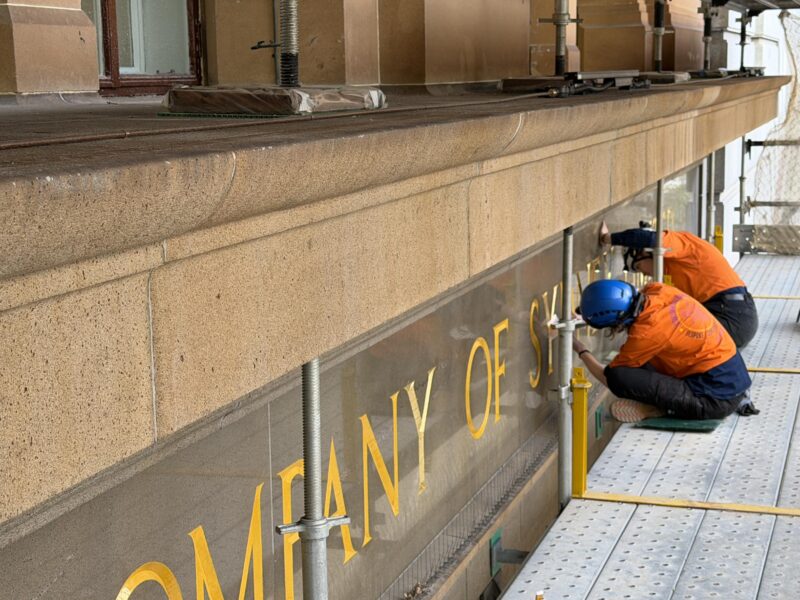
Simone and Stacey undertaking regilding work at 343 George Street, Sydney.