Heritage Conservation Lab, University of Canberra
Another year rolls by at the Heritage Conservation Lab at the University of Canberra. And another batch of students are immersing themselves in the ins and outs of materials conservation and collection care. This semester the students are looking at materials and how they react and deteriorate in their environments. They are also thinking about and exploring surface treatments on objects. Some cool objects in the lab this semester include a large batik panel with very fugitive red dye, a vintage camera, and a large Looby painting.
This semester, Macy Hampton May joins the lab as the Lab Intern helping support teaching and research and also undertaking conservation treatment and collection management of the Teaching Collection. One of her tasks is to sort out our new guest at the lab, Conservator Ken.
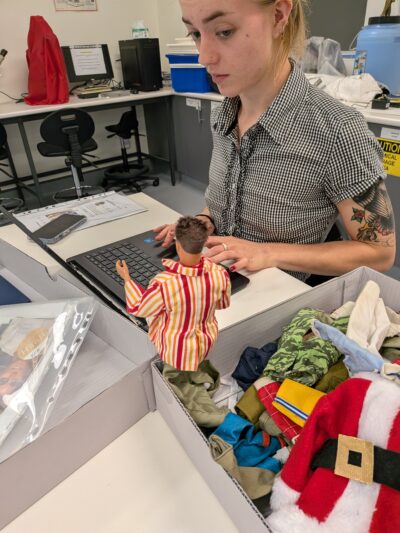
Lab Intern Macy sorting out Conservator Ken and his belongings.
Conservator Ken is AICCM ACT Division's official unofficial spokes-doll, conservator and all-round gentlemen. He is spending the year at the Heritage Conservation Lab, getting back to his roots and refreshing his bench skills with the other students. Ken will be undergoing a full condition assessment to keep his plastic fantastic self in tip-top condition. Ken has been enjoying his time in the lab, learning about humidity and pests in collections, mechanical cleaning of surfaces, and most recently how to properly wash textiles. Ken can now do his own laundry.
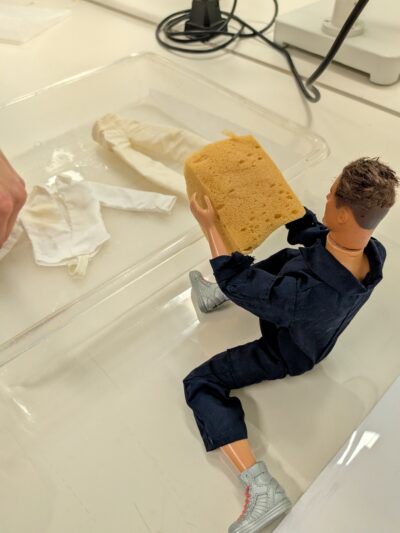
Conservator Ken can't wait to wash his grubby clothes.
Please follow Conservator Ken and what he's up to on Instagram @kenconservator
National Film and Sound Archive of Australia
Staff updates
In February, we welcomed Hernán Lopera as our new Audiovisual Conservation Coordinator. Hernán joins us after completing a Master of Cultural Materials Conservation at the University of Melbourne and brings extensive experience in the digitisation of film and printed materials, as well as over 15 years of professional practice in photography.
Conferences
On 3–4 March 2026, the NFSA hosted the 11th Joint Technical Symposium (JTS) at our Acton headquarters in Canberra. Organised by the Coordinating Council of Audiovisual Archives Associations, JTS is a major international forum for audiovisual preservation professionals, bringing together recent research, technical innovation, and developments in the care of screen and sound heritage.
This was the first time the symposium was held in the southern hemisphere, and the first in-person gathering in six years, making it a particularly significant opportunity to welcome colleagues from across Australia and overseas.
The program included presentations and networking events, with topics spanning sustainable preservation practices, audiovisual preservation environments and workflows, and connected practice across the GLAM sector.
A number of staff from the Conservation team attended, with several presenting current research:
- Daniela Matarazzo presented on the use of Deep Eutectic Solvents for the removal of degraded gelatin on cellulose nitrate film ('Between light/fire: Innovative diagnostics and green chemistry for sustainable conservation')
- Alex Vamvas and Joshua Grigg presented research on identifying hidden nitrate film within the NFSA's vaults, outlining current detection methods and deterioration patterns observed in mixed nitrate–acetate reels ('Dude, where's my nitrate? Identifying hidden hazards in audiovisual collections')
- Karelle Duchesne presented research into Australia's colour film processing history, focusing on the bi-pack Solachrome system and drawing on archival research, oral histories, and material analysis ('Solachrome colour processing: Reclaiming Australia's forgotten colour film legacy').
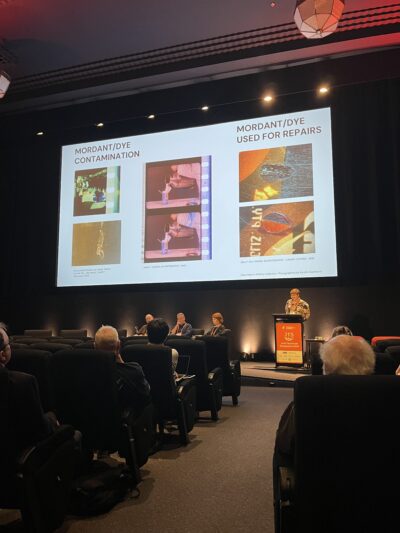
Karelle Duchesne presenting at JTS.
We extend our thanks to all NFSA staff who contributed to the organisation and delivery of the symposium, and to colleagues and partners who travelled from near and far to participate.
Internships
Last year, the NFSA hosted two graduate conservation student interns.
Sarah Johnston (University of Melbourne) and Jemma Plantamura (University of Canberra) gained valuable hands-on experience in our Audiovisual and Documents & Artefacts conservation labs. Both had the opportunity to learn film winding and repair techniques and visited key areas across the NFSA, including Collection Digitisation, Digital Preservation, and our storage vault facilities.
Sarah's internship included a focused project examining the NFSA's animation cel collection. Using FTIR analysis, she identified materials including cellulose nitrate, cellulose acetate, and polyester, and updated our collection management system (Mediaflex) with these findings, informing improved storage and preservation strategies.
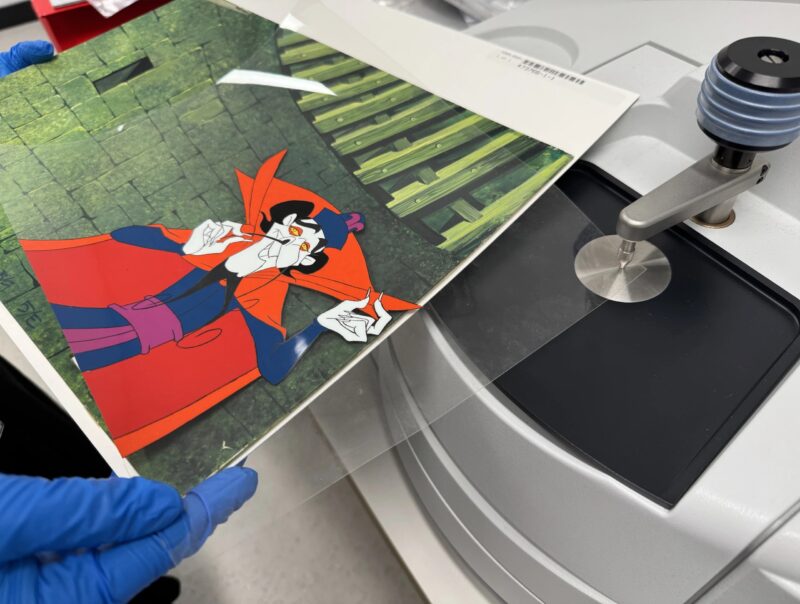
Animation cel being sampled via FTIR.
Jemma conducted a survey of films stored in our vinegar syndrome isolation vault. Their work involved condition assessments, shrinkage measurement, and A-D strip testing of molecular sieves, film cans, and the films themselves, to detect and measure the severity of deterioration. In total, they evaluated a representative sample of 136 cellulose acetate films (about 6.7% of the vault contents), providing valuable insights into collection condition and the effectiveness of current preservation practices.
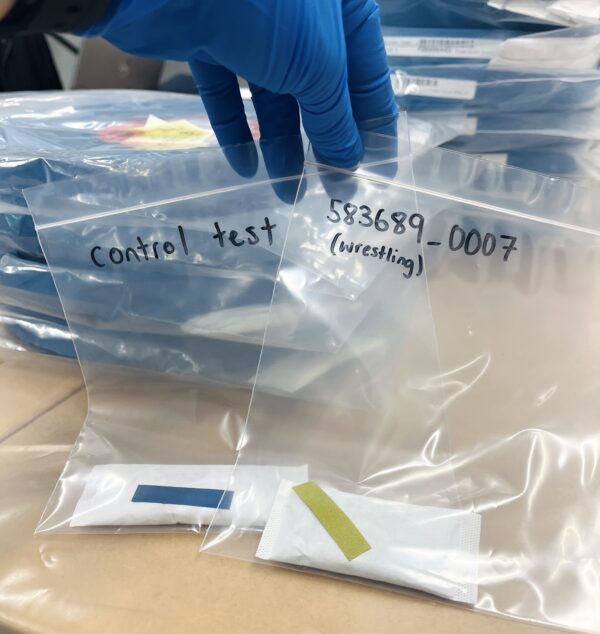
A-D strips sealed with molecular sieves for comparison: a control (unused) sample alongside a sieve exposed to a severely deteriorated vinegar syndrome film.
We thank both Sarah and Jemma for their contributions to the NFSA's ongoing preservation work.
Exhibitions
In December, our poster exhibition Rebels, Romantics and Reactionaries opened on the ground floor of the Acton Heritage Building. Featuring 40 works on paper, the exhibition explores Australian counterculture from the mid-1970s to the 1980s through the graphic work of the Redback Graphix, Earthworks, and Tin Sheds collectives.
The exhibition highlights how artist-activists combined pop-art aesthetics with radical politics across art, film, radio, video, and dance culture to inspire social change and community empowerment. The Documents and Artefacts team undertook extensive preparation in the lead-up, including condition reporting, treatment, framing, and installation support.
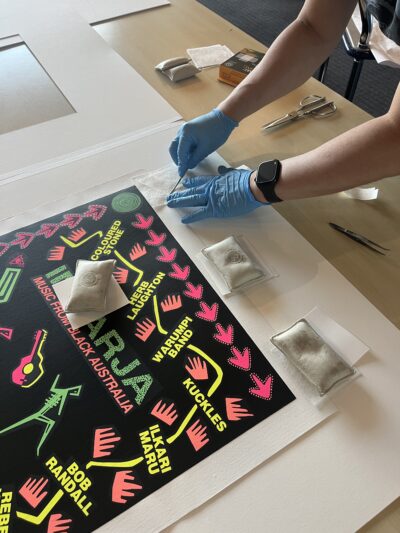
Hinging a poster for framing and display.
International Conservation Services, NSW
Events
Arts National Conference
Julian Bickersteth AO attended the Arts National Conference (previously ADFAS) in March as Patron, where he delivered the keynote address, ‘The Art of Slow Looking’. His presentation explored the importance of careful, sustained observation as a means of learning, encouraging audiences to spend extended time with a single artwork. While this approach contrasts with the pace of contemporary life, it is fundamental to conservation practice and underpins the analysis and execution of treatments.
Known as ‘slow looking’, this method also offers broader mindfulness and wellbeing benefits. The Google Arts & Culture gigapixel platform now enables audiences to practise slow looking remotely, engaging with renowned artworks in exceptional detail.
Newcastle Art Gallery reopening
ICS played a leading role in the conservation of the Newcastle Art Gallery collection during the extensive redevelopment and construction of the new gallery wing. Over several years, the Sydney and Melbourne laboratories conserved paintings, works on paper, and other objects, alongside periods of on-site work in Newcastle.
Alis Jitarescu, Principal Conservator (Decorative Arts & Murals) and Francesca Elia, Paintings Conservator, attended the official reopening, which attracted more than 18,000 visitors across a three-day program of celebrations.
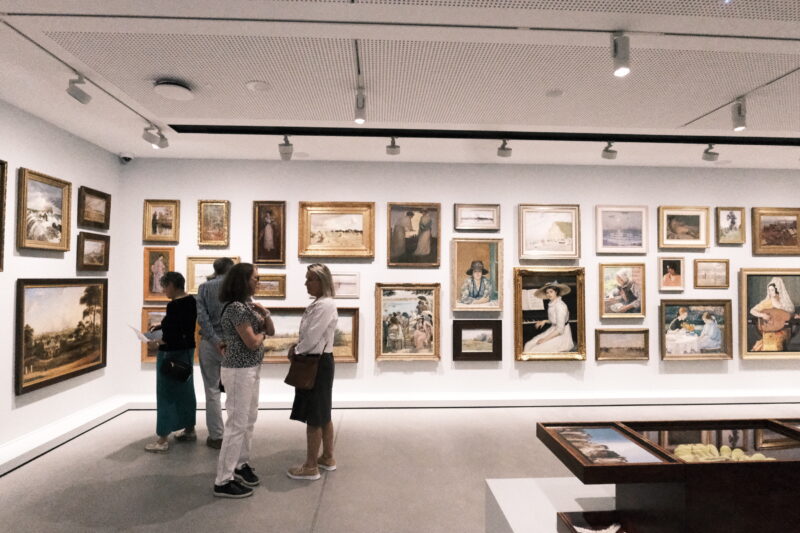
Newcastle Art Gallery reopening.
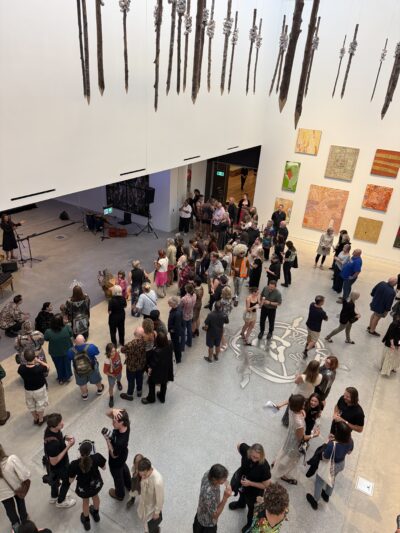
Newcastle Art Gallery reopening
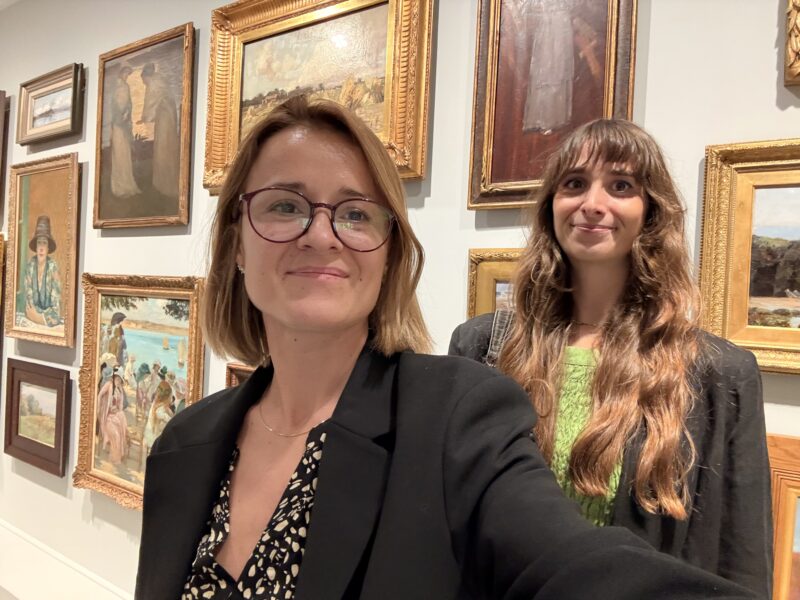
Alis Jitarescu and Francesca Elias at the gallery reopening.
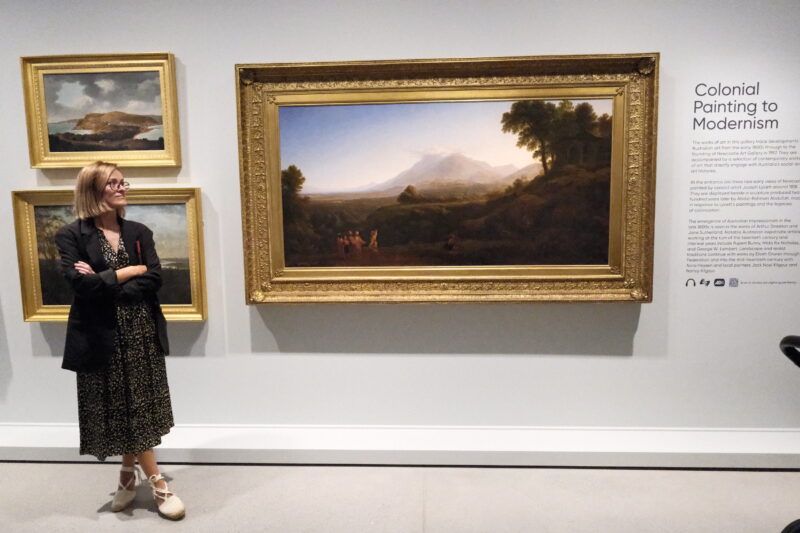
Alis Jitarescu at the gallery opening.
Awards
National Trust NSW Heritage Awards
ICS is pleased to be involved in four submissions to the 2026 National Trust NSW Heritage Awards.
Q Station Inscriptions Conservation – Submitted by ICS
Dr Shrief Eissa, Senior Objects Conservator, led a team undertaking long-term conservation treatment of sandstone inscriptions at the Q Station site within Sydney Harbour National Park.
These inscriptions are significant cultural records commemorating individuals who experienced quarantine at the site. Multilingual in nature – encompassing English, Chinese, Greek and Arabic – they provide a rare insight into early settler experiences and the social and public health impacts of disease.
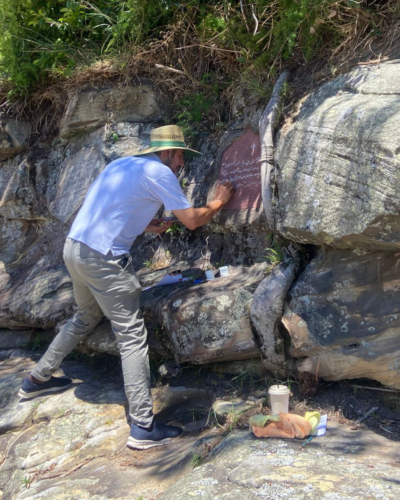
Dr Shrief Eissa cleaning and overpainting an inscription at Q Station.
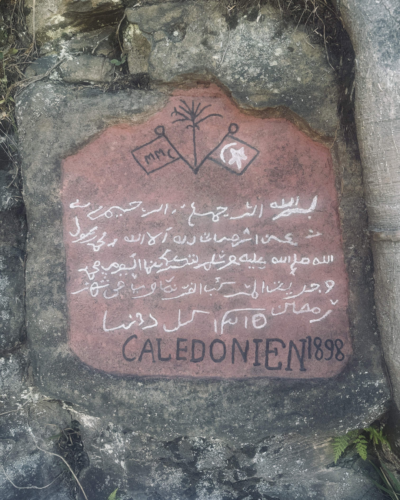
An Arabic inscription cleaned and overpainted for continued site interpretation.
Joy Statue – Submitted by the City of Sydney
Keir Bayley, Principal Metals Conservator, worked closely with the original artist, Loui May, to oversee the fabrication and installation of a bronze replica of Joy.
The original 1995 sculpture, depicting a local sex worker, was removed from its Darlinghurst location after community controversy and later relocated to Macquarie University. In 2023, a community-led campaign sought the return of Joy as a symbol of the contemporary sex workers’ movement. Following consultation, the City of Sydney approved the project.
ICS conserved the original cement and painted steel sculpture, which remains at the university, with the new bronze replica successfully installed at the original Darlinghurst site.
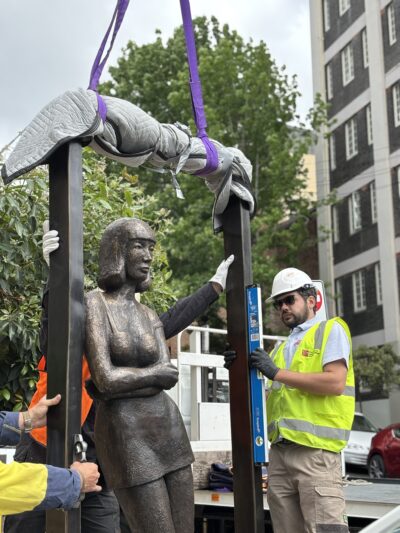
Keir Bayley installing the new bronze sculpture of Joy.
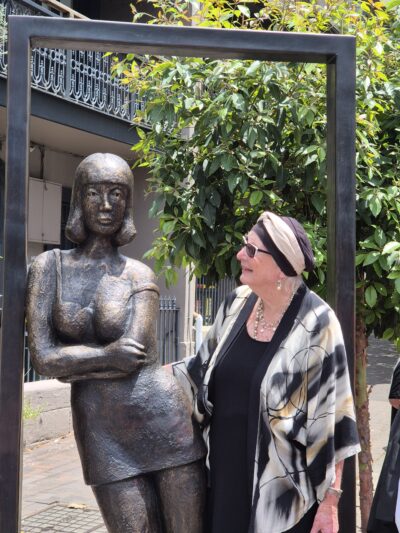
Artist Loui May with the new replica of Joy.
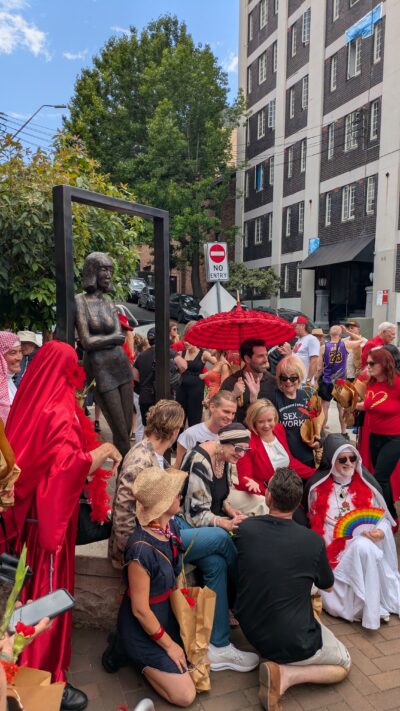
The joyous unveiling of Joy.
Chinatown Gates – Submitted by the City of Sydney
The ICS Objects, Outdoor & Built Heritage team collaborated with the City of Sydney on the revitalisation of Haymarket and Chinatown. Working alongside GML Heritage and Henry Tsang OAM of Tsang & Lee Architects, the team played a key role in the conservation and renewal of the Chinatown Gates.
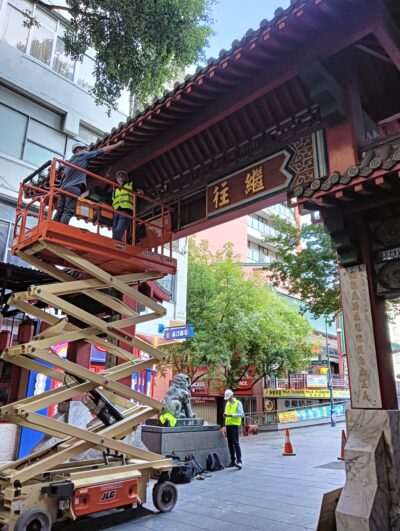
Working on the Chinatown Gates.
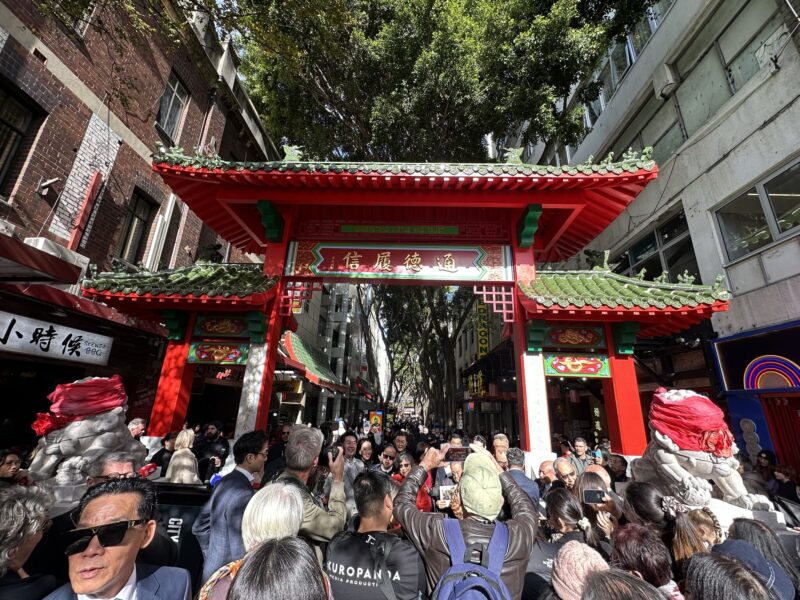
Official unveiling of the Chinatown Gates.
Professional Development
Monica Renn, Paintings Conservator, attended FRAME: Concept, History and Conservation Symposium 3, held at The Hedberg in Hobart from 16–18 February 2026.
‘The variety of talks was great, and there was a lot of insight into frame collections, conservation, and history. The tours we were given of the Allport Library, TMAG, and Parliament were really special, and it was wonderful to see their collections and gallery spaces.’
Gianna Puzzo, Preventive Conservator, and Richard Isaacs, Conservation Technician, participated in the AICCM NSW Division’s interactive Oddy Testing Workshop at the Powerhouse, Castle Hill. The hands-on session focused on recognised testing methods for exhibition and storage materials, contributing data to a national reference database.
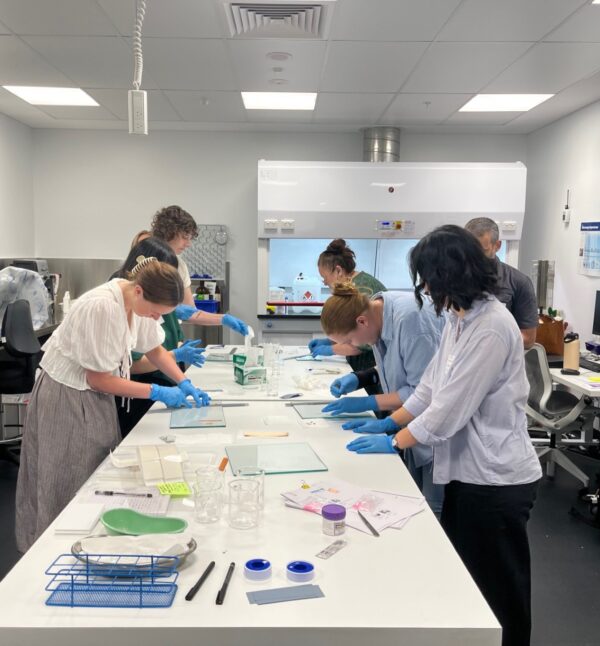
Gianna and Rick attending the Powerhouse Oddy Testing Workshop.
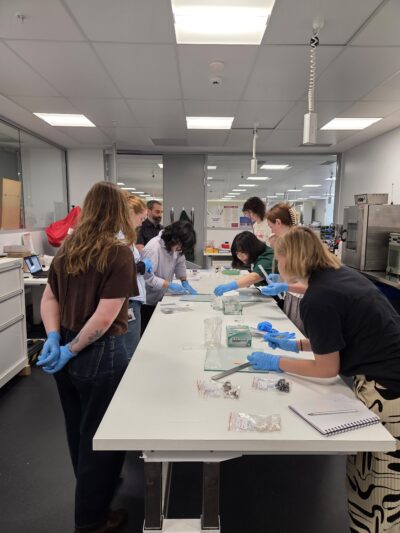
Gianna and Rick attending the Powerhouse Oddy Testing Workshop.
Paintings
Matteo Volonté, Head of Paintings, and his team of painting conservators – Francesca Elia, Monica Renn and Jenny Dawson – are having a productive year.
Matteo has been working in Papua New Guinea on behalf of the Australian War Memorial. Sir William Dargie CBE’s Native Bearers Carrying Wounded, by the renowned Australian portraitist and official war artist, has been loaned to the PNG National Museum and Art Gallery (PNG-NMAG) in Port Moresby and is now on display in the Kokoda Gallery WWII.
The work underwent a condition assessment, maintenance clean, and targeted consolidation and retouching to ensure its long-term stability and presentation.
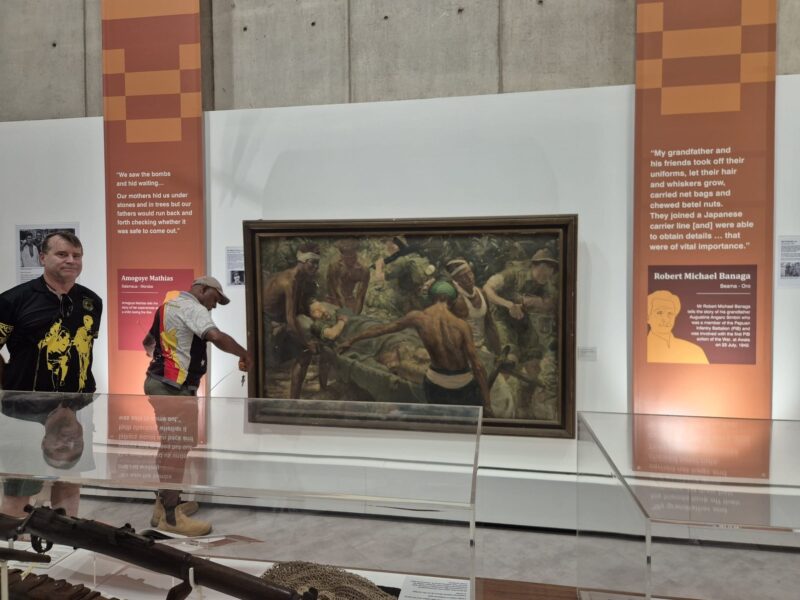
Native Bearers Carrying Wounded hanging in the PNG-NMAG with Andrew Connelly and Anthony Parak.
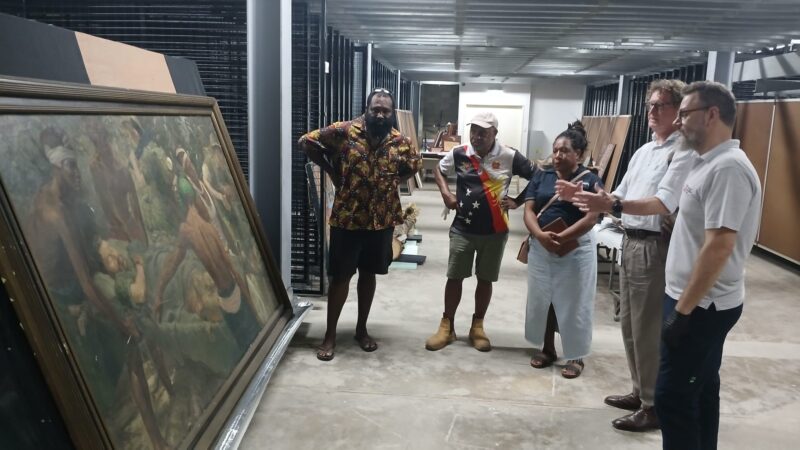
Matteo Volonté inspecting the painting with Gregory Bablis, Anthony Parak, Fiona Akaropa and Mark Nizette from the Kokoda Initiative.
Francesca Elia undertook extensive painting preparation work for the Newcastle Art Gallery reopening, and Monica Renn recently applied advanced techniques in her treatments, including wax infilling and expanded use of gel solvents.
Paper
Caroline Whitley is Acting Head of Paper while Katie Wood is on maternity leave.
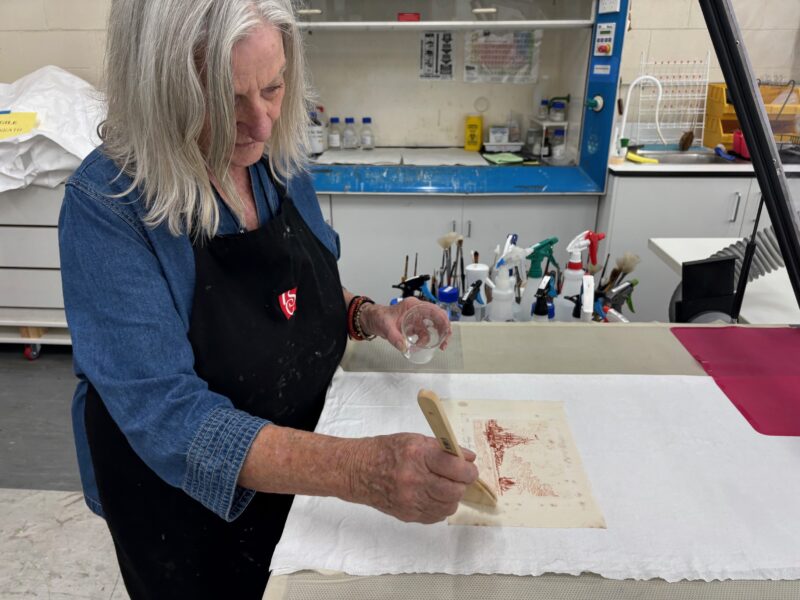
Caroline Whitley performing a treatment on Botany Bay.
We farewelled Rebecca Clendinen, Paper Conservator, as she returned to the United States. Prior to her departure, Rebecca completed conservation work on a National Trust (NSW) hand-drawn music manuscript book.
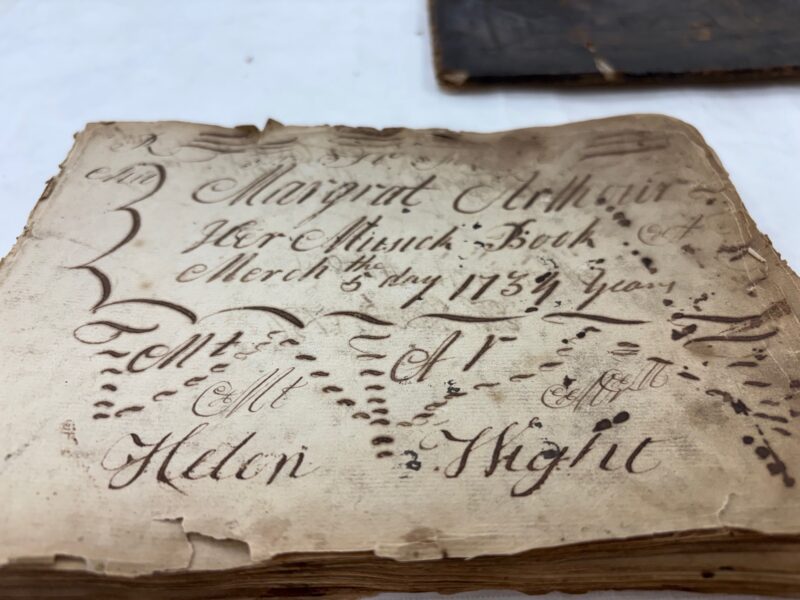
National Trust (NSW) music manuscript.
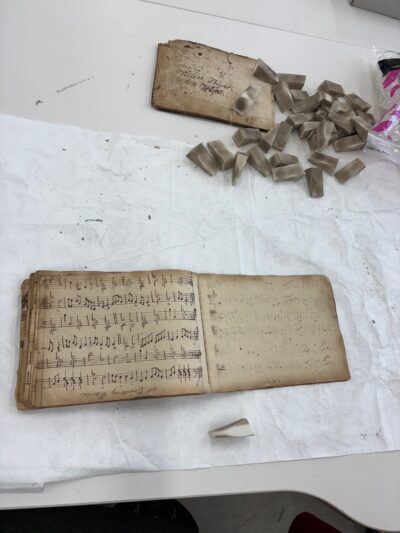
Manuscript during cleaning.
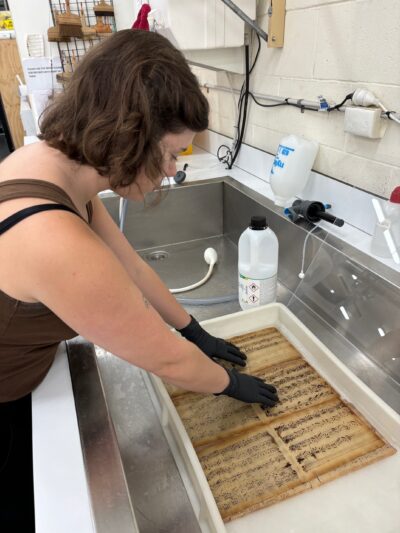
Rebecca Clendinen during the bathing process.
Jennifer Walker, Senior Paper Conservator and specialist in Asian arts conservation, has treated a range of screens, scrolls and woodblock prints, including the Tethered Hawks screen needing treatment for puncher holes and repairs to the paper hinges.
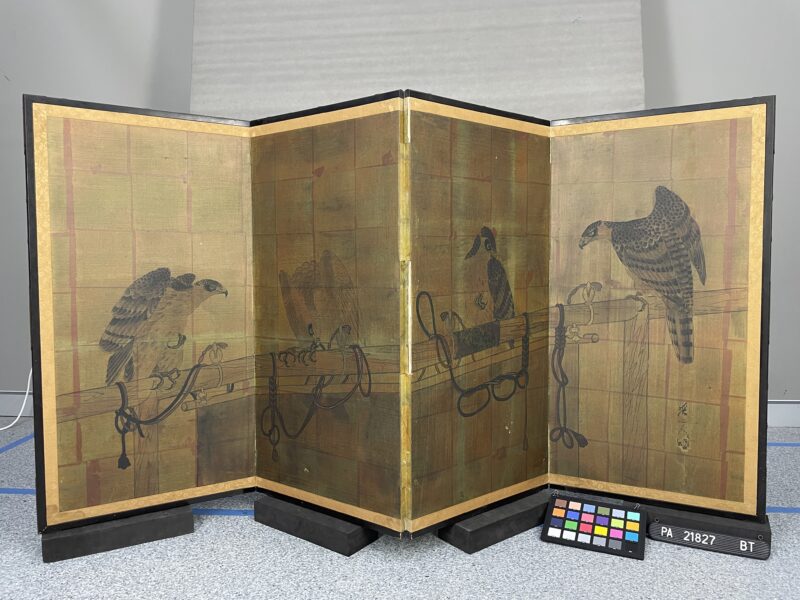
The screen before treatment.
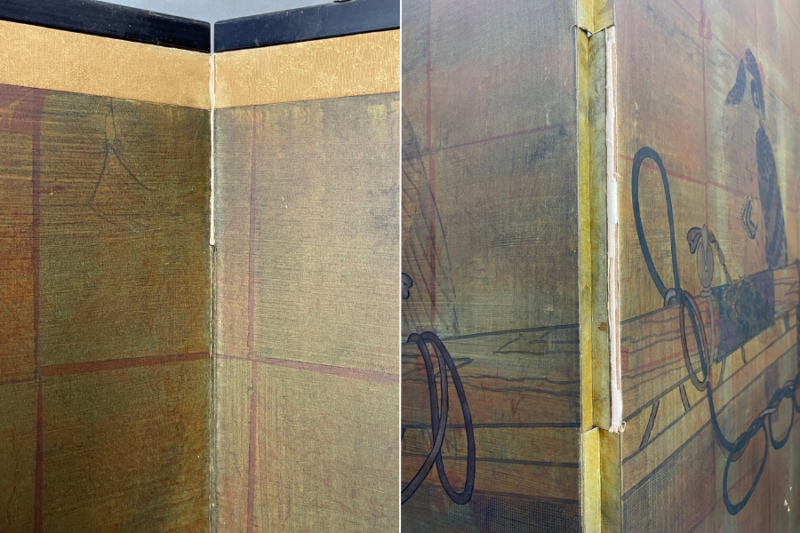
Close-ups of the screen before treatment.
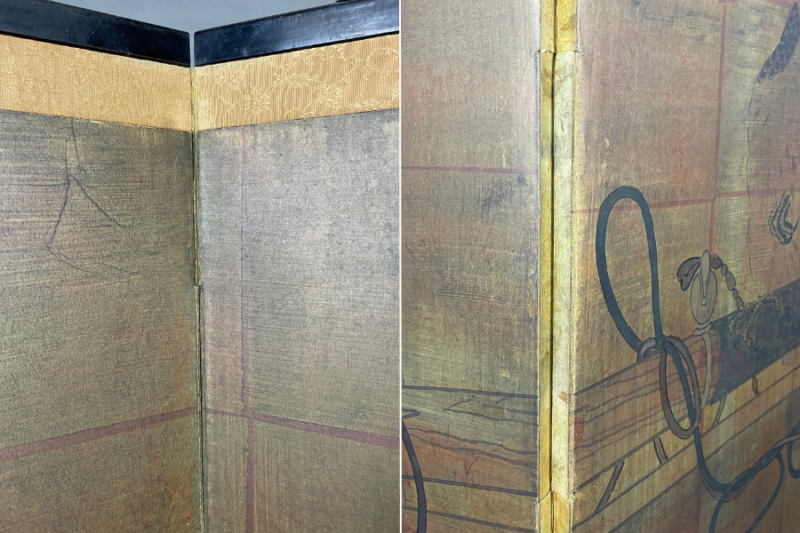
Close-ups of the screen after treatment.
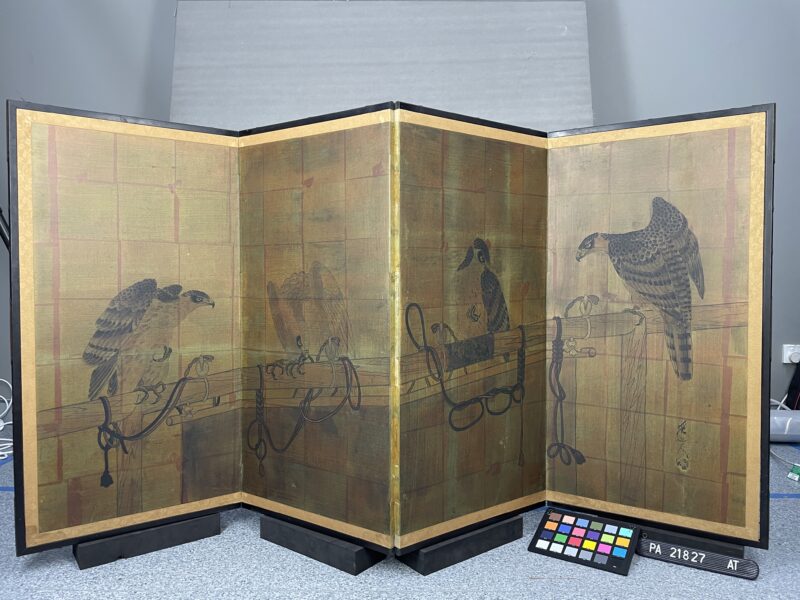
The screen after treatment.
Textiles
Christina Ritschel, Principal Conservator and Head of Textiles, recently travelled to Canberra to undertake a comprehensive condition assessment of curtains and blinds from the historic offices and chambers of Old Parliament House.
During this visit, she also assessed and mounted the ‘Yes’ Dress designed by Clothing the Gap, worn by Senator Jana Stewart at the 2023 Midwinter Ball at Parliament House.
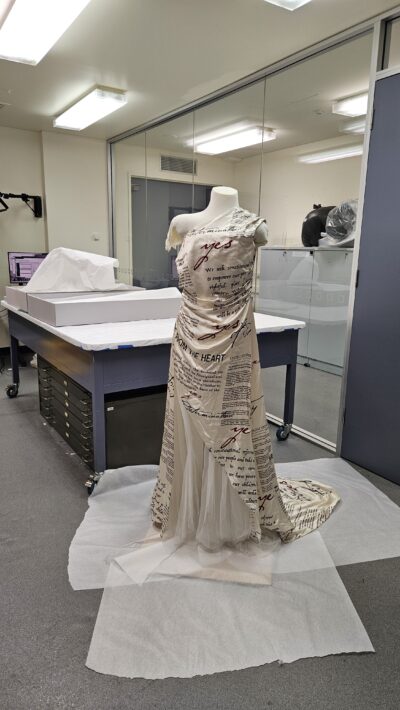
‘Yes’ Dress treated and mounted.
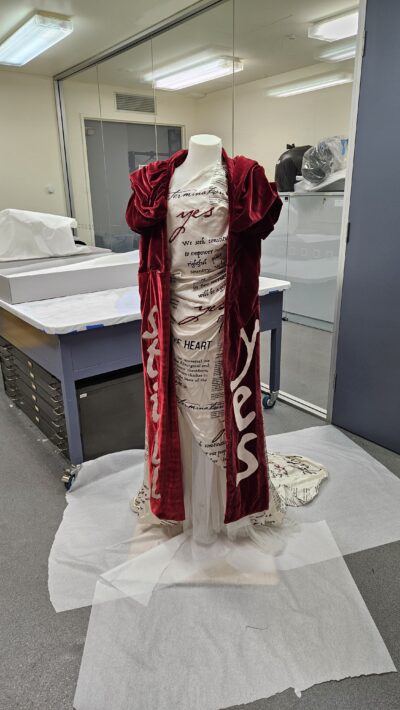
‘Yes’ Dress treated and mounted.
Other treatments include four large blankets constructed from multiple fur panels, including platypus, quoll, possum and an unidentified fur affected by extensive moth infestation. The work, encompassing consolidation, stabilisation and preparation for framing, was completed over nearly two years. The blankets now look impressive in their custom frames.
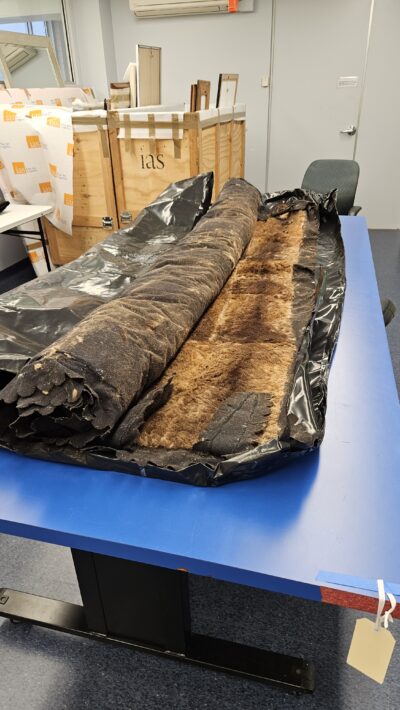
Possum rug before treatment.
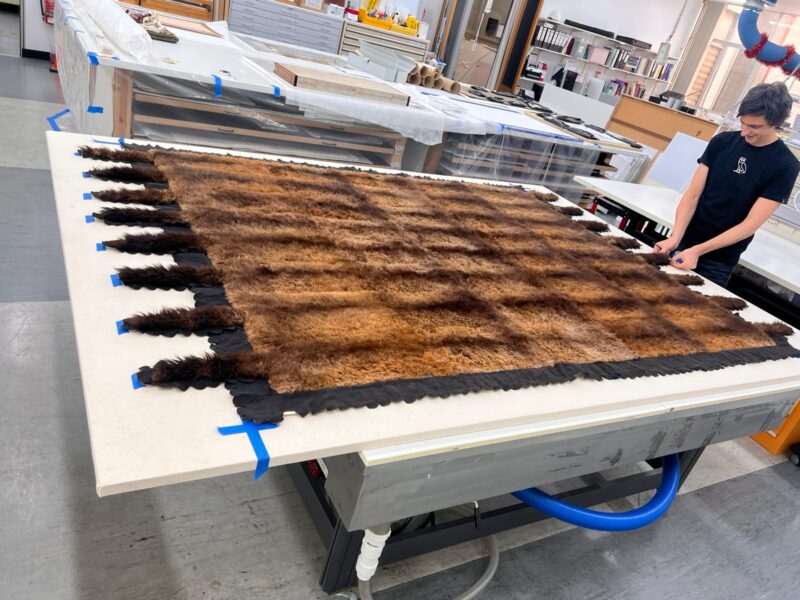
Possum rug during treatment.
Framing
Elric Ringstad, Senior Conservation Framer, constructed the enormous frames for the four fur-panel blankets treated by Christina Ritschel.
The frames were fabricated from reclaimed Douglas fir house trusses. The framed possum rug alone measured 2.6 × 2 metres and weighed over 60 kilograms.
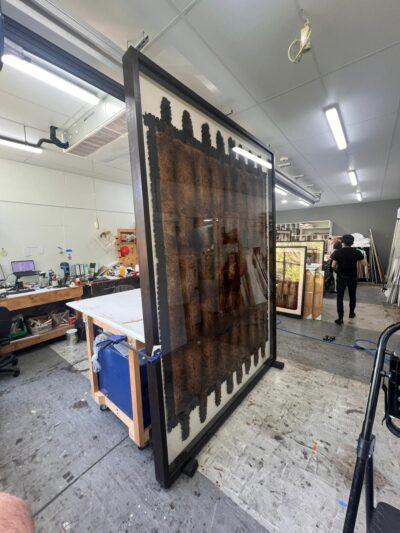
Possum rug after framing.
Elric Ringstad also designed and constructed a bespoke curved frame for a family shield crest. Thin timber sheets were laminated in a custom jig to form the curved structure, while the frame facing was created from a single piece of Douglas fir, book-matched, stained and hand-finished.
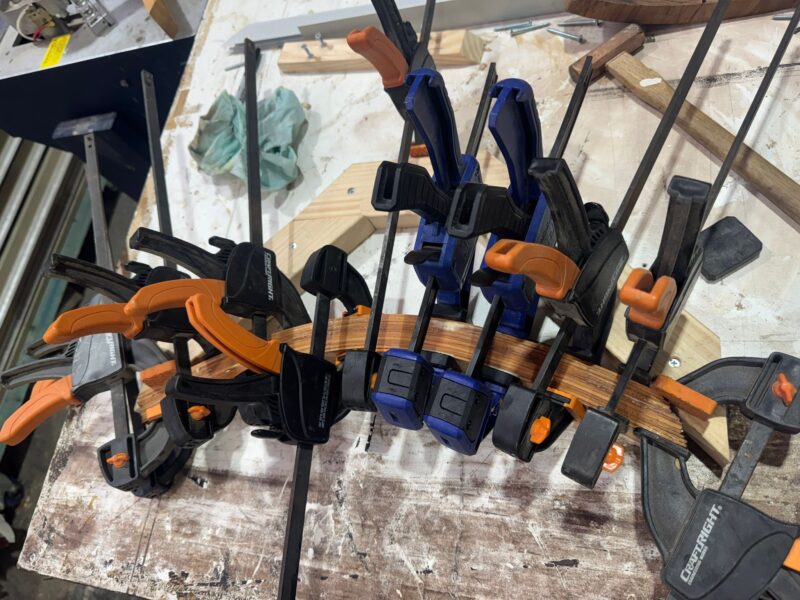
The jig setup.
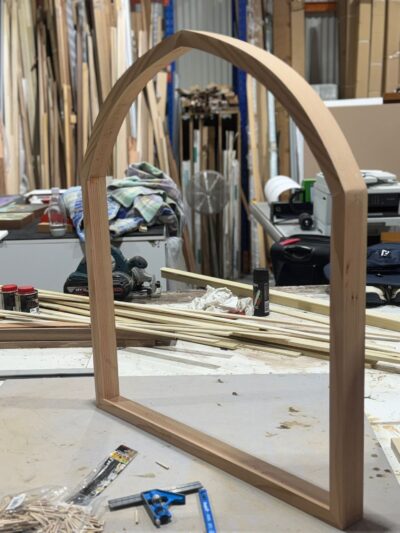
The frame before facing and staining.
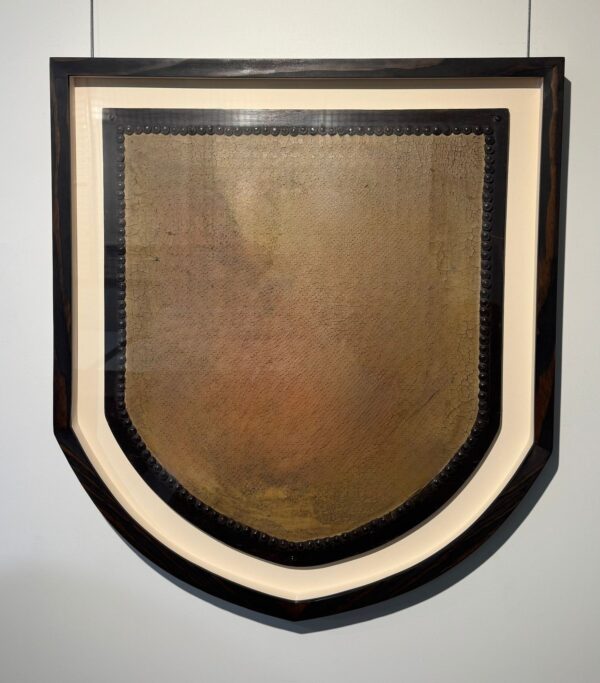
The final frame.
Museum and Gallery Services
We warmly welcome Gianna Puzzo, Preventive Conservator, to the Sydney office. Gianna brings nearly a decade of experience across Australia and the United States, specialising in preservation, collections care, assessment and large-scale institutional planning.
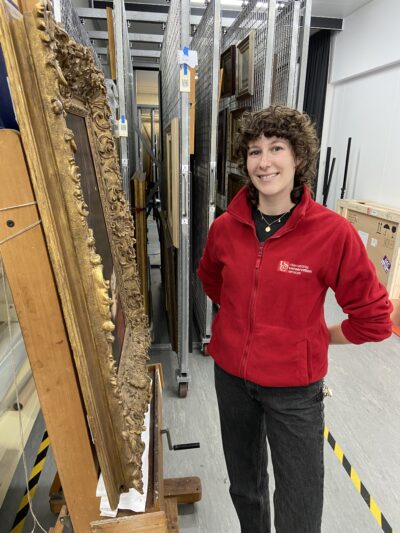
Gianna Puzzo, Preventive Conservator.
Children’s illustrated cubby house
Alis Jitarescu, Principal Conservator (Decorative Arts & Murals), and Kacey Green, Objects Conservator, treated the interiors of a 1960s children’s cubby house painted by acclaimed illustrators Walter Cunningham and Noela Young.
The fairy-tale scenes and depictions of Australian animals were treated for water damage prior to consolidation of losses and flaking paint, to prepare the cubby for a new generation.
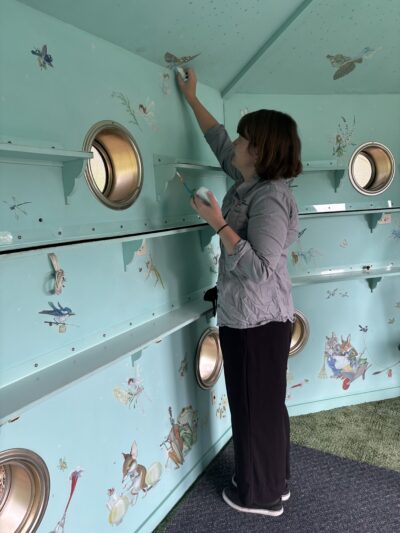
Overpainting the blue ground.
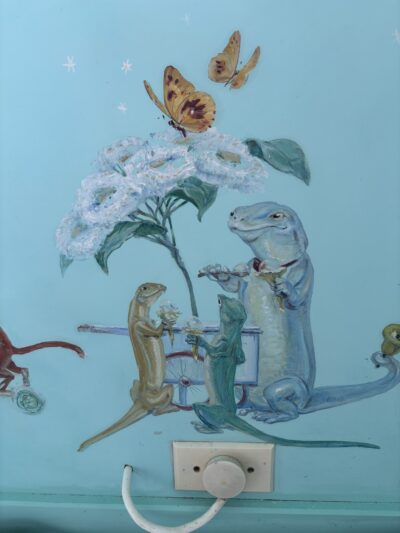
Up close to the illustrations.
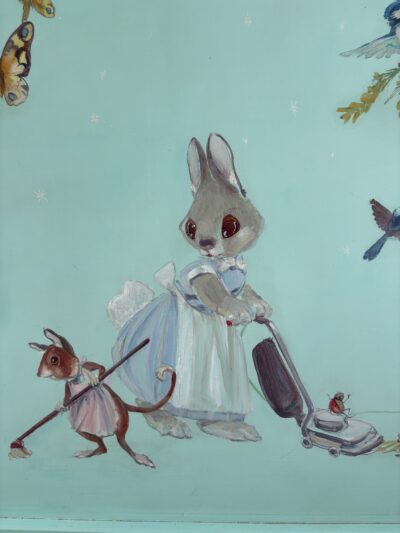
Up close to the illustrations.
Museums of History NSW
Projects
It was ships ahoy at the Museums of History NSW Western Sydney Records Centre (WSRC) in February when Supervising Conservator Tristan Congreve undertook a conservation treatment on the Princess of Tasmania RNCG-4344-16-[A3580 8] ship model. This treatment involved careful planning and coordination with colleagues at the Museums of History NSW (MHNSW). The ship’s model lid needed to be removed safely off the model base; the model then needed cleaning of the deterioration products sitting on the deck. Tristan then modified the glass lid to allow air exchange into the model and finally the lid was placed back onto the model into its storage location. The whole process made Tristan and the model a point of interest for staff at the WSRC for three days!
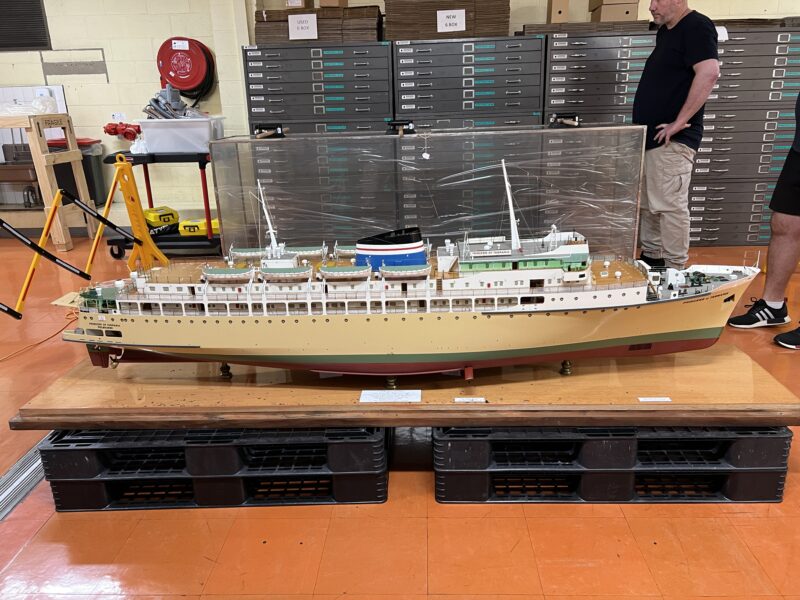
The ship model with lid removed. Image credit: Lang Ngo for MHNSW.
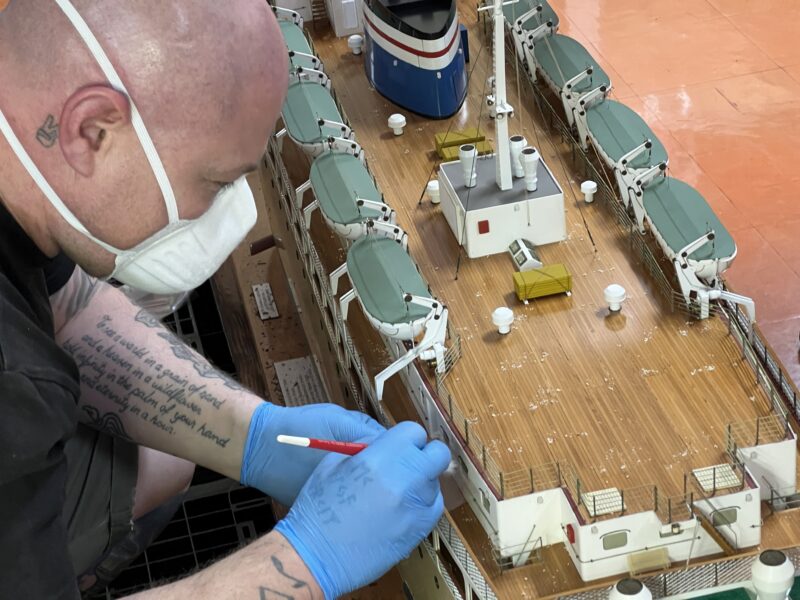
Tristan cleaning the ship model. Image credit: Kimberley Chung for MHNSW.
People news
In February, Jacinta Sanders and Kimberley Chung both attended the Oddy Testing workshop at the Powerhouse Museum Castle Hill and found that it was very difficult cutting into copper. Other than that, we were grateful to have had the opportunity to assist with the Oddy database.
The team has also been busy treating collections for digitisation. We have prepared Immigration correspondence letters for an external digitisation provider, and Paula Thorby has started preparing GPO negatives for digitisation later this year.
Tristan Congreve will soon be heading off for a short stint of parental leave in March/April (congratulations to Tristan), and Jacinta will be filling in for Tristan as Supervising Conservator at that time.
O’Sullivan Conservation
Staff news
This year is a special one for O’Sullivan Conservation as we celebrate our 10year anniversary. Over the past decade, we’ve worked with a wide range of museums, galleries, cultural institutions, government organisations, and private collectors. Every project has offered something unique.
We’re proud of the relationships we’ve built across the sector and remain committed to our ongoing values of quality, safety and communication.
As we mark this milestone, we want to acknowledge the clients, colleagues, and partners who’ve been part of our story over the last ten years. We’re excited for what’s ahead and look forward to continuing our work in conservation in the decade to come.
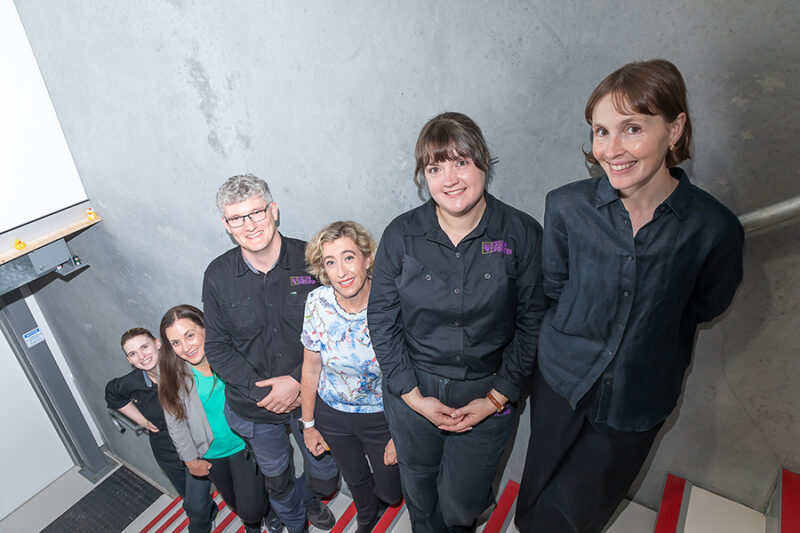
The team at O’Sullivan Conservation.
Treatment projects
Conservation of the Woolloomooloo Murals
Emily Bramich, Stacey Hibberd, and Madeleine Tripp recently completed a major conservation project on the Woolloomooloo Murals, an important part of the city’s publicart heritage, in readiness for the Biennale. The murals were created by Merilyn Fairskye and Michiel Dolk between 1981 and 1984 and were originally designed to last 10 years. The eight remaining murals vary in size with some being approximately 6.5 metres high.
Our team carried out a comprehensive program of conservation treatments designed to stabilise the artwork and enhance its longterm preservation. The work included a full conservation clean to remove accumulated grime and environmental soiling. Selected areas of graffiti were removed/reduced, using techniques that lifted the graffiti material with minimal disruption to the original painted material.
Areas affected by corrosion, particularly where the painted panels interacted with metal framing and fixtures, received targeted treatment. Areas of flaking or lifting paint caused by years of exposure to bird fouling and other environmental contaminants were consolidated. A protective varnish and antigraffiti coating were applied to help protect the murals and to aid future cleaning.
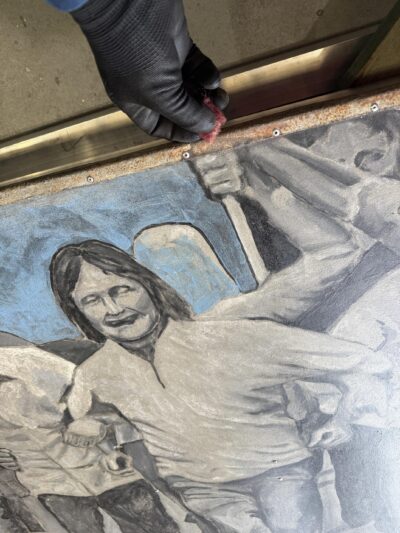
Treatment being undertaken to areas of corrosion.
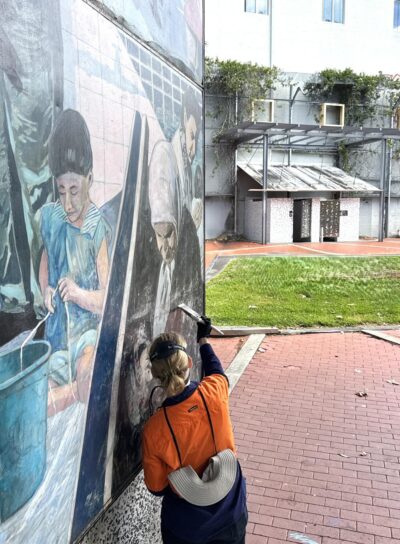
Varnish application to Passing Through Customs (Mural 7).
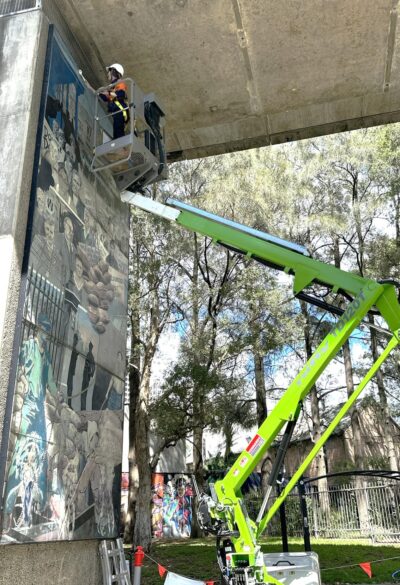
Conservation cleaning of History of the Waterfront (Mural 1).
Australian National Maritime Museum conservation cleaning and maintenance
We recently completed a conservation maintenance program for a selection of objects within the Australian National Maritime Museum’s main building. Many of the items treated are substantial in scale, and suspended from the ceiling, requiring careful planning and coordinated access. Tiger 75 a SIKORSKY S-70B-2 Seahawk helicopter, suspended high within the gallery, is one example. Its size and position required specialised equipment and safe working procedures, allowing conservators to clean its numerous surfaces.
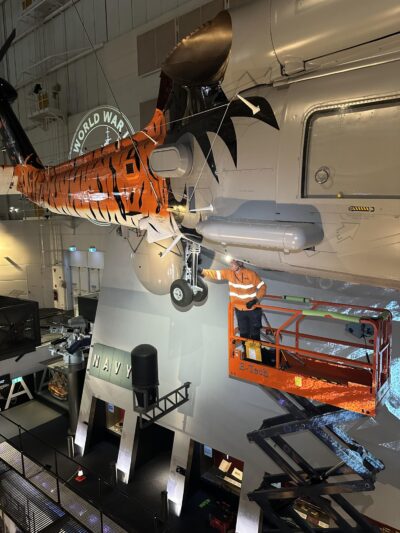
Conservation cleaning of Tiger 75.
Au Karem Ira Lamar Lu – Ghost Nets of the Ocean is a marine ecology installation by collaborating artists from Erub Arts on Erub (Darnley Island), Torres Strait, Australia. The installations are created from abandoned fishing nets and recycled plastics.
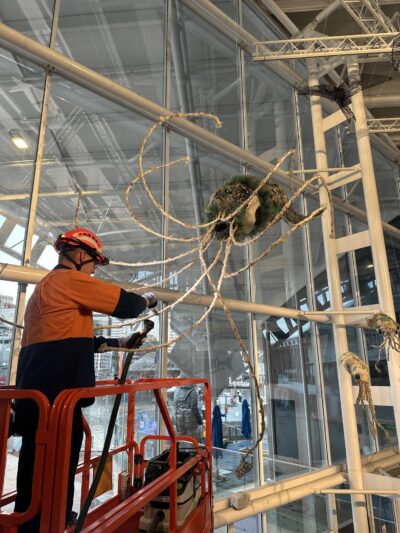
Brush vacuuming the intricate elements on Au Karem Ira Lamar Lu – Ghost Nets of the Ocean.
Heritage façade conservation works
In the lead up to Chinese New Year and the opening of the Museum of Chinese in Australia (MOCA), OSC carried out façade conservation works on two of Haymarket’s heritage‑listed buildings, the Haymarket Library and the Corporation Building.
The works focused on exterior conservation treatments, including façade cleaning, repainting, and graffiti removal/reduction, including JOS cleaning with our new machine. Cleaning was undertaken using conservation‑appropriate methods suited to historic masonry and repainting followed heritage colour guidance.
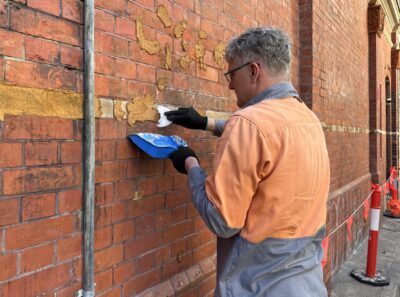
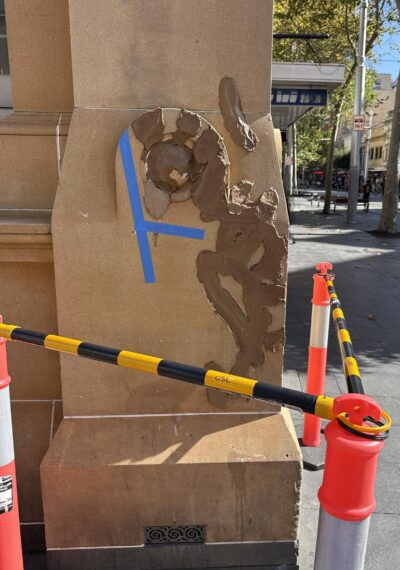
Poultice application.
ANZAC Digger Statue memorial
In preparation for ANZAC day 2026, O’Sullivan Conservation undertook the installation of two commemorative plaques at the ANZAC Digger Statue memorial, located on the ANZAC Bridge, Sydney. The memorial is located on the western side of the bridge, which carries approximately 180,000 cars per day. In such a busy location, safety, public access, and the traffic were all major considerations.
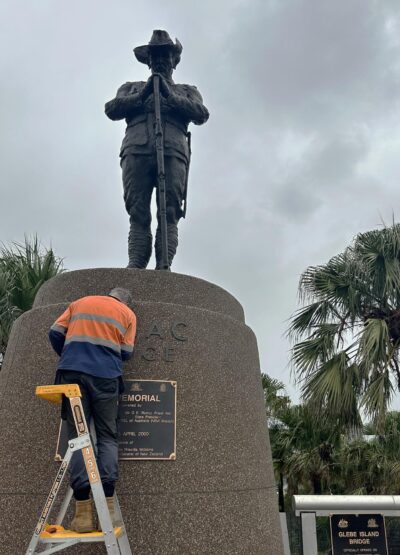
Installation of the first plaque.
International Conservation Services, QLD
Professional Development
Jochen Letsch, State Manager (Queensland), attended the FRAME: Concept, History and Conservation Symposium 3, held 16–18 February 2026 at The Hedberg, Hobart.
'It was a privilege to have the opportunity to meet, hear, and learn from the keynote speakers Dr Charlotte Chastel-Rousseau (Musée du Louvre, Paris) and Josephina de Fouw, MA (Rijksmuseum, Amsterdam), as well as all the other amazing speakers.'
Paintings
Maïté Le Mens, Senior Paintings Conservator, completed conservation treatment of The Scottish Lassie for the Royal Historical Society of Queensland. Removal of a discoloured varnish layer revealed the original colour and detail, ensuring the painting's long-term preservation and accessibility.
Our collaboration with Redland Art Gallery has also expanded, with ICS now supporting the care of the gallery's collection.
Paper
Liam, Paper Conservator, has undertaken a wide range of treatments for private and institutional clients. A notable project involved fragments of a Perth newspaper dated 4 September 1939.
The fragments were discovered inside an antique tool chest undergoing asbestos decontamination following flood-related restoration. Treatment involved humidification, flattening and careful reassembly using toned Japanese tissue, enabling safe storage for potential future display.
Tasmanian Museum and Art Gallery (TMAG)
Conservation-focused exhibition, Restoring the Past (6 February – 21 June)
TMAG has recently opened Restoring the Past (6 February – 21 June), an exhibition developed by Jennifer Bird (Senior Painting Conservator), Lisa Charleston (Conservation Technician) and Kate McKay (Assistant Conservator) that focuses on the treatment of three remarkable 19th‑century paintings and their ornate frames, including the portraits of Thomas and Catherine Chapman and a landscape by John Glover. The exhibition offers visitors a rare behind‑the‑scenes look at conservation, featuring a film that documents the treatments from start to finish. Over the past year, each stage of the process has been filmed, and these short sequences reveal the range of conservation techniques involved and provide visitors with an understanding of what conservation work entails.
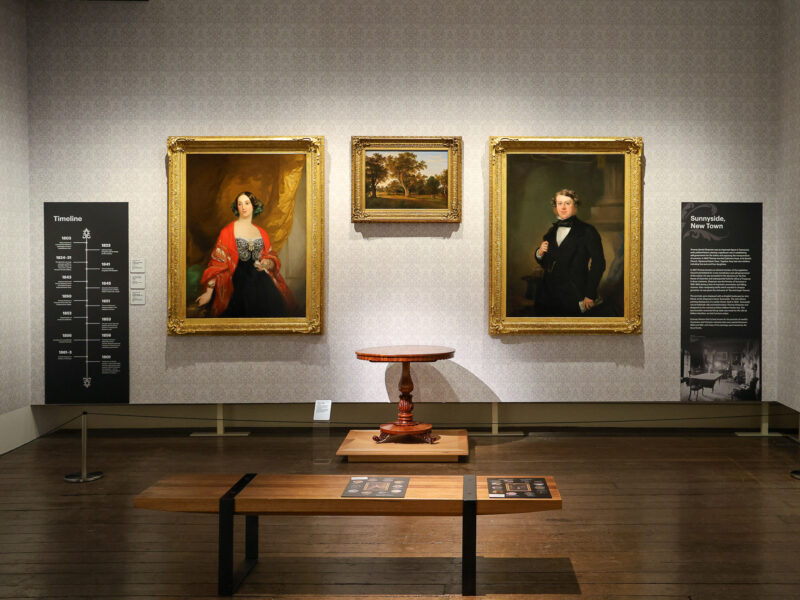
Installation view of Restoring the Past at TMAG.
Left to right paintings: AG9181 Conway Hart, Catherine Chapman (c. 1856); AG6040 John Glover, View Near Byrkley Lodge (c. 1820); AG9180 Conway Hart, Thomas Chapman (c. 1856). Table in middle: P2009.4 William Hamilton, Centre Table (c. 1845).
FRAMES 3 Symposium, Hobart (16–18 February 2026)
Lisa Charleston (Conservation Technician), Kate McKay (Assistant Conservator) and Mary Knights (Senior Curator of Art) participated in the FRAMES 3 Symposium, which was held in Hobart from 16 to 18 February 2026.
Over 100 professionals from Australia and beyond shared their expertise and knowledge about frames from many perspectives.
One of the highlights was a session held at TMAG hosted by Lisa, Kate and Mary, focusing on the early 19th-century frames in the TMAG art exhibitions Restoring the Past, This too shall pass, and Dispossessions and Possessions.
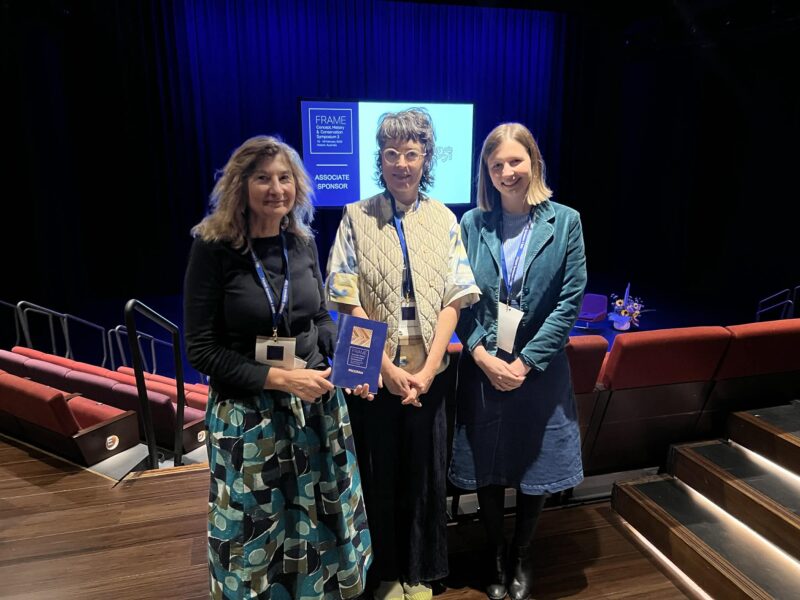
Mary, Lisa and Kate at the FRAMES 3 Symposium, Hobart.
Arts Centre Melbourne
The ACM Conservation team is settling into the rhythm of having a new museum on-site with a regular exhibition schedule. Having opened in December 2025, the Australian Museum of Performing Arts is halfway through the first exhibition cycle. DIVA from the V&A, London, has been a great inaugural exhibition. Costumes of our home-grown divas from the Australian Performing Arts Collection (APAC) such as Nellie Melba, Olivia Newton-John and Kylie Minogue complement the international content. Located along the Yarra River Promenade, the museum is housed within the Hamer Hall building facing north towards the CBD. The exhibition is open until 26 April.
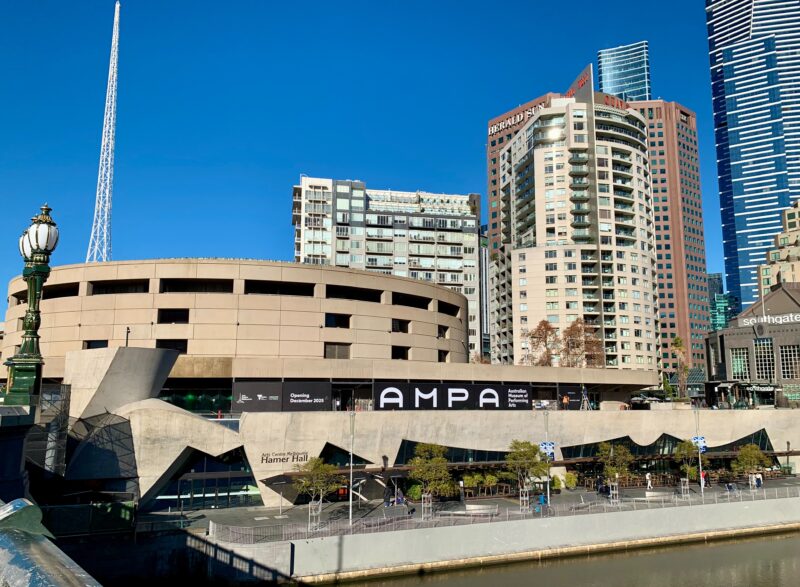
The new Australian Museum of Performing Arts (AMPA), located at Hamer Hall, Arts Centre Melbourne. Image credit: Sandra Bruce, December 2025.
The next exhibition, Encore, will take on a more local flavour, centring on some of the most significant objects from the APAC. Bronwyn Cosgrove, Senior Conservator, is looking forward to the perennial challenge of creating mannequin supports that are not only appropriate for the size and condition of the costume but also evoke the 'essence' of the performer who wore it.
We have recently completed a project where our entire Split Enz Costume Collection was photographed. Recent donations in 2025 from Noel Crombie, a band member and original designer and maker, brings the complement to 108 full costumes. The photographs were recently used by the band as part of the stage design for their tour, Forever Enz Tour 2026, and will be used in a new book about the band. In addition to improving both our documentation about this collection and the housing for each costume, the collection has been used in a creative and meaningful way. This a great example of 'preservation through celebration', the active safeguarding of cultural heritage and history by honouring cultural material through events and activities outside the usual museum and gallery paradigm. Thanks to Narelle Wilson for her amazing photography.
In other Arts Melbourne Precinct news, the fully refurbished Ian Potter State Theatre is set to re-open in October 2026 after being closed for more than three years. The conservation team will be overseeing the re-installation of the Public Art Collection that features throughout the foyers, the historic State Theatre stage curtain and eventually some of the outdoor sculptures to the new public garden, Laak Boorndap. Recently erected hoarding along St Kilda Road signals the commencement of work on the new garden, which will include conservation of Inga King's iconic sculpture Forward Surge, installed 1981.
Robert Cripps Institute for Cultural Conservation, University of Melbourne
Conservation of the Cranbourne Meteorite no. 7
Objects conservators Ellie Bernard and Dr Evan Tindal recently undertook the treatment of the University of Melbourne's Cranbourne Meteorite no. 7, which has been submerged in an anoxic, oil-based solution since its donation to the institution in 1941. The treatment and purchase of a custom-built anoxic showcase were supported with funding from the Miegunyah foundation.
The treatment program commenced with the draining of the existing preservation solution, which was subsequently analysed using X-ray diffraction (XRD). This was followed by degreasing and surface cleaning of the meteorite and its detached elements. X-ray fluorescence (XRF) analysis was also undertaken to further characterise the material composition.
A small polished section was prepared and etched using nitric acid to reveal the characteristic Widmanstätten structure typical of iron–nickel meteorites. The meteorite was then weighed, recording a mass of approximately 80 kg, a substantial reduction from its documented weight of 153 kg when first excavated in 1923. This loss is likely attributable to a combination of corrosion processes, historical sampling, and earlier intervention campaigns over the course of its custodial history.
Both the primary specimen and the etched section were subsequently rehoused in a custom-built dry anoxic exhibition case and are now on display at the entrance of the Earth Sciences Building (Level 2, Elgin Street). This new housing provides a stable, dry environment while enabling improved access for research and display.
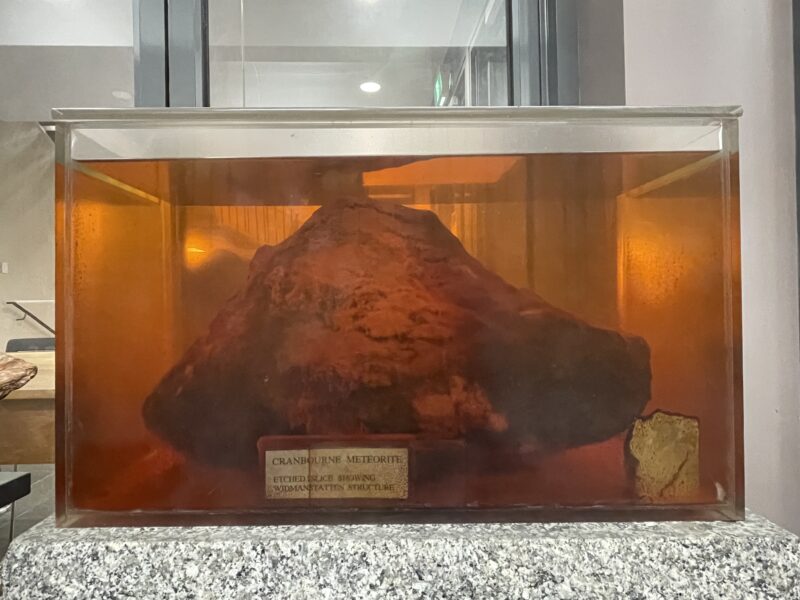
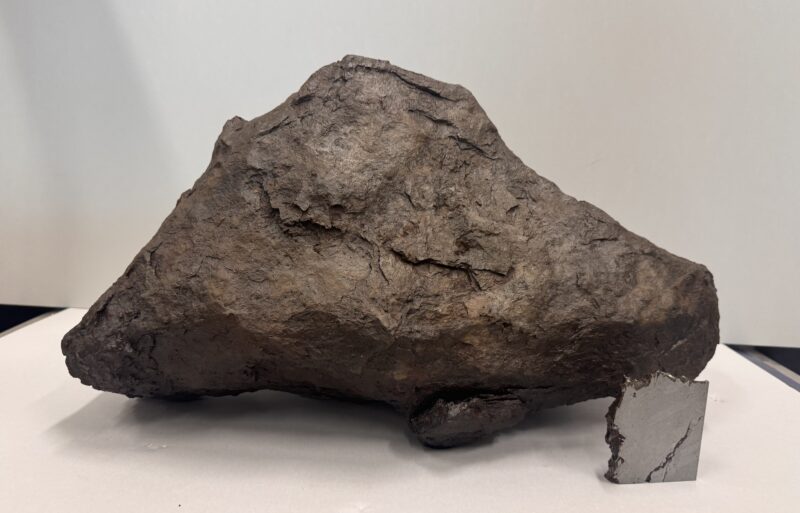
Cranbourne Meteorite no. 7 before and after treatment.
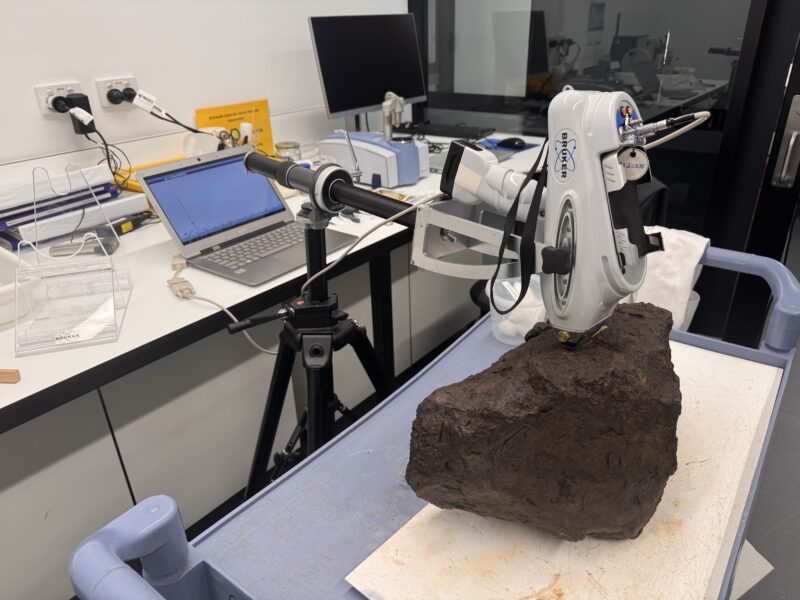
XRF analysis was undertaken to characterise the material composition of the Cranbourne Meteorite no. 7.
Advanced Conservation Practice and Industry Internship
Second year students recently completed the subject Advanced Conservation Practice over the Summer term. This provided the opportunity to apply complex and critical decision making and risk assessment to complex treatment challenges across three streams of specialisation: paper, paintings and objects/textiles. Students worked on a range of treatments, including on prints and other artworks from the University of Melbourne's Art Collection, items including early Apple computers from the School of Engineering, and some privately loaned works across media. It was great to see students jump right into the year and take on the complex problem-solving, methodology development and practical implementation presented by these objects.
The internship program is also underway, with a couple of students having already completed or about to start their three-week placements as part of the Industry Internship subject. Sunny Tinkler recently completed a placement with University Collections, working behind the scenes on a number of projects, including the installation of the exhibition A velvet ant, a flower and a bird at the Potter Museum of Art. We identify hosts for student placements across the year; if you or your organisation are interested in hosting one of our second-year students, or have a project you think might be suitable for a student intern this year, please get in touch via conservation-interns@unimelb.edu.au.
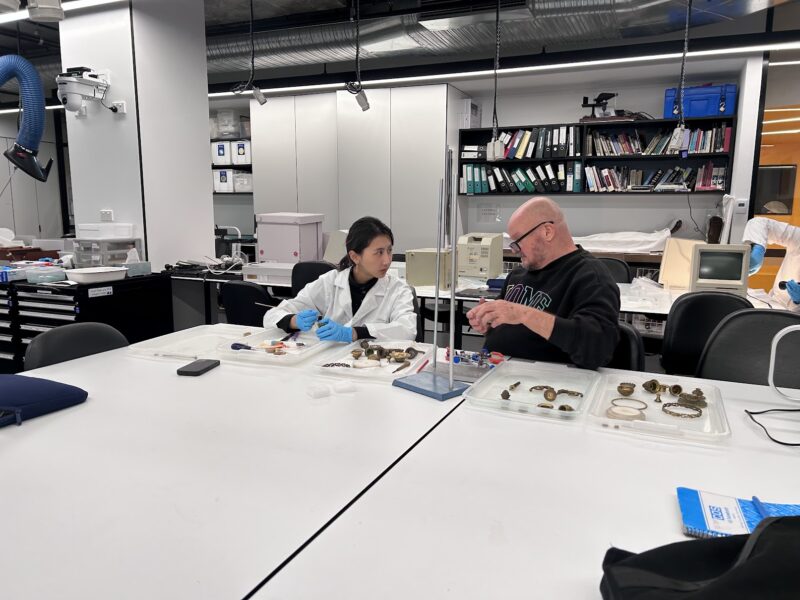
Student Shara Dejilongzhen and Dr Jonathan Kemp in consultation as part of a supervised workshop session in Advanced Conservation Practice.
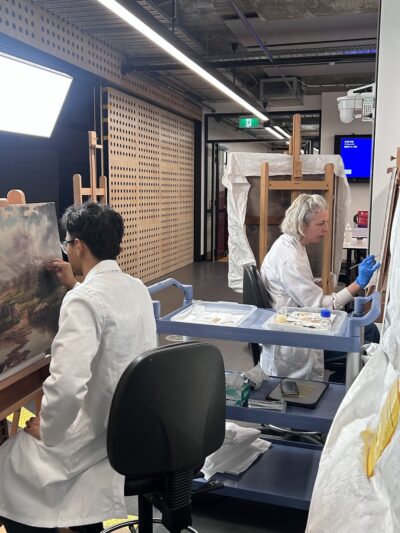
Second-year students Mahesa Riyutara and Iona McNab work on paintings treatments as part of Advanced Conservation Practice.
Asia Pacific Tropical Climate Conservation Art Research Network (APTCCARN) 7 meeting
Plans are underway for APTCCARN7 to take place in Malaysia in the forthcoming year with the National Art Gallery of Malaysia.
Fire recovery project of Australia's oldest Chinese Temple, awarded ARC Discover Project grant
Researchers at the Robert Cripps Institute for Cultural Conservation have been awarded Australian Research Council (ARC) Discovery Project funding to lead a critical study on Melbourne's See Yup Temple, following the devastating fire that struck the South Melbourne site in February 2024.
The project, led by Associate Professor Nicole Tse with historian Dr Sophie Couchman, Dr Caroline Kyi, Dr Simon Soon, Professor Tonia Eckfeld, and conservation scientists Professor Zhanyun Zhu and Professor Huan Yang, will build cultural, material and technical knowledge of Chinese migration collections together with their living processes, and the risks to heritage collections exposed to extreme fires.
The team aims to strengthen Australia's disaster risk-reduction strategies to build resilience for community-held collections across the country.
By protecting and safeguarding migration heritage, it will connect Chinese Australian communities, their sense of belonging, and Australia's contemporary engagement with China.
Gels and Nanofluid Workshop, ACdR, San Francisco (6–8 February 2026)
Our Senior Paintings leader at the Grimwade, Cushla Hill, undertook professional development training recently into innovative 'green' cleaning techniques using gels and microemulsions. The workshop, led by leading chemists from the University of Bologna, advanced our understanding of innovative gel and nanofluid cleaning systems that enable highly selective, controlled, and environmentally responsible treatment of cultural heritage materials.
The combination of lectures and hands-on training, introduced and refined practical skills in applying microemulsion-loaded gels for the safe removal of complex surface coatings, including aged varnishes and synthetic coatings. These systems represent a major advancement in conservation practice, offering greater precision while reducing risks to both conservators and artworks.
'As the sole Australian participant, I gained valuable perspective by engaging with an international cohort of conservators and benchmarking current global practices. Visits to ACdR conservation studios further strengthened my understanding of best-practice workflows, materials, and equipment.'
The knowledge gained is already being applied in treatment practice and will be disseminated across our organisation, supporting team capability and future training. This experience strengthens our capacity to implement innovative, sustainable methodologies and contributes to the ongoing delivery of high-quality conservation outcomes aligned with international standards. (See full workshop review in this newsletter.)
Attendance at this workshop was generously supported by ArtsNational via the Patricia Robertson Fund with additional professional development provided by Grimwade Conservation Services.
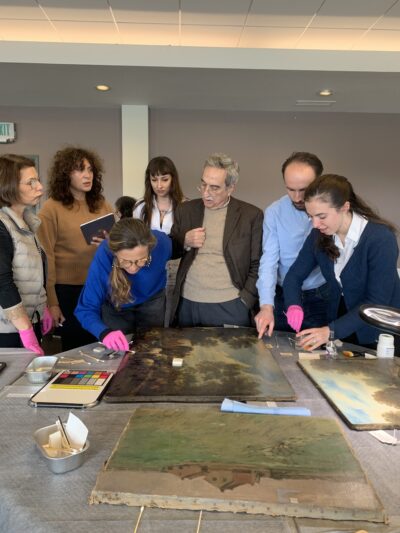
Students gather around Professor Baglioni as part of the Gels and Nanofluid Workshop, ACdR, San Francisco.
Australian Research Council Discovery Project funds groundbreaking initiative that will develop advanced, sustainable polymers to protect and preserve Australia's cultural heritage
Researchers from the Robert Cripps Institute and School of Chemistry at the University of Melbourne have been awarded Australian Research Council (ARC) Discovery Project funding for a groundbreaking initiative that will develop advanced, sustainable polymers to protect and preserve Australia's cultural heritage.
The project, Advanced Polymers for Heritage Conservation, brings together leading experts in polymer chemistry and cultural materials conservation to design next-generation materials that are safer, more stable, and environmentally responsible.
The research will address a longstanding challenge in the conservation field – the reliance on industrial polymers not specifically engineered for heritage preservation.
Robert Cripps Institute director Professor Robyn Sloggett at ALIVE National Centre Annual Symposium
Professor Robyn Sloggett joined the ALIVE National Centre's Annual Symposium held in collaboration with Children's Ground in Alice Springs from 17–19 March.
This is a new partnership for the Cripps Institute, which aims to consider how conservation fits with and can contribute to lived experience research.
The overlap between community health and conservation is an area of significant interest, and a topic that deeply engages students and researchers at the Cripps Institute. It is an area where conservation has a lot to offer. For information on the ALIVE Centre see: https://alivenetwork.com.au/about-us/. For information on Children's Ground see: https://childrensground.org.au/
International Conservation Services, Victoria
Creswick Library wallpaper salvage
The ICS Melbourne team investigated historic wallpapers at the Creswick Campus Library (University of Melbourne). Following sampling and analysis, significant wallpaper sections were salvaged, separated, catalogued and preserved in archival storage, in collaboration with heritage consultant Robert Griffin.
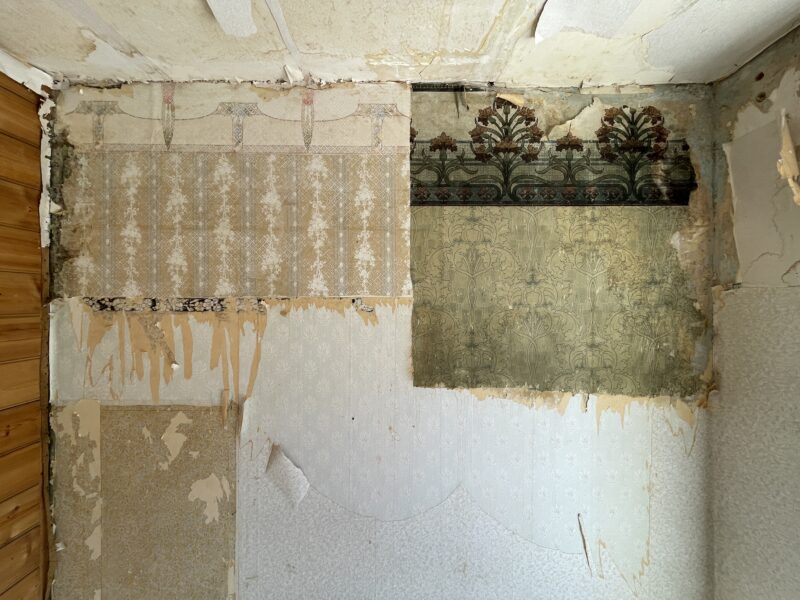
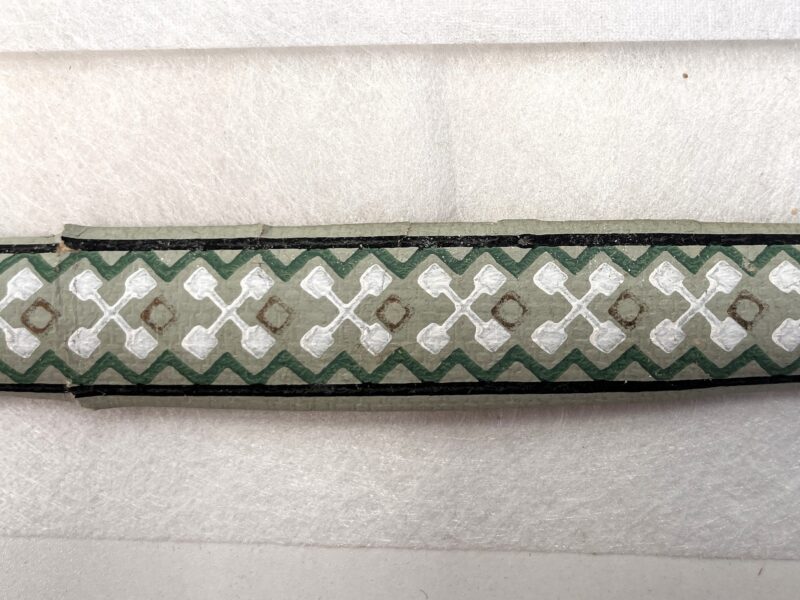
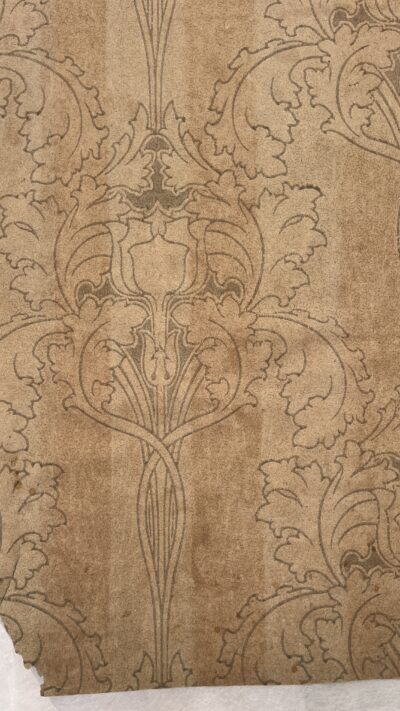
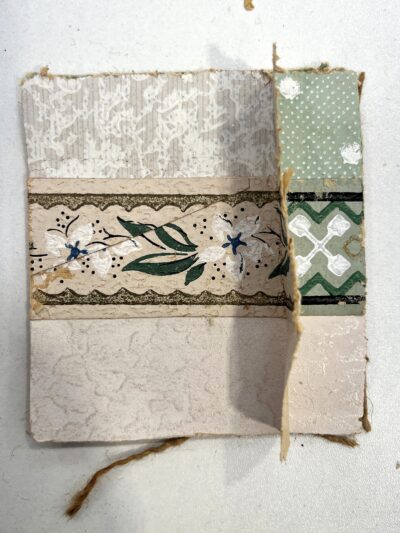
Historic wallpapers at the Creswick Campus Library.
Painting of two lovers
This painting arrived with extensive water damage, flaking paint and a brittle canvas. Treatment included consolidation, lining, varnish removal, filling of losses and preparation for inpainting and re-varnishing.
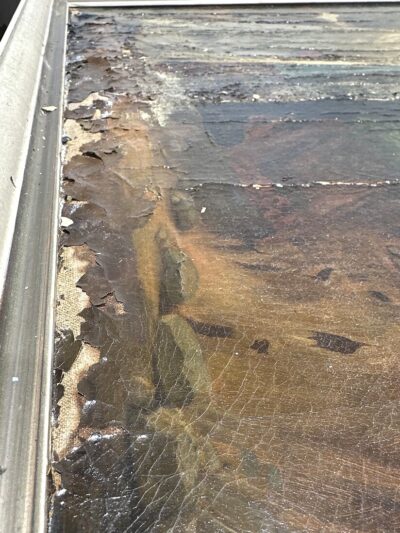
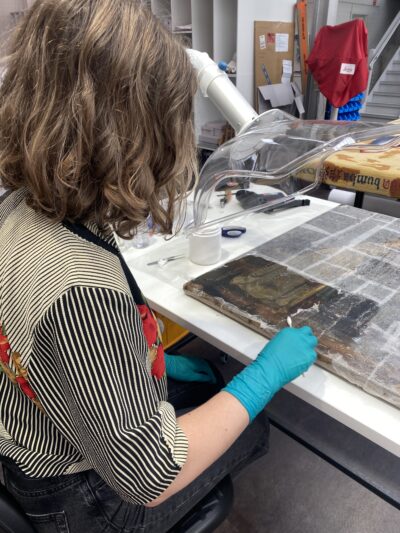
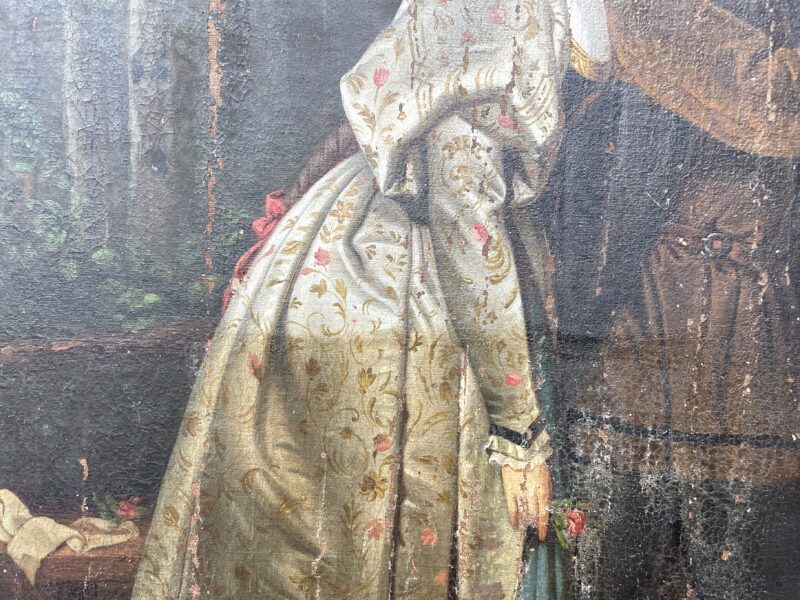
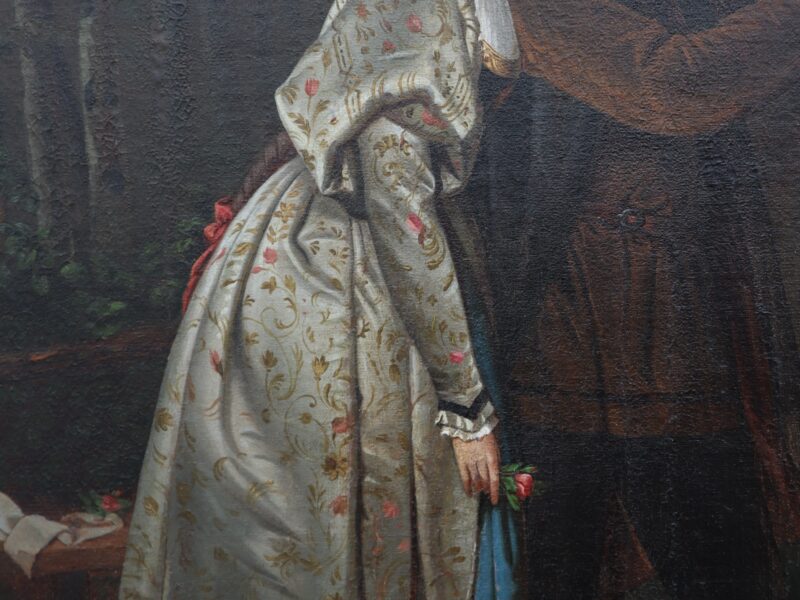
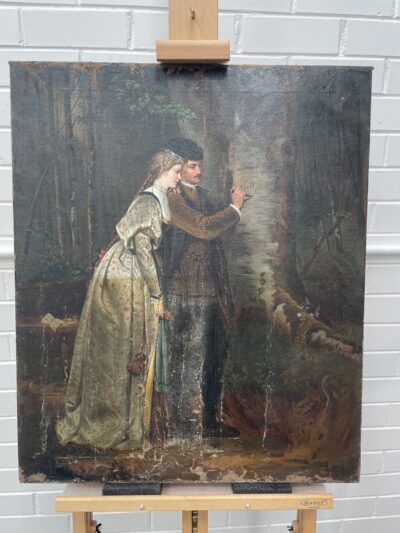
Painting of two lovers.
Remote graffiti removal
Our Objects team, led by Zora Sanders, undertook a series of visits to regional Victoria to remove graffiti from a culturally significant natural site.
Graffiti removal in remote environments presents challenges, particularly the risk of hazardous chemical run-off near waterways. The team hiked approximately 500 metres to the site, carrying all necessary equipment to implement a controlled chemical capture system and safely manage waste.
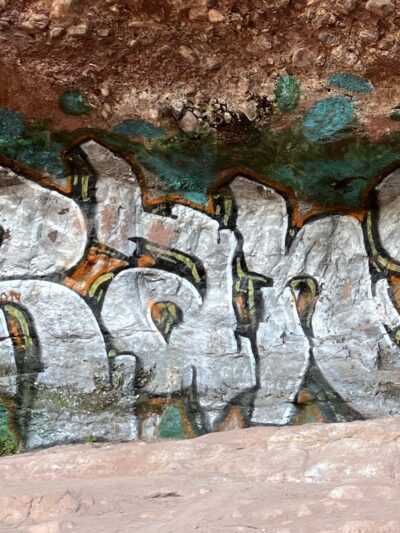
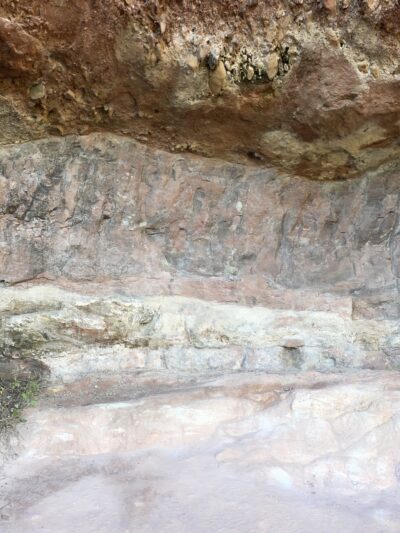
Remote graffiti removal.
A warm welcome for Christina
We are pleased to welcome Christina Ritschel, Head of Textiles, to the Melbourne team. Christina, who relocated to Melbourne earlier this year, is pictured treating an antique bonnet for a private client.
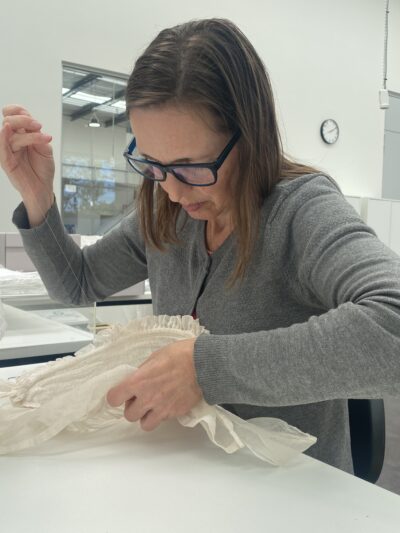
Christina working on an antique bonnet.
International Conservation Services, WA
Claire Rowson, State Manager (WA), and Lorna Sweetwood, Objects Conservator, are now established in their new office and laboratory at 3/7 Hector Street West, Osborne Park WA 6017.
Recent projects include treatment of Palissandro, a marble sculpture by Alexander, for the Lawrence Wilson Art Gallery (University of WA), addressing bore-water staining and lichen growth.
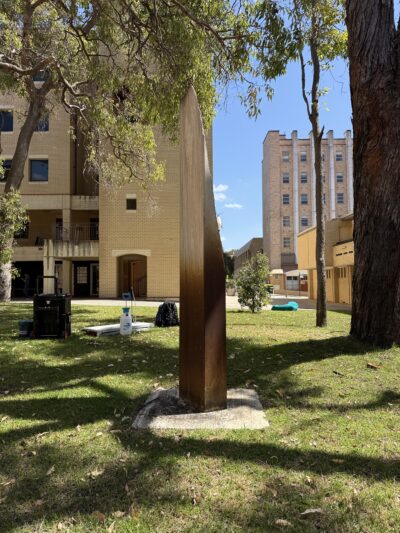
Palissandro before treatment.
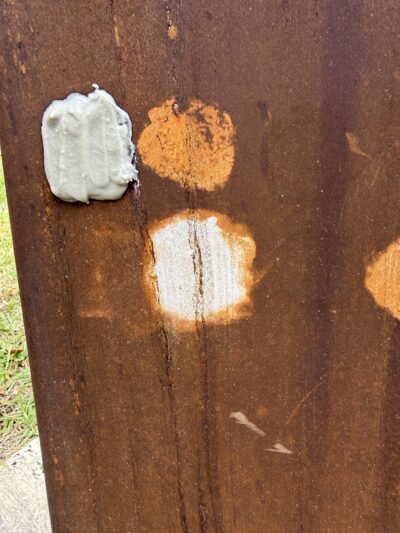
Palissandro during treatment testing.
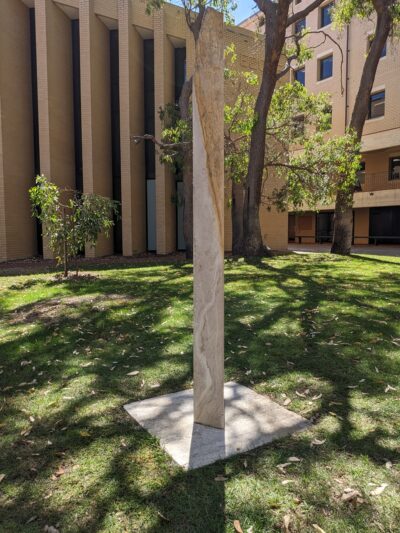
Palissandro after treatment.
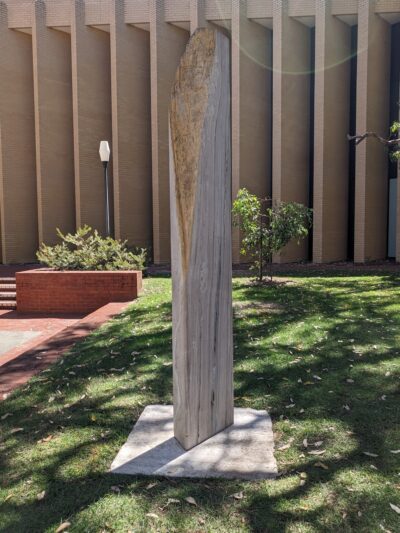
Palissandro after treatment.
Lorna also presented findings from a Preservation Needs Assessment for the Royal Perth Hospital Museum, completed under the National Library's Community Heritage Grant scheme. The report supports future funding applications and collections care planning.
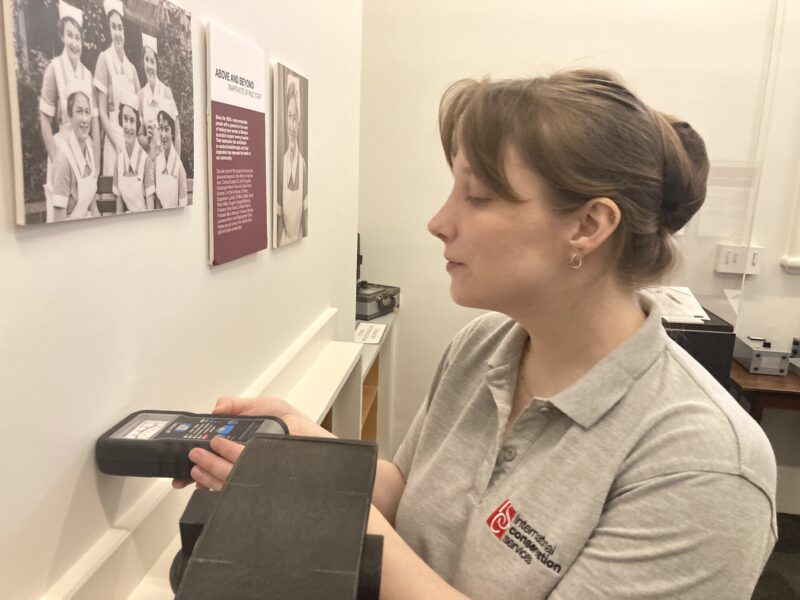
Objects Conservator Lorna Sweetwood checks the Museum's wall for moisture.
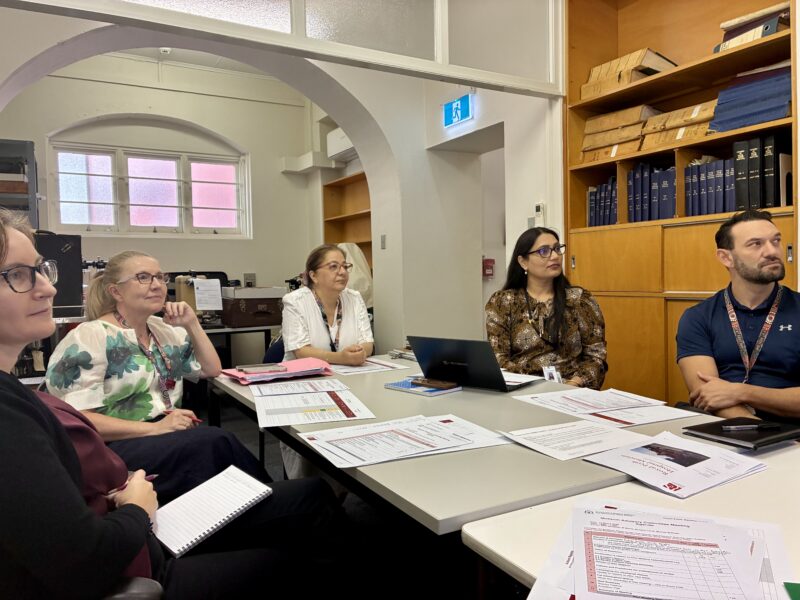
PNA Presentation for Museum Advisory Committee.
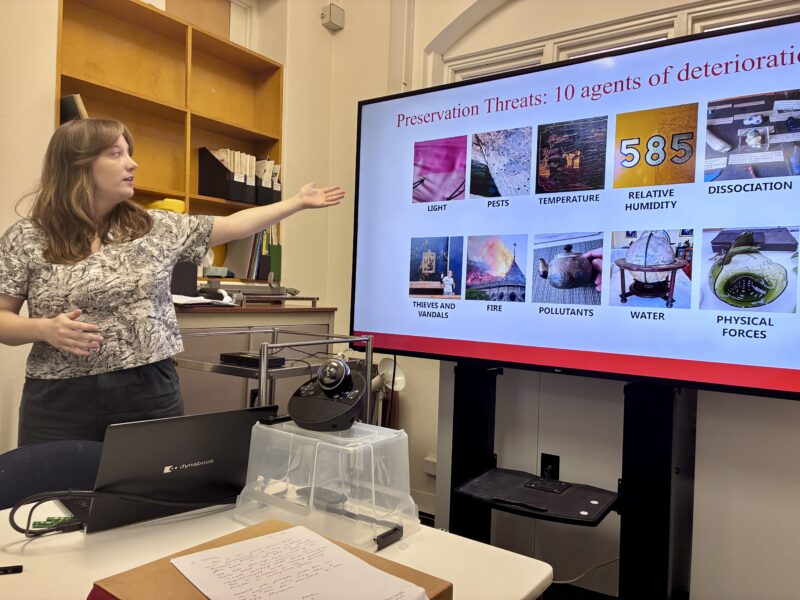
PNA Presentation for Museum Advisory Committee.