A year has almost passed since I sat in a lecture theatre at the State Library of Queensland, listening to conversations that have continued to shape my thinking long after the conference ended. At the time, I could not have known how often I would return to those three days. Looking back now, I see them as marking the beginning of a broader shift within the Australian conservation profession.
Professional conferences often fade into memory. We return home with notebooks full of ideas, a handful of new contacts, and the familiar optimism that accompanies a few days away from the demands of practice. Reality usually catches up quickly. Notes are filed away, presentations become distant memories, and daily work resumes much as it always has.
The 2025 AICCM National Conference was different.
What remains with me nearly a year later is not a particular presentation or technical innovation but a feeling that something within the profession had shifted. The conversations were different. The questions were different. More importantly, the willingness to ask them – and to sit with the discomfort they generated – felt different. Rather than reaffirming what conservation has always been, the conference invited us to consider what conservation might become.
In November 2025, conservators, collection managers, scientists, artists, cultural leaders and knowledge holders gathered at the State Library of Queensland on the lands of the Turrbal and Yuggera/Jagera peoples, on the banks of Maiwar in Kurilpa (South Brisbane). What unfolded over the following three days became much more than an annual conference. It became a conversation about a profession in transition.
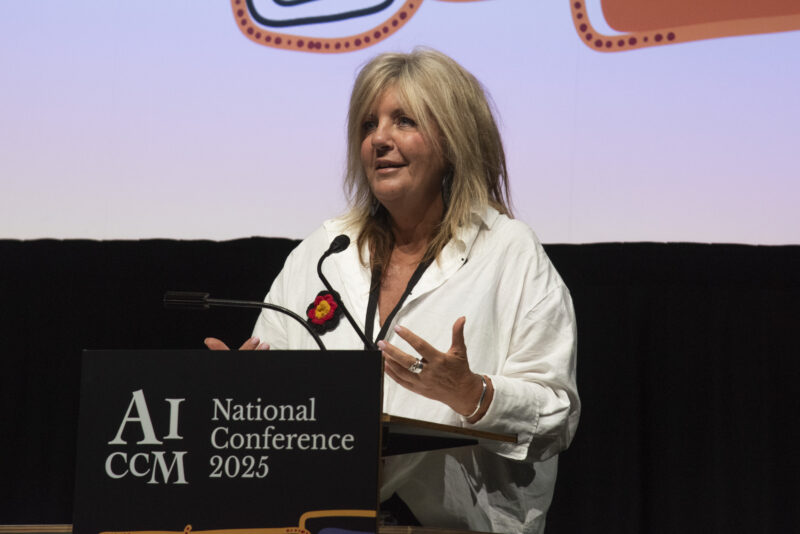
Caroline Martin, 2025 Conference Co-Chair. Image courtesy State Library of Queensland.
From the outset, it was evident that this gathering had been conceived differently. Co-curated with Caroline Martin, the programme was intentionally grounded in First Nations leadership. It acknowledged conservation not simply as a technical discipline but as a cultural practice – one that exists within relationships between people, Country, objects, histories and futures.
The invitation extended to delegates was deceptively simple: to listen, to learn and to reimagine what conservation practice might become when grounded in cultural authority, relational accountability and truth. That invitation was woven throughout the conference and shaped the tone for everything that followed.
That framing mattered.
It recognised something that Indigenous peoples have always understood: cultural material is never simply material. Objects carry memory. They embody relationships, identity, obligation and continuity. To care for them is therefore never only a technical act. It is also a cultural, ethical and often deeply human one.
Caroline captured this beautifully in her welcome, describing the conference as being founded upon a simple but profound truth: conservation is cultural work. The objects entrusted to our care carry stories and responsibilities that extend well beyond their physical form. Throughout the program, this understanding became the thread that connected every presentation, every discussion and every difficult conversation that followed.
For me, however, arriving at this conference carried another layer of meaning.
As a wāhine Māori and an Indigenous conservator, my own professional journey has unfolded within institutions shaped by colonial histories and extractive systems. I retain deep connections to my whenua in Aotearoa, while living and working on the lands of First Nations peoples in Australia, whose cultural authority I acknowledge and respect. Those relationships have profoundly shaped my conservation practice. I don’t see my role as preserving objects in isolation but as acting as a conduit through which conservation science and cultural knowledge work together to sustain the living relationships between taonga, people, whakapapa, whenua and Country, and future generations.
As a wāhine Māori, this understanding has never been separate from my conservation practice. Relationship, reciprocity and shared authority are not principles I have adopted over time – they are intrinsic to how I understand the care of taonga [tangible and intangible treasure].
Over more than a decade working across museums, communities, cultural institutions and independent practice, I have seen how often professional spaces invite Indigenous participation without fundamentally changing the structures that have long marginalised Indigenous knowledge. Cultural authority is frequently acknowledged rhetorically while remaining peripheral in practice. Indigenous knowledge is welcomed when it complements institutional narratives yet can become inconvenient when it asks those institutions to reconsider their assumptions.
That experience is not unique to me. It reflects broader patterns embedded within our profession.
Conservation spaces – even those dedicated to preservation and care – can continue to echo the colonial systems from which many of our institutions emerged. These narratives are no longer always spoken aloud, yet they remain present in quieter ways: in whose expertise is privileged, whose histories are recorded, whose values are embedded within policy, and whose voices continue to require permission to be heard. Institutional comfort has often depended upon these silences.
It was through this lens that I arrived at the conference. Not because I doubted the people in the room but because experience had shown me that meaningful change requires more than good intentions. It requires institutions – and professions – to become willing to examine themselves, to share authority and, at times, to embrace discomfort.
And yet, almost immediately, something felt different.
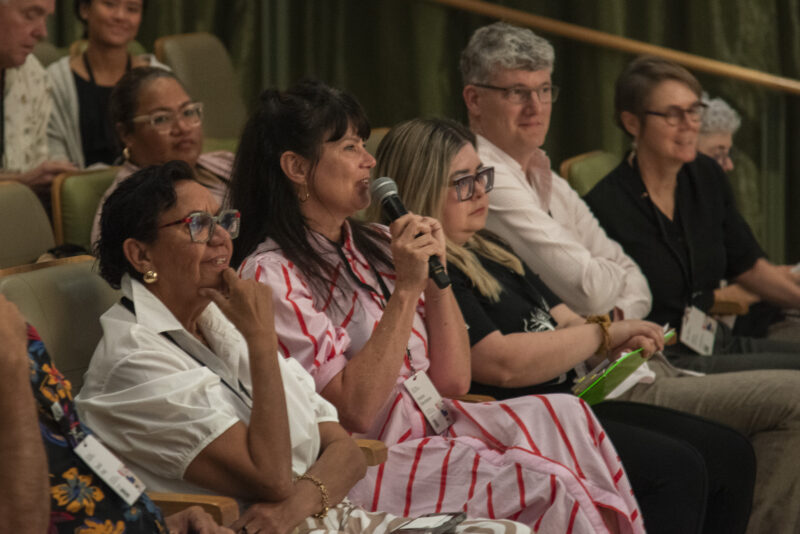
Audience questions. Image courtesy State Library of Queensland.
There was an openness that I had not expected. The conversations carried honesty rather than defensiveness. Difficult histories were not skirted around but approached directly. Truth-telling was not presented as an exercise in guilt, nor as performance but as necessary groundwork for moving forward together. Across the room, there was a palpable sense that the profession was becoming willing to ask harder questions of itself.
The conference did not promise answers. Instead, it offered something far more valuable: permission to reconsider the assumptions upon which conservation has long been built.
Looking back now, I think that is why these three days have stayed with me. They marked the beginning of a different conversation – one in which cultural authority, shared responsibility and relational ways of working were no longer positioned at the margins of conservation practice but increasingly at its centre.
The significance of that shift would become clearer as the conference unfolded.
A profession beginning to unsettle itself
If the opening of the conference established its intent, Caroline Martin’s keynote, ‘Cultural integrity requires more than good intentions: Unsettling comfort and restoring truth in conservation practice’, revealed what that intent was asking of the profession.
Rather than presenting a series of solutions, Caroline posed a challenge. She invited us to examine not only what we do as conservators but why we do it, who our work ultimately serves, and whose voices continue to shape – or be excluded from – the stories we preserve. Throughout her kōrero she returned to a central proposition: conservation is fundamentally relational. Our responsibility extends beyond the care of objects to the people, communities, histories and futures with which those objects remain connected.
Looking back now, I see this keynote as the point at which the conference’s deeper purpose came into focus. It was not asking conservators to become more culturally aware; it was asking the profession to become more culturally accountable.
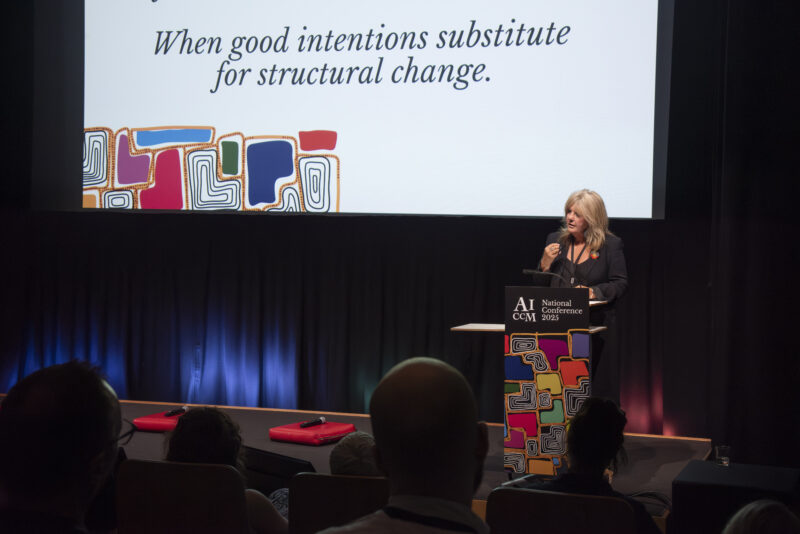
Caroline Martin delivering her keynote. Image courtesy State Library of Queensland
Truth-telling emerged as the thread that connected almost every conversation over the following three days. Not truth as confession, nor truth as accusation, but truth as a necessary condition for ethical practice. The histories of extraction, dispossession, exclusion, institutional power and colonial collecting were not treated as uncomfortable footnotes to our profession – they were recognised as part of the context within which conservation continues to operate. Only by acknowledging these histories could we begin to understand the responsibilities we inherit as contemporary practitioners.
For me, this represented a profound shift.
Conservation has long defined itself through technical expertise. We have developed sophisticated methods for understanding deterioration, stabilising materials and preserving collections. Yet technical competence alone cannot resolve questions of authority, belonging or justice because these are fundamentally relational. They emerge through relationships characterised by reciprocity, shared authority, mutual respect and accountability, where cultural knowledge and conservation expertise are recognised as complementary rather than competing forms of knowledge. It is through these relationships – not technical expertise alone – that ethical conservation practice becomes possible.
That shift in thinking led me to reflect on the relationship between shared authority and language. Much of the power within conservation is embedded in the words we use – not only in conversation but in policies, documentation, collection records, treatment proposals and institutional procedures. Language quietly shapes assumptions about ownership, responsibility, expertise and care.
Even seemingly modest changes can reshape practice. Replacing the word display with hold, for example, fundamentally changes the relationship between institution and object. Display suggests observation, separation and institutional control. Hold suggests care, responsibility, reciprocity and relationship. Such shifts may appear subtle, yet they illustrate that decolonising conservation is often less about dramatic institutional reform than the accumulation of everyday decisions that gradually transform professional culture.
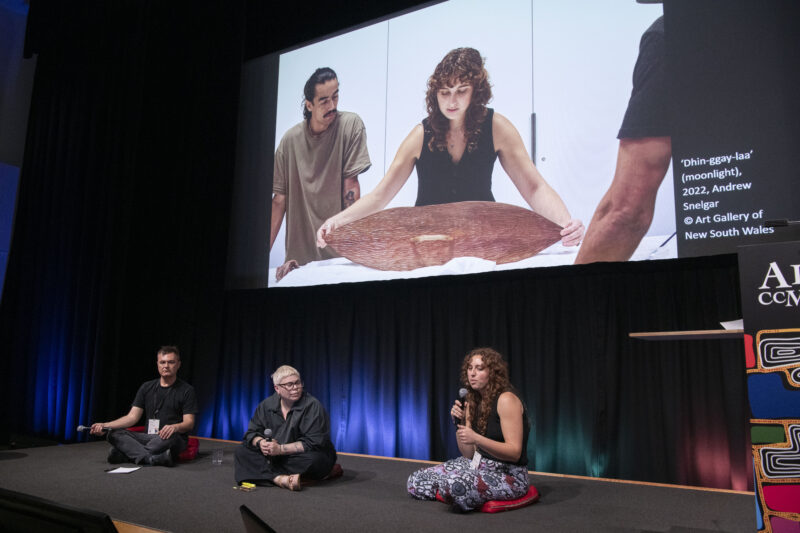
Panel session: ‘Transmitting the intangible | Reframing Conservation through Indigenous Perspectives.’ Image courtesy State Library of Queensland.
This naturally led to another question: what do we mean when we talk about safety?
Within conservation, safety is usually understood in technical terms – environmental control, object stability, handling procedures, hazard management and risk mitigation. These remain fundamental to our practice. Yet cultural safety and psychological safety have rarely occupied the same place within professional discourse, despite the reality that much of our work requires engagement with histories of violence, dispossession, grief and cultural loss.
As conservators, we ask communities to revisit painful histories. We ask ourselves to work closely with material that embodies profound human experience. It seems only reasonable that we also consider how these histories affect those undertaking this work. Psychological wellbeing should not be viewed as peripheral to conservation practice but recognised as an integral part of professional responsibility.
Creating culturally and psychologically safe spaces, however, should never be confused with avoiding discomfort. Some of the most important work in conservation requires us to remain present with histories that are difficult, confronting and unresolved.
One of the conference’s most enduring messages was that conservation carries a responsibility to preserve both the light and the darkness of human history. Objects do not tell stories only of achievement, beauty and innovation. They also bear witness to conflict, displacement, injustice, resilience and survival. To preserve only what is comfortable is to distort history itself.
Within Māori knowledge systems, this understanding is not unfamiliar. Our pūrākau (Māori narratives / oral histories) have never hidden conflict, loss or mamae (pain, hurt). They acknowledge complexity because complexity carries knowledge. Through wānanga (discussion, meeting, learning) we return to these stories – not to remain within trauma but to understand it, learn from it and continue forward. Conservation, in my opinion, serves a similar purpose. It does not erase difficult histories. It creates the conditions through which they can continue to be understood.
Recognising this also reframed how I thought about the emotional labour carried by conservators. Our profession has traditionally celebrated technical objectivity, yet many practitioners quietly carry the emotional weight of the material they care for. For Indigenous conservators, that burden may also include intergenerational trauma, cultural responsibility and lived experience. These dimensions rarely feature within our professional frameworks, despite profoundly shaping how many of us experience the work.
Rather than diminishing professional judgement, emotional engagement can deepen it. Empathy, attentiveness and cultural responsiveness are not obstacles to good conservation – they are essential to understanding why the work matters.
Running quietly beneath all of these conversations was another idea that has stayed with me ever since: intergenerational responsibility.
Conservation has always described itself as preserving material for future generations. During the conference, however, that future became much more tangible. The question was no longer simply what we are preserving but for whom. Future generations are not abstract beneficiaries of our work. They are our children, our mokopuna (grandchildren), our communities and those who will inherit both the collections and the decisions we make today.
Seen through this lens, conservation becomes an act of continuity rather than simply preservation. It is less concerned with maintaining the past unchanged than with ensuring that knowledge, relationships, identity and culture remain available for those yet to come.
Nearly a year later, I think this is what continues to distinguish the 2025 conference in my memory. It was not simply advocating for different techniques or stronger policy. It was inviting the profession to reconsider its foundations – to move beyond good intentions, to become willing to unsettle institutional comfort, and to recognise that conservation is not only about caring for cultural material but also about sustaining the relationships that give that material meaning.
What became increasingly apparent over the following three days was that these ideas were not confined to Caroline Martin’s keynote. They surfaced repeatedly through different projects, communities and cultural contexts. Although each presentation stood on its own, together they revealed a series of interconnected themes that pointed towards a different future for conservation.
Country as teacher
The first of these themes centred on Country. Although each speaker approached the subject from a different cultural perspective, a remarkably consistent idea emerged: conservation cannot be separated from place. Country was not presented as the setting within which conservation occurs but as an active teacher, knowledge holder and participant in cultural continuity. Again and again, speakers demonstrated that cultural knowledge is not held solely within objects or institutions but lives within landscapes, relationships, communities, language and practice. This perspective fundamentally reshapes conservation. Rather than asking how we preserve cultural material, it asks how we sustain the living systems that continue to give that material meaning.
That understanding was beautifully illustrated through the work of Maree Clarke and Mitch Mahoney. Their kōrero described the regeneration of cultural practices through returning to Country. Art-making was not presented simply as an act of production but as a process of reconnecting with place, family, language and ancestral knowledge. Conservation, viewed through this lens, becomes less about stabilising material and more about creating the conditions in which culture can continue to live. Objects are not cared for because they are old; they are cared for because they remain active participants in cultural life.
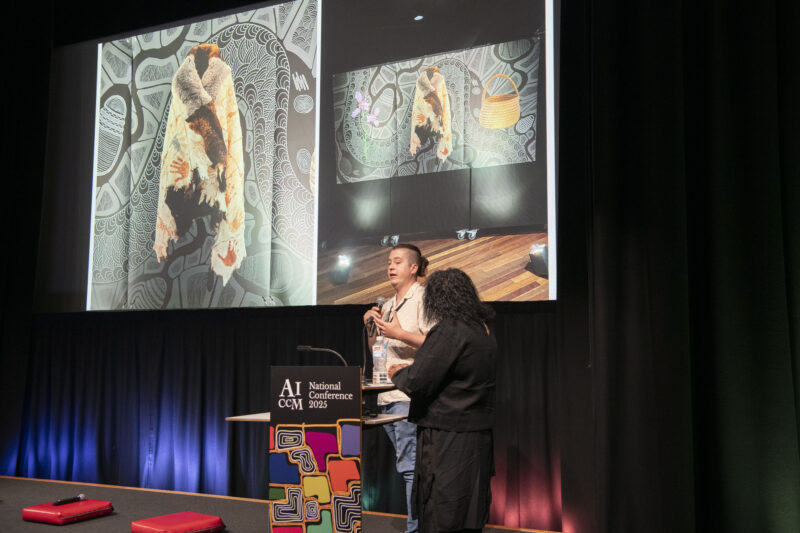
Mitch Mahoney and Maree Clarke. Image courtesy State Library of Queensland.
The same philosophy emerged through Arnhem Northern and Kimberley Artists’ (ANKA) Cultural Legacy Program, where conservation begins within community rather than institution. Rather than positioning conservators as external experts arriving with technical solutions, the program invests in building conservation capability within remote communities, supporting artists, Elders and art workers to determine how collections should be cared for according to their own priorities. Throughout these discussions, two-way learning repeatedly emerged as the foundation of practice. Conservation science and cultural knowledge were not presented as competing systems but as complementary ways of understanding, caring for and learning from heritage.
If these presentations demonstrated that conservation is strengthened through connection, the Pasifika Tauhi Project challenged the profession to consider what happens when those connections are broken. Grounded in the Tongan concept of tauhi – care, stewardship, and nurturing relationships – the project presented heritage not as isolated material requiring preservation but as something sustained through enduring relationships between people, objects, knowledge and community. One idea, in particular, has remained with me ever since: collections separated from their source communities experience a form of deterioration beyond physical decay. Cultural severance – the gradual erosion of relationships, knowledge, language, cultural practice and community connection – is itself an agent of deterioration, yet one that conventional conservation frameworks rarely acknowledge. Conservation has long recognised physical, chemical and biological threats to cultural material. Perhaps it is time we also recognise that relationships can deteriorate. When the connections that give cultural material its meaning are weakened or lost, conservation has not fully succeeded, regardless of how physically stable the object remains.
That same understanding echoed through Dr Zoe Rimmer’s presentation on the return of the Preminghana luwamakuna. Rather than framing repatriation as the conclusion of a conservation story, it became a demonstration of conservation’s relational purpose. The presentation showed how colonial intervention had disrupted relationships and how the return of cultural authority created the conditions for those relationships to be rebuilt. In this context, conservation sometimes begins not when institutions intervene but when they step back and enable communities to lead.
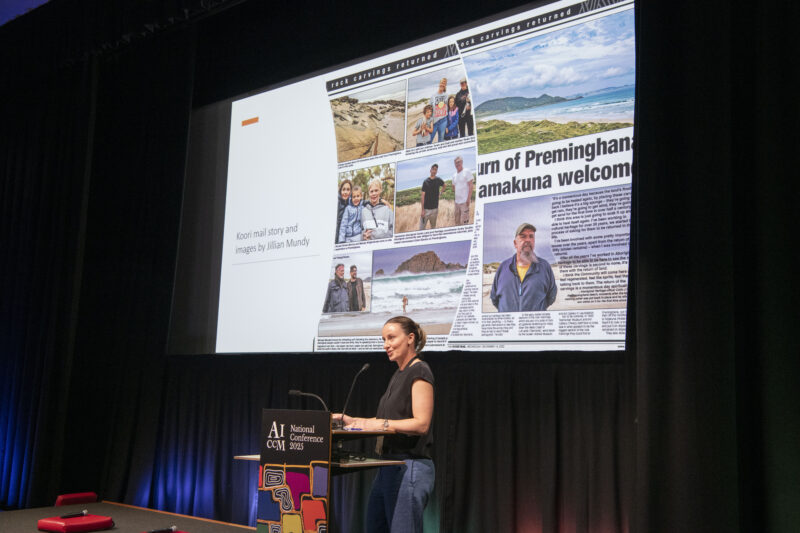
Dr Zoe Rimmer. Image courtesy State Library of Queensland.
Taken together, these presentations challenged one of conservation’s most enduring assumptions: that preservation can be measured primarily through the physical stability of cultural material. Instead, they suggested that continuity of knowledge, cultural practice, language, relationships and connection to Country are themselves forms of preservation. Without them, even the most physically stable collection risks becoming culturally diminished.
This broadens the very definition of conservation. Caring for cultural material could no longer be understood simply as preventing deterioration. It also meant sustaining the relationships that allow cultural material to remain living, connected and meaningful within the communities to whom it belongs.
Conservation beyond material
Running alongside these conversations was another equally significant shift – an expanding understanding of what contemporary conservation now demands of us.
Historically, conservators have occupied positions of technical authority. Our education, institutional roles and scientific expertise have often positioned us as the primary decision-makers in determining how cultural material should be cared for. Yet if conservation is fundamentally relational, as so many presentations suggested, then our role must also become more relational. The question is no longer simply ‘What expertise do we hold?’ but ‘How do we exercise that expertise alongside the knowledge, authority and aspirations of others?’.
Several speakers explored this idea from different perspectives. Tharron Bloomfield spoke directly to the subtle ways conservation can unintentionally become a form of gatekeeping. Professional expertise, while essential, can also create barriers that exclude communities from participating in decisions about their own heritage. Rather than diminishing professional knowledge, the challenge was to consider how that knowledge might be shared in ways that strengthen, rather than replace, community authority.
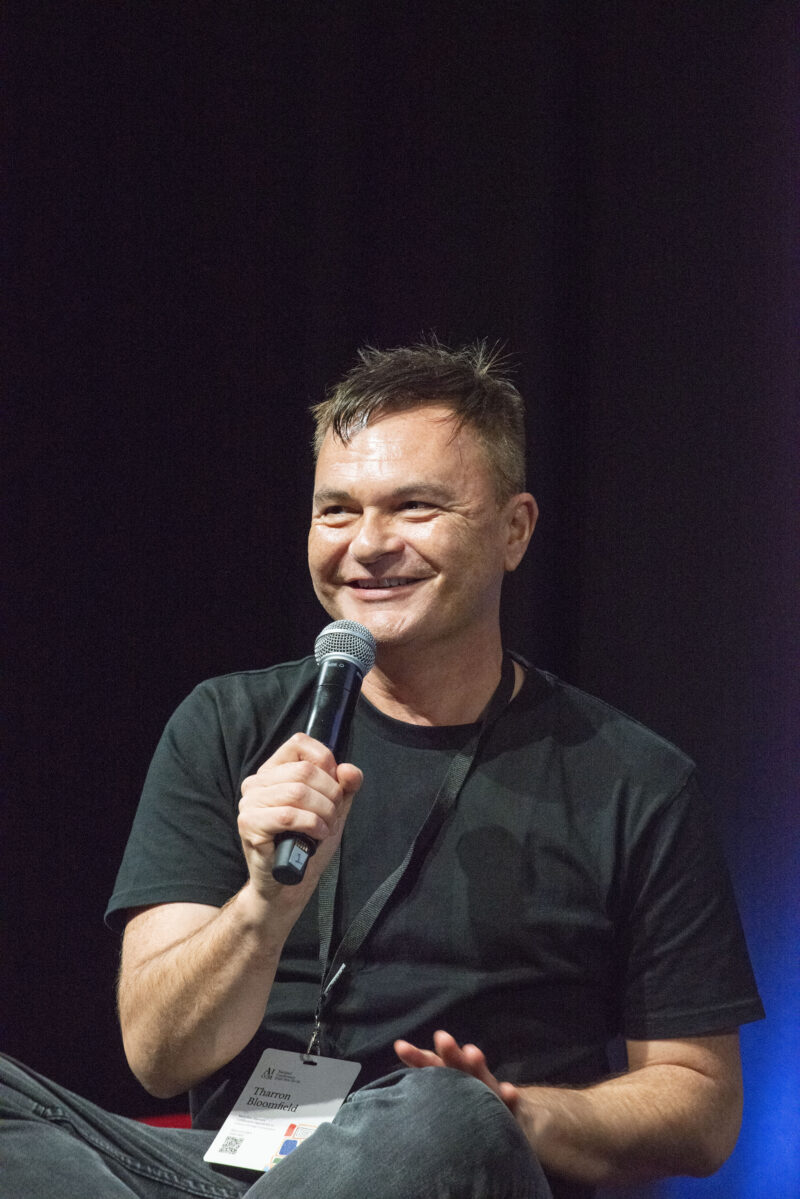
Tharron Bloomfield. Image courtesy State Library of Queensland.
This conversation naturally extended into broader discussions of positionality. Throughout the conference, speakers repeatedly acknowledged that knowledge is never neutral. Every interpretation is shaped by where we stand, whose histories have informed us and whose voices have been privileged within our education, institutions and professional practice. Recognising positionality does not diminish expertise; it reminds us that expertise itself exists within relationships.
These principles were reflected throughout discussions of Indigenous Cultural and Intellectual Property (ICIP), cultural authority and community-led decision-making. Rather than treating consultation as another step within established conservation workflows, presenters described a more fundamental shift in practice. Communities are not stakeholders invited into conservation projects; they are rights holders whose authority exists from the outset. Conservation therefore becomes something undertaken with communities rather than for them.
Examples from ANKA and Waringarri Aboriginal Arts demonstrated what this looks like in practice. Their approaches to iterative conservation rejected the idea of treatment as a single, completed intervention. Instead, conservation was understood as an ongoing relationship – one that evolves alongside the changing needs of objects, families, communities and Country. Care is revisited, adapted and renegotiated over time, recognising that relationships themselves continue to evolve.
Shevaun Wright’s legal perspective reinforced that this transition now extends beyond ethics into governance. Conversations surrounding Indigenous Cultural and Intellectual Property demonstrated that concepts such as free, prior and informed consent, relationship agreements and cultural authority are no longer peripheral considerations. They are increasingly becoming fundamental components of contemporary conservation practice.
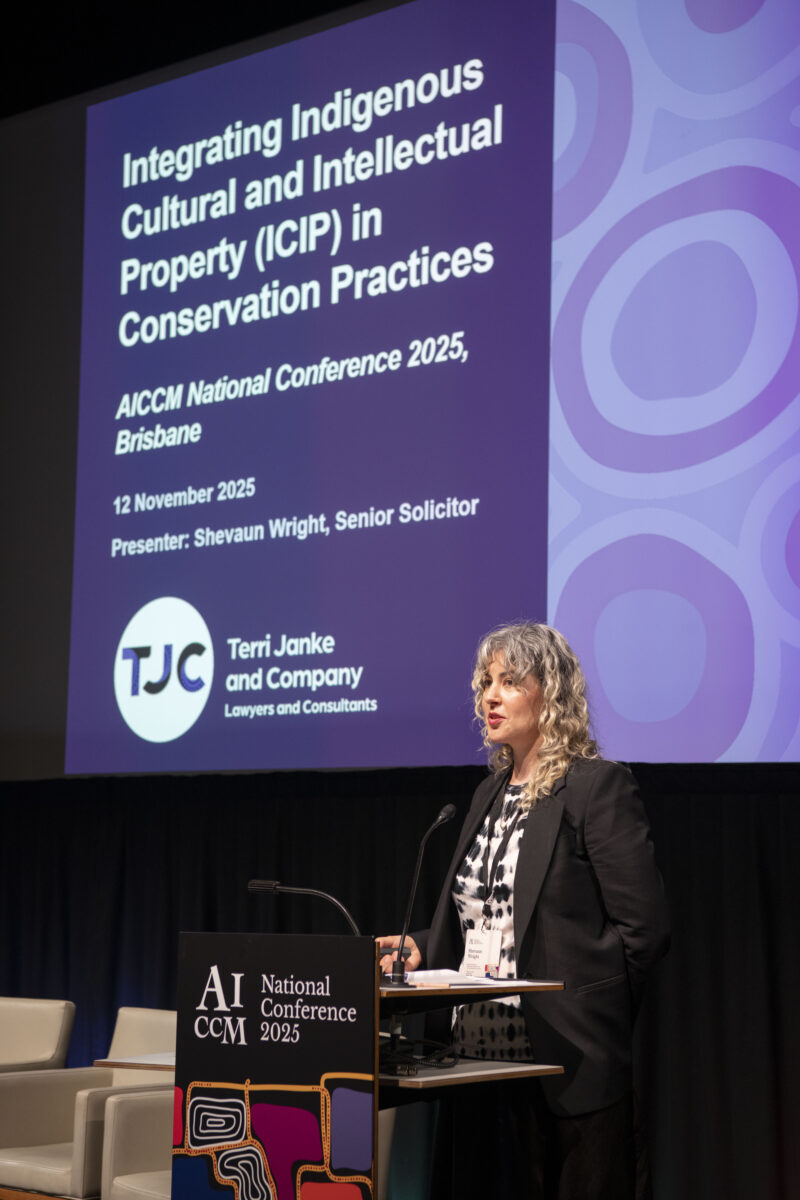
Shevaun Wright, Senior Solicitor from Terri Janke and Company. Image courtesy State Library of Queensland.
What struck me most was that none of these conversations positioned technical conservation as less important. Instead, they redefined what professional expertise now requires. Scientific knowledge remains indispensable but it is no longer sufficient on its own. Increasingly, our profession asks conservators to move confidently between conservation science, cultural literacy, relationship-building, facilitation, advocacy and collaborative decision-making.
The conservator of the future will still need to understand chemistry, deterioration, treatment methodologies, preventive conservation and collection care. Those foundations remain essential. Increasingly, however, professional excellence will also require humility – the willingness to recognise when others hold knowledge we do not – and the ability to build relationships in which different forms of knowledge can work together rather than compete.
Perhaps this is where I sensed the greatest shift over the course of the conference.
For many years, conservation has been described as the care of cultural material. My own practice has always understood conservation more broadly – as the care of the relationships that give cultural material its meaning. What struck me throughout the conference was not that my thinking had changed but that these relational ways of practising were increasingly being recognised across the profession.
Material preservation remains fundamental to our work but it is no longer sufficient to describe its purpose. Increasingly, conservation is being understood as the practice of sustaining the relationships that allow cultural material to remain living, connected and meaningful.
It was this recognition, more than any individual presentation, that stayed with me long after I returned home.
The profession I saw emerging
Looking back almost a year later, it is not individual presentations that remain most vividly in my memory. What has stayed with me is the remarkable convergence of ideas that emerged across the conference. Viewed together, those conversations revealed far more than a collection of individual projects or perspectives. They offered a glimpse of a profession collectively questioning its foundations and beginning to redefine what conservation can be.
As I reflected on those conversations, what struck me was not their diversity but their convergence. Presentations that initially appeared to address different aspects of conservation gradually revealed a common direction. Country became inseparable from cultural authority. Conservation treatment became inseparable from relationships. Repatriation became inseparable from cultural continuity. Across every theme, technical practice was continually reframed through ethical, cultural and social responsibility. Taken together, these conversations suggested that Australian conservation is beginning to redefine not only how it is practised but what it is ultimately trying to achieve.
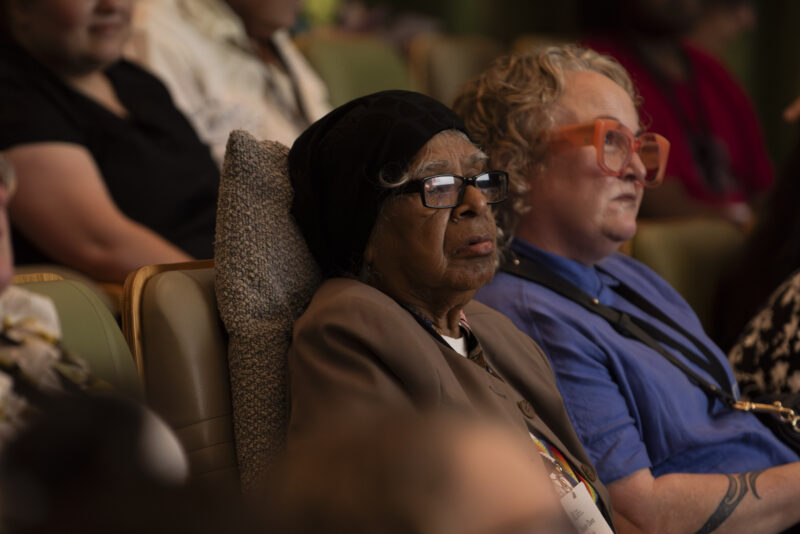
Audience members. Image courtesy State Library of Queensland.
One of the most significant ideas to emerge for me was the concept of cultural severance. Collections separated from their source communities experience a gradual loss that cannot be measured with moisture meters or environmental loggers. Knowledge becomes fragmented. Languages fall silent. Stories become disconnected from place. Cultural practices that once gave objects meaning risk disappearing altogether. Material may remain remarkably stable while the relationships that sustained it slowly erode.
Conservation has long recognised physical, chemical and biological agents of deterioration. Yet if deterioration is understood as the loss of what gives cultural material its significance, then the erosion of relationships, language, cultural practice and community connection deserves equal recognition. Recognising cultural severance as a legitimate preservation concern may prove to be one of the profession’s most important conceptual developments. This naturally reframes conservation itself.
For many years, conservation has been described as the preservation of cultural material. My own practice has always understood conservation more broadly – as the stewardship of the relationships that give cultural material its meaning. What struck me throughout the conference was not that this understanding was new but that relational ways of practising conservation were increasingly being recognised across the profession.
These shifts are unfolding at precisely the moment the profession faces unprecedented challenges. Climate change is increasing the frequency of disasters and environmental instability. Heritage organisations continue to navigate funding uncertainty, ageing infrastructure and growing expectations for community engagement. Across Australia – and echoed by colleagues from Canada, the Pacific and elsewhere – conservators described working within small teams, across vast distances, with declining resources and specialist knowledge disappearing faster than it can be replaced.
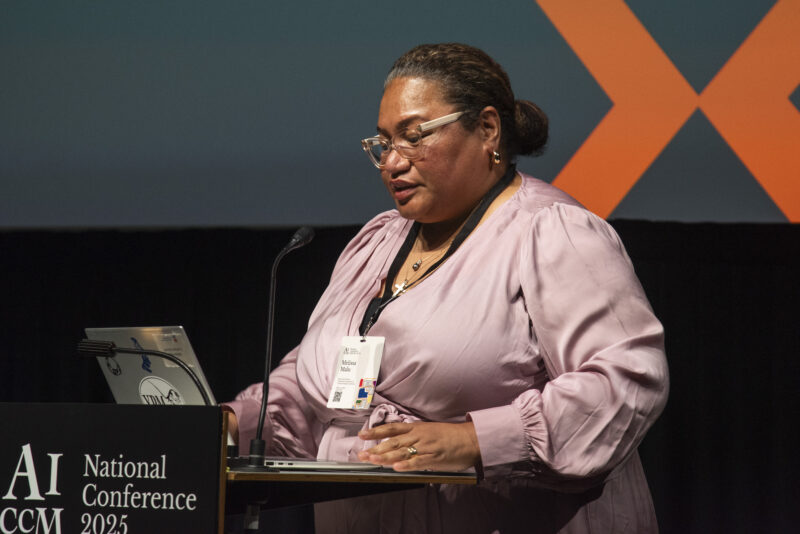
Melissa Malu. Image courtesy State Library of Queensland.
These pressures reinforce rather than diminish the need for collaboration. They cannot be addressed by individual practitioners or institutions working in isolation. They require coordinated leadership, stronger professional networks, genuine partnerships with communities, and a collective willingness to rethink how conservation is practised.
Perhaps nowhere is this more important than in education and succession.
Across Indigenous communities, the need to nurture future conservators is becoming increasingly urgent. Representation within the profession remains limited, particularly for First Nations, Māori, and Pasifika practitioners. While new pathways are beginning to emerge through community-led training, partnerships and evolving educational models, much more remains to be done. Succession planning is therefore about far more than replacing retiring conservators. It asks who will carry this work forward, whose knowledge systems will shape the profession, and whether future generations will see themselves reflected within it.
These conversations also extend to professional wellbeing.
Conservation asks practitioners to work closely with grief, trauma, dispossession and loss, yet the emotional dimensions of that work have rarely been openly acknowledged. Increasingly, I wonder whether professional resilience lies not in emotional detachment but in creating workplaces that recognise vulnerability, encourage reflection and understand that caring deeply about cultural heritage is not a professional weakness but one of our greatest strengths.
What encouraged me most was that these conversations were no longer taking place at the margins of the profession.
Truth-telling, cultural safety, Indigenous Cultural and Intellectual Property, community-led care, shared authority and relational accountability were increasingly being recognised as fundamental components of contemporary conservation practice rather than specialist interests.
This also caused me to reflect on AICCM itself.
Throughout the conference, I sensed an organisation beginning to embrace a broader purpose – not simply representing conservators but helping shape the future of conservation practice in Australia. Through its willingness to create space for difficult conversations, support culturally responsive practice, encourage Indigenous leadership and advocate nationally and internationally, AICCM appeared increasingly confident in recognising that technical excellence and cultural accountability are not competing priorities but complementary responsibilities.
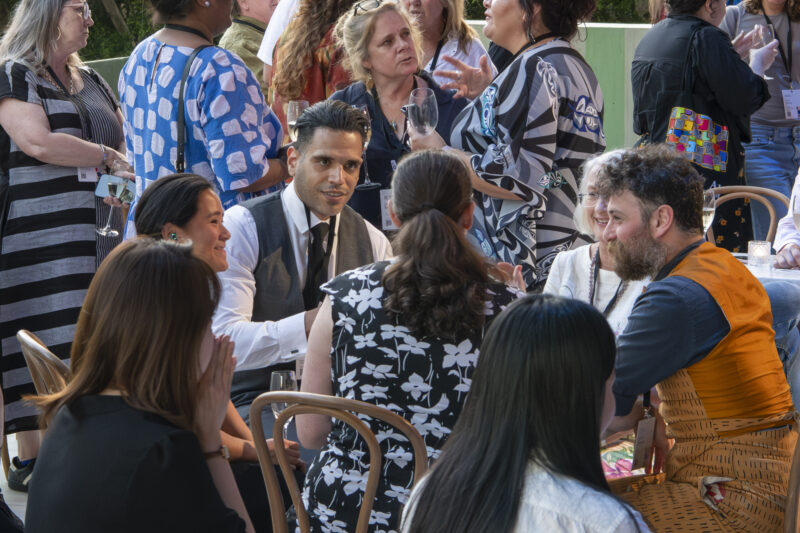
Conference attendees. Image courtesy State Library of Queensland.
The conference did not leave me believing that the profession had reached its destination. Quite the opposite. It revealed how much work remains to be done.
But it also revealed something equally important: a profession increasingly willing to question long-held assumptions, share authority more openly, embrace more relational ways of practising, and imagine a future in which scientific excellence and cultural accountability strengthen one another rather than compete.
This is the profession I saw beginning to emerge. Not one that has resolved every challenge but one becoming more willing to recognise that conservation is, fundamentally, the stewardship of relationships as much as it is the preservation of material. In that future, caring for heritage ultimately means caring for people, knowledge, Country and the connections that allow cultural material to remain living, connected and meaningful across generations.
Looking back one year later
Nearly a year has passed since those three days in Brisbane, yet I continue to return to them. Not because every question was answered nor because the profession transformed overnight but because the conference marked a moment when many of the values that have long shaped my own practice began to find a stronger voice across the profession. Looking back now, I see those conversations not as isolated presentations but as part of a broader movement that continues to gather momentum.
For me, the conference became far more than a professional development opportunity. It became a point of departure – opening new conversations, new responsibilities and new opportunities to contribute beyond my own conservation practice.
The ideas explored throughout those three days – truth-telling, cultural safety, relational accountability, Indigenous leadership and shared authority – have continued to influence my work. Not because they changed how I understand conservation but because they affirmed principles that have long guided my practice while demonstrating that they are increasingly being recognised across the profession.
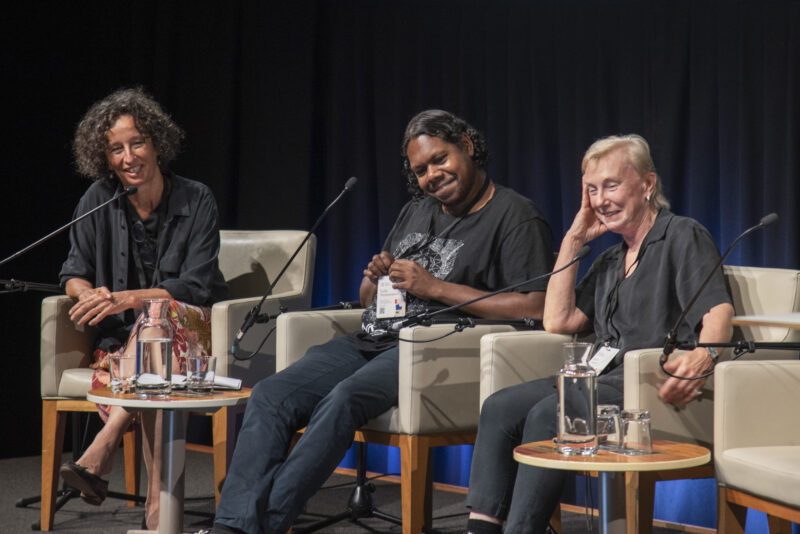
Dr Sabine Cotte, Colin Puruntatameri and Professor Robyn Sloggett. Image courtesy State Library of Queensland.
Perhaps most unexpectedly, the conference also created opportunities to contribute to that change.
Over the past year I have been privileged to accept appointments as Co-convenor of the AICCM Objects Special Interest Group and as a member of the AICCM Codes and Cultural Safety Framework Working Group. While these are early days, these roles allow me to contribute to conversations about how conservation practice can continue to evolve – supporting culturally safe practice, strengthening professional guidance and ensuring that our ethical frameworks reflect not only the institutions in which we work but also the communities with whom we work.
Those conversations have continued well beyond the conference itself.
Over the past year, alongside fellow Māori conservators working across Aotearoa New Zealand and Australia, we have begun establishing a Kāhui (company/group) to strengthen relationships, support one another professionally, and collectively consider the future of our profession. Our conversations have centred on succession planning, mentoring and how we might create stronger pathways for Māori and Pasifika practitioners to enter and thrive within conservation.
In many ways, this collaboration reflects the realities of our profession today. Although many of us now live and work on opposite sides of the Tasman, our relationships, whakapapa and responsibilities continue to extend across these waters. Rather than seeing national boundaries as defining our professional communities, we are exploring how we can work collectively across Aotearoa and Australia to support Indigenous leadership, strengthen capability and ensure future generations inherit a profession in which they can see themselves reflected.
To me, these conversations represent something much larger than professional networking. They are an expression of the relational values that ran throughout the conference itself – demonstrating that leadership is not exercised by individuals alone but through communities of practice committed to supporting one another and those who will follow.
Throughout the conference and in the months since, I have sensed AICCM growing more confidently into that role. Not simply as Australia’s professional body for conservators but as an organisation willing to help shape the future direction of conservation practice. Leadership, in this context, is about more than setting technical standards. It is about creating space for conversations that have too often remained at the margins of professional practice. It is about advocating for conservation within government, education and the broader cultural sector. Most importantly, it is about recognising that cultural safety, Indigenous Cultural and Intellectual Property, community partnerships, professional wellbeing and ethical accountability are no longer emerging issues. They are central to the future of conservation in Australia.
That future is not without its challenges.
We remain a relatively small profession working across an immense continent, facing climate-driven disasters, funding uncertainty, ageing collections and increasing expectations from the communities we serve. Specialist skills continue to disappear faster than they can be replaced, while the need to strengthen pathways for First Nations, Māori, Pasifika and other underrepresented practitioners has never been greater. None of these challenges can be addressed by individual conservators or institutions working in isolation. They require collective leadership, collaboration and a profession willing to think beyond its traditional boundaries.
Perhaps that is why the conversations in Brisbane continue to resonate so strongly. They reminded me that the future of conservation will not be secured through technical expertise alone but through the relationships we build – with communities, with one another and with those who will inherit this work after us.
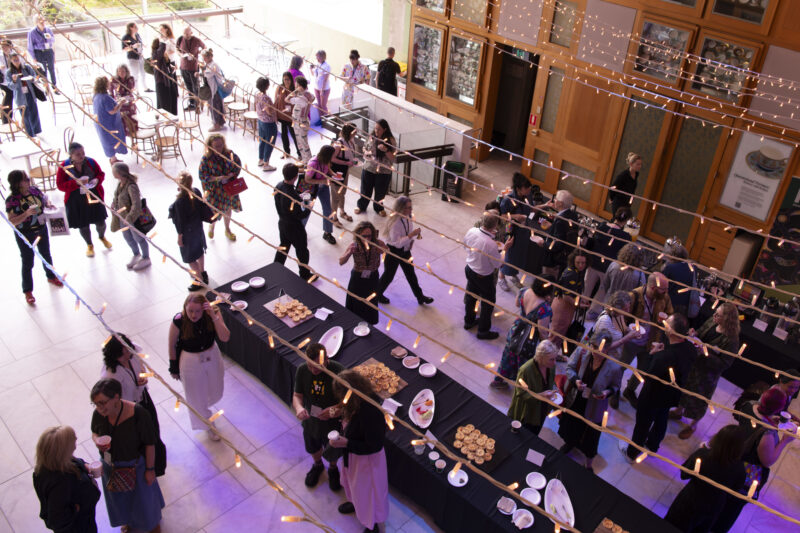
Image courtesy State Library of Queensland
As I reflect on those conversations now, I am reminded that conservation has never truly been about objects in isolation. Objects matter because of what they carry and make possible: identity, memory, belonging, continuity, knowledge and relationship. Material preservation remains fundamental but its purpose has always extended beyond material itself. At its best, conservation creates the conditions for these connections to endure across generations.
It is this understanding that leaves me optimistic.
The conference demonstrated a profession increasingly willing to ask difficult questions of itself. It showed conservators prepared to examine long-held assumptions, acknowledge uncomfortable histories and imagine ways of practising that place relationships alongside material care. Rather than treating scientific excellence and cultural accountability as competing priorities, the conversations throughout the conference suggested that each strengthens the other.
When I walked into the State Library of Queensland in November 2025, I carried caution. That caution was earned, and I do not believe it was misplaced. When I left three days later, I carried something else. Hope. Not because the profession had solved its challenges but because it seemed increasingly willing to confront them. Hope that conservation in Australia is recognising that its greatest strength lies not only in the science that underpins our work but in the relationships that give that work meaning. Hope that Indigenous leadership, cultural authority and community-led practice are becoming integral to the profession’s future. And hope that AICCM will continue to provide the leadership, advocacy and vision needed to support conservators as we collectively navigate the opportunities and responsibilities ahead.
Looking back now, I do not think the conference changed how I understood conservation. Rather, it affirmed the values that have long shaped my practice and gave me confidence that Australian conservation is increasingly embracing a more relational, culturally responsive and ethically grounded future.
Acknowledgements
I would like to thank the AICCM Victorian Division for awarding the National Conference Bursary, which supported my attendance at the 2025 AICCM National Conference, More than Materials: Collaborative Approaches in Cultural Heritage Conservation, held at the State Library of Queensland. As a sole practitioner, opportunities such as this make professional engagement and contribution possible. It is the Division’s support and commitment to fostering participation, connection and ongoing learning within our profession that made my attendance possible. Thank you.